Jiaozuo Film and Television City
Subtitle: A Cinematic Journey Through Ancient China: Your Essential Guide to Jiaozuo Film City
1. Introduction to Jiaozuo Film City Nestled in the northwestern region of Henan Province, within the esteemed tourist city of Jiaozuo, lies one of China's Top Ten Film and Television Bases—Jiaozuo Film City. As the premier and most renowned cinematic complex in the Central Plains region, it stands as the number one attraction among Jiaozuo's top ten scenic spots. Its strategic location, a mere kilometer from the city center, offers unparalleled convenience. The city is cradled by the majestic Taihang Mountains to the north and overlooks the mighty Yellow River to the south. This advantageous position is further enhanced by its status as a critical transportation hub, where major railway lines—Xin-Jiao, Jiao-Zhi, Jiao-Tai—and expressways like Jiao-Zheng and Jiao-Jin converge, ensuring seamless access from all directions.
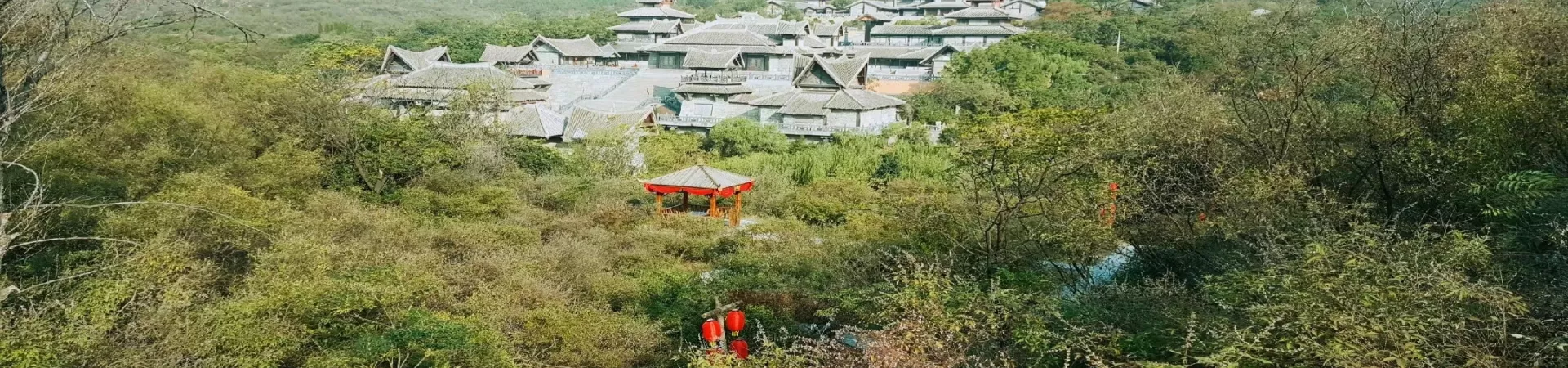
2. Historical Overview and Architectural Grandeur Established in 1995 through a significant investment of 230 million RMB by the Jiaozuo Municipal Government, the film city was conceived as a multifaceted destination. While its primary function is to provide comprehensive services for film and television production, it has masterfully evolved into a prominent center for sightseeing, cultural immersion, entertainment, and leisure. Spanning an impressive 2.5 square kilometers with a built-up area of 400,000 square meters, the complex is a breathtaking recreation of ancient architectural styles from the Spring and Autumn, Warring States, Qin, and Han dynasties, extending through the Three Kingdoms period.
What truly distinguishes Jiaozuo Film City from other cinematic bases in China is its masterful integration with the natural landscape. Built directly into the mountain slopes, its structures exhibit a majestic, imposing grandeur coupled with an authentic,古朴 (gǔ pǔ, simple and unadorned) aesthetic. This unique approach has fostered a distinctive garden-style characteristic throughout the grounds. The city is meticulously divided into several thematic zones, each serving as a versatile filming set and an immersive historical experience for visitors.
2.1. The City Gate Plaza Area This entrance sector sets the historical tone, dominated by symbolic artifacts from the era. A massive bronze-cast rectangular ding (ancient ritual vessel), large-scale reliefs depicting the Eastern Migration of the Western Zhou and the Unification by the Qin Dynasty, stoic bronze warriors, and a grand gate shaped like ancient coins welcome guests. Sculptures of the Three Sovereigns, Six Philosophers, and the Four Mythical Creatures further concentrate and showcase the political and cultural essence of the historical periods the film city embodies.
2.2. The King of Zhou Palace Area This area is the epitome of monumental architecture and regal power. The King of Zhou Palace itself is a sight to behold—magnificent, robust, and constructed in tiers up the mountainside, each level ascending above the last. Its design profoundly reflects the古朴 (gǔ pǔ) and profound depth of the Yellow River culture central to the Zhongyuan (Central Plains) region. Adjacent to the palace is a massive, state-of-the-art soundstage covering 8,000 square meters, capable of accommodating the filming needs of diverse cinematic genres. Crowned at the highest point of the entire film city is the Ling Terrace (Spirit Altar), an ancient ceremonial site used by emperors for offerings to heaven and for alliances between powerful leaders.
2.3. The King of Chu Palace Area In stark contrast to the solemn grandeur of the Zhou Palace, the King of Chu Palace area presents an aesthetic of elegant beauty and refined brilliance. Its architecture and ambiance fully capture the rich cultural内涵 (nèi hán, connotation) of the Chu culture, which flourished along the Yangtze River basin, offering a different yet equally captivating historical perspective.
2.4. The Marketplace (Shijing) Area This zone offers a rare glimpse into the daily life of commoners during the Spring and Autumn and Warring States periods. Featuring humble yellow mud walls, thatched-roof cottages, and small artisan workshops, this authentic recreation of an ancient commoners' district is a unique feature seldom found in other film studios across China, providing invaluable cultural and visual authenticity.
3. Cinematic Legacy and Visitor Experience The sheer scale of the facility and the richness of its diverse shooting scenes have made it a magnet for domestic film and television directors. Since its inauguration, Jiaozuo Film City has hosted nearly a hundred film and TV productions. Notable titles that have utilized its authentic backdrops include The Eastern Zhou Dynasty, Diaochan, Qu Yuan, The Goddess Luo, Emperor Wu of Han: Liu Xiu, Cao Cao and Cai Wenji, Master Lu Ban, The First Emperor, The Legend and the Hero, The Great Revival, The Gallants, The Qin Empire, the new adaptations of Romance of the Three Kingdoms and Water Margin, The Warring States, Grand Tutor Yang Zhen of the Han, The Foolish Old Man Who Moved the Mountains, Confucius, and The Song of the Great Wind, among many others. This steady stream of productions has brought countless actors and directors to its gates.
For visitors, the film city prioritizes an enriching experience. It pioneered a complimentary全程讲解 (quánchéng jiǎngjiě,全程讲解) service, ensuring guests gain deep insights into the history and significance of each area. Beyond sightseeing, it caters to all needs with a variety of dining options, shopping venues, and recreational activities. A notable highlight is the large-scale nighttime lighting and performance system, a 7-million-RMB investment by the city government. This transformation turns the historical sets into a dazzling spectacle after dark, solidifying the film city's reputation as a premier destination for evening culture and entertainment in Jiaozuo, rightfully earning the title "a璀璨的明珠 (cuǐcàn de míngzhū, bright and shining pearl) on the land of the Central Plains."
4. Practical Information for Your Visit 4.1. Transportation As mentioned, Jiaozuo Film City is exceptionally accessible. It is approximately 1 km from downtown Jiaozuo, easily reachable by taxi or local bus. The city's extensive network of railways and highways connects it to major centers like Zhengzhou, Jinzhou, and beyond.
4.2. Ticket Information * Adult Ticket: 30 RMB.
4.3. Opening Hours * December 1st to February 28/29th: 08:00 - 17:30 (last admission at 17:00). * June 1st to August 31st: 08:00 - 18:00 (last admission at 18:00). * Operating hours for other periods typically align with the longer summer schedule or are subject to seasonal adjustment. It is always advisable to confirm the latest times before your visit.