Datong Ancient Town
Subtitle: A Journey Through Time in Zunyi's Ancient Riverside Town
Introduction: The Allure of Untouched History
Nestled on the banks of the Chishui River in Zunyi City, Guizhou Province, lies Datong Ancient Town—a rare gem of preservation and tranquility. Unlike many commercialized ancient towns in China, Datong offers an authentic, unvarnished window into the past. It is a living community where history whispers from every weathered stone and wooden beam, inviting visitors to step away from the modern rush and into a serene, timeless landscape. The town's charm lies precisely in its "unfinished" state of development; here, tourism coexists with daily life, offering a genuinely immersive cultural experience rather than a staged performance.
Section 1: The Architectural and Historical Tapestry
1.1. Foundations from the Ming and Qing Dynasties Datong Ancient Town's story begins during the Ming and Qing dynasties, serving as a vital riverside hub. Its architecture and layout have been remarkably preserved, forming a cohesive historical canvas. The town is not defined by a single monument but by a complete ensemble of historical structures that together narrate its commercial and social past.
1.2. Key Historical Components This ensemble includes several well-preserved elements that form the town's backbone: * The Ancient Street and Buildings: The central artery of the town is a winding, quiet lane paved with smooth, worn bluestone slabs. Flanking it are rows of ancient street houses and dwellings, characterized by their classic wooden structures, sloping tiled roofs, and intricate carvings that speak of centuries-old craftsmanship. * The Riverside Heritage: The ancient dock stands as a silent testament to Datong's former prosperity as a river port, where goods from along the Chishui were loaded and unloaded. Nearby, ancient wells that once provided vital water to the townsfolk can still be found. * Centers of Community and Culture: Scattered throughout are remnants of public life, including ancient temples that offered spiritual solace and ancient guild halls (huiguan) that served as hubs for merchants from specific regions. Various ancient stone tablets inscribed with historical records are embedded in walls or stand in quiet corners, waiting to be deciphered.
Section 2: The Living Town Experience
2.1. A Community, Not Just a Museum What truly sets Datong apart is its vibrant, living essence. The town is not a deserted relic but a fully functioning community where residents live, work, and socialize. This creates an atmosphere of genuine warmth and offers a unique opportunity to observe local life undisturbed.
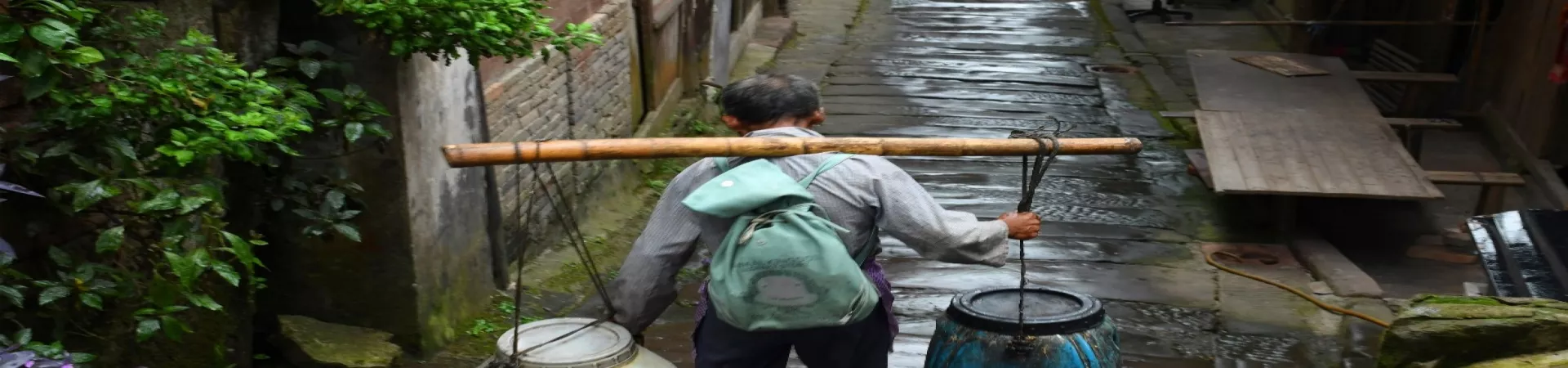
2.2. Glimpses of Daily Life Along the Main Street A stroll down the main bluestone street is a journey into the rhythm of local existence. You will pass by simple, functional shops that cater to the townspeople: a tailor's shop with fabrics and a sewing machine by the window, a no-frills barbershop where elders gather for a haircut and conversation, and a local clinic that serves the community's basic healthcare needs. The absence of ubiquitous souvenir chains and loud vendors is refreshing, allowing the authentic sounds and sights of the town to take center stage.
Section 3: Essential Visitor Information
3.1. Getting to Datong Ancient Town The most convenient way to reach the town is via public transportation tailored for tourists. Visitors can take the Chishui Danxia Tourist Shuttle Bus Line 5 and alight at the "Datong Ancient Town (Bus Stop)" station. From the bus stop, the entrance to the ancient town is within easy walking distance.
3.2. Admission and Opening Hours One of Datong's most appealing features is its free and unrestricted access. There is no admission fee to enter and explore the ancient town. Furthermore, it is open 24 hours a day, every day of the year. This policy allows for maximum flexibility in planning your visit, whether you prefer the soft morning light, the quiet of an afternoon, or the atmospheric dusk by the riverside.
3.3. Suggested Duration of Visit To fully appreciate the slow pace, explore the side alleys, observe daily life, and soak in the atmosphere, it is recommended to allocate approximately 1 to 3 hours for your visit. This provides ample time for a leisurely walk, photography, and perhaps a simple meal or tea at a local establishment without feeling rushed.
Information last updated: January 9, 2023. Credit and thanks to contributor RENE for their editorial input.