Shennong Statue
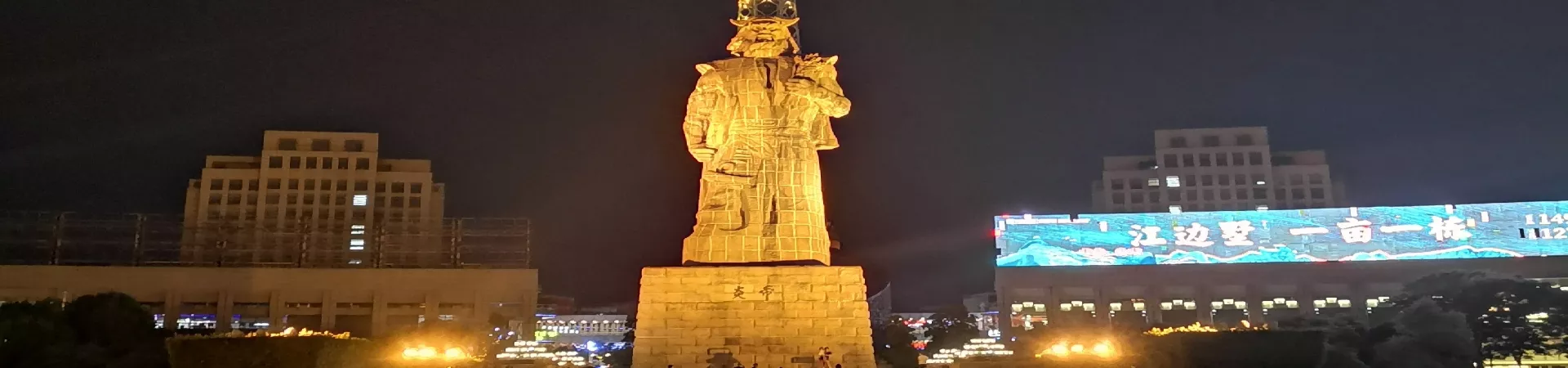
Subtitle: A Journey to the Heart of Chinese Ancestral Culture: The Yandi Shennong Statue in Zhuzhou
1. An Icon Upon the Landscape: Introduction to the Monument
Rising with solemn grandeur against the skyline of Zhuzhou, Hunan Province, the Yandi Shennong Statue is far more than a mere sculpture; it is a profound cultural symbol, a site of pilgrimage, and a commanding landmark that connects the present to the deepest roots of Chinese civilization. Located atop the picturesque Shennong Park on Tianyuan District's Shennong Peak, this monumental bronze statue stands at an awe-inspiring height of 72 meters, equivalent to a 30-story building. It represents Yandi Shennong, one of the revered ancestral figures of the Chinese nation, often mentioned in conjunction with the Yellow Emperor (Huangdi). The statue's sheer scale and dignified presence are designed to evoke a sense of reverence and wonder, marking Zhuzhou not only as a modern industrial city but also as a sacred ground intimately linked to the origins of Chinese culture. For any visitor, the journey to its base is the first step in an immersive historical and spiritual exploration.
2. The Figure of Shennong: Myth, History, and Legacy
2.1. The Divine Farmer and Cultural Hero To understand the statue's significance, one must understand the figure it venerates. Yandi Shennong, whose name translates to "Divine Farmer," is a semi-legendary ruler and cultural hero credited with foundational contributions that shaped early Chinese society. According to ancient texts and folklore, his reign, believed to be around 5,000 years ago, was a pivotal era of discovery and invention. He is most famously hailed as the progenitor of agriculture, teaching people how to cultivate grains using tools, thus transitioning society from a nomadic hunting-and-gathering existence to settled farming. Furthermore, he is revered as the father of Chinese herbal medicine, personally tasting hundreds of plants to discern their medicinal and toxic properties, laying the groundwork for traditional Chinese pharmacology. His other attributed inventions include the development of markets for trade, the use of pottery, and the creation of the zither for music.
2.2. The Yan-Huang Identity and Cultural Unity The enduring phrase "Yan Huang Zi Sun" (Descendants of Yan and Huang) underscores the deep cultural identity shared by ethnic Chinese worldwide. Yandi (Yan Emperor) and the Yellow Emperor (Huangdi) are collectively considered the common ancestors of the Chinese people. While the Yellow Emperor is often associated with political organization and martial arts, Yandi Shennong symbolizes the dawn of material civilization, sustenance, and health. The statue in Zhuzhou, therefore, serves as a powerful physical embodiment of this shared heritage. It is a place where visitors can contemplate the ingenuity and perseverance of their forebears, fostering a tangible connection to a mythical yet integral past that continues to inform Chinese culture and values today.
3. Experiencing the Monument: Design, Setting, and Pilgrimage
3.1. Architectural Grandeur and Symbolic Detail The design of the statue is rich with symbolism. Cast in bronze, a material denoting permanence and dignity, the figure depicts Shennong standing tall, holding sheaves of grain in one hand and a medicinal herb in the other. This iconic posture directly represents his dual legacy. His facial expression is wise, benevolent, and forward-gazing, suggesting foresight and care for his people. The statue is erected on a massive, multi-tiered granite pedestal, which itself is intricately carved with bas-reliefs depicting scenes from Shennong's life—his tasting of herbs, his teaching of farming techniques, and other legendary exploits. The interior of the pedestal houses a comprehensive exhibition hall.
3.2. The Shennong Park Environment The statue is not an isolated structure but the centerpiece of the expansive Shennong Park. The journey to the summit is part of the experience. Visitors can ascend along winding paths through lush greenery, enjoying panoramic views of the city and the Xiang River. The park's natural beauty provides a serene and contemplative environment fitting for the monument's theme. The integration of the colossal human figure with the natural landscape reinforces the idea of Shennong's harmony with and mastery over nature.
3.3. Ritual and Remembrance The site functions as a major venue for commemorative activities, especially during the Qingming Festival (Tomb-Sweeping Day) and on significant anniversaries. Large-scale public worship ceremonies are held here, attracting thousands of participants, including diaspora Chinese, who come to pay their respects. These rituals, involving offerings and traditional performances, transform the space from a tourist site into a living cultural theater. For individual visitors, the act of ascending the steps, viewing the reliefs, and standing before the immense figure becomes a personal moment of reflection and homage.
4. Zhuzhou’s Cultural Anchor and Visitor Practicalities
4.1. Beyond Industry: Redefining a City’s Identity Zhuzhou is widely known as a powerhouse of China's rail transportation and manufacturing industries. The Yandi Shennong Statue strategically provides a profound cultural counterpoint to this modern identity. It anchors the city in a narrative that predates industrialization by millennia, offering both residents and tourists a vital link to spiritual and historical roots. The monument has become the city's most recognizable cultural symbol, driving tourism and serving as a point of local pride.
4.2. Planning Your Visit For the traveler, a visit to the statue is a half-day to full-day excursion. The best times are during spring and autumn for pleasant weather. The climb to the base can be undertaken on foot for the able-bodied, or via available shuttle services within the park. The interior exhibition hall is a must-visit, featuring detailed historical explanations, archaeological findings related to early agriculture in the region, and displays on traditional Chinese medicine. Allocate sufficient time to explore both the hall and the surrounding parklands. The summit offers unparalleled photo opportunities, particularly at sunrise or sunset when the bronze figure catches the light dramatically against the changing sky.
4.3. A Broader Cultural Context A visit to the Yandi Shennong Statue is greatly enriched when understood as one node in a broader cultural journey. The region around Zhuzhou and the wider Hunan province is steeped in history related to early Chinese settlements. The statue thus can serve as a prelude to exploring other historical sites, museums, and even the natural beauty of Hunan, creating a holistic travel experience that weaves together myth, history, and landscape into a deeper understanding of China's enduring civilization.