Lujiang Bridge
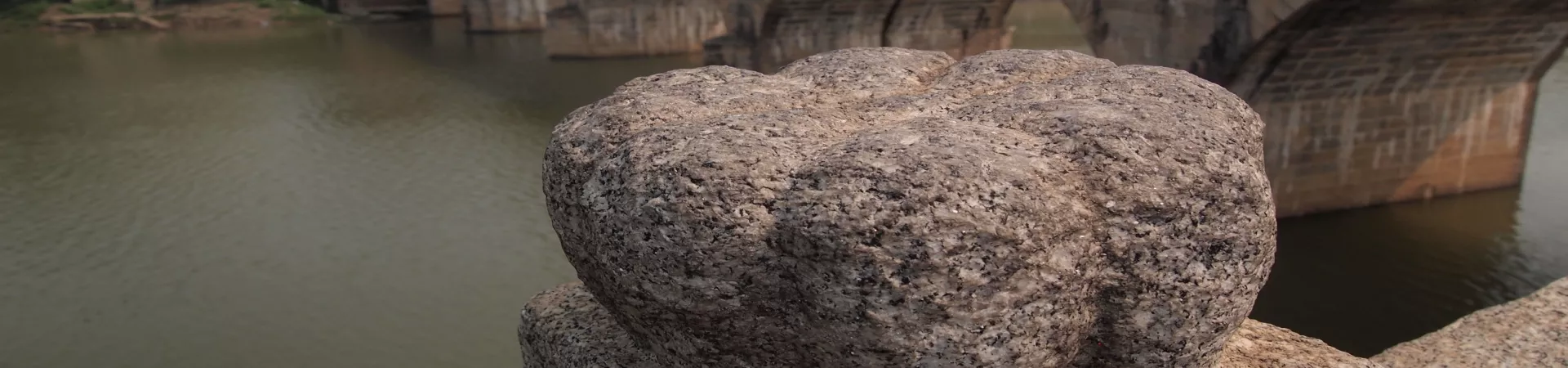
Subtitle: A Journey Through Time: The Enduring Legacy of Lujiang Bridge in Liling
1. Introduction: The Indispensable Artery of Liling
Spanning the tranquil waters of the Lujiang River, the Lujiang Bridge stands not merely as a structure of stone and mortar but as the pulsating heart of Liling City in Zhuzhou, Hunan. For over eight centuries, it has served as the primary public bridge of Liling and holds the distinguished status of being one of the few large-scale stone arch bridges in pre-1949 China financed primarily through public contributions with supplementary government aid. Its historical significance is profound, having been an indispensable transportation hub since ancient times. As recorded in the Annals of Liling County, "The Lujiang Bridge cannot be without for a single day, nor is its importance limited to just one prefecture or one road." This statement underscores its critical role as a vital link for merchants, travelers, and armies traversing the strategic corridor between the ancient states of Wu and Chu, connecting northern and southern China. Today, it continues to function as the crucial throat for north-south traffic within the city, a testament to its enduring and irreplaceable geographical importance.
2. A Historical Chronicle: From Ferry to Fortified Arch
2.1. The Pre-Bridge Era and Its Founding Before the Southern Song Dynasty, the Lujiang River presented a formidable barrier to transportation. Historical evidence suggests only a ferry service existed. A significant clue comes from the years 1136-1137, when Zhao Shanjun, the Pacification Commissioner of Hunan, petitioned to abolish the ferry toll on the Lujiang, indicating the absence of a bridge at that time. The bridge's genesis is poetically captured several years later. On January 30, 1143 (the ninth year of the Qiandao era), the renowned poet and later high-ranking official Fan Chengda passed through Liling from Pingxiang. His poem Inscribed on the Liling Post Station contains the evocative lines: "By the county at the bridge on the green river, / Willows before the gate are already yellow. / Sparse people, the mountain trees ancient; / Lean soil, the stream's fragrance sweet." More concretely, in his travelogue The Record of a Phoenix Carriage, he noted, "A new bridge has been built in recent years," and referred to it as the "Lushui" (Green Water) Bridge. This places the bridge's construction firmly in the early to mid-Qiandao period, around the 1140s, marking the beginning of its storied existence.
2.2. Trials by Nature and War: A Cycle of Destruction and Renewal The history of the Lujiang Bridge is a dramatic saga of resilience against relentless forces. Over its 800-year lifespan, it has faced repeated devastation, only to be resurrected each time by the determination of the local community and authorities. Records document a staggering series of calamities: it was destroyed by floods 14 times, by fire 5 times, and by warfare 4 times. This cycle of destruction and rebirth is mirrored in the chronicles of its repairs, which span dynasties: restored twice in the Song Dynasty, once in the Yuan, seven times in the Ming, thirteen times in the Qing, and once during the Republican era. Each reconstruction was not merely a repair but a reaffirmation of the bridge's vital role in the social and economic life of Liling.
3. Architectural and Cultural Distinctions: The Bridge's Defining Features
The Lujiang Bridge is celebrated not only for its age but for three distinctive characteristics that elevate its status among China's ancient bridges.
3.1. An Engineering Marvel: Scale and Preservation Firstly, the bridge is remarkable for its substantial span. It holds the distinction of being the largest-span stone arch bridge preserved in Hunan Province, and its condition is considered the finest among comparable structures in the region. This scale is a direct reflection of its historical importance as a major public thoroughfare, designed to accommodate significant traffic and withstand the powerful currents of the Lujiang River.
3.2. Inscribed Legacy: The Bridge Name Stele Secondly, the bridge boasts a well-preserved cultural artifact: the bridge name stele, inscribed by a notable figure. This stone tablet, bearing the bridge's name in authoritative calligraphy, serves as a tangible link to the past, adding a layer of scholarly and artistic prestige to the structure. It stands as a silent witness to the bridge's acknowledged significance across generations.
3.3. A Rich Textual Heritage: The Chronicles of Lujiang Bridge Thirdly, and perhaps uniquely, the bridge is supported by an exceptionally detailed and continuous body of textual records. The historical accounts specifically titled Records of the Lujiang Bridge are remarkably plentiful, with eleven distinct versions surviving from the Ming Dynasty through the Republican period. This wealth of documentation provides an unparalleled, granular view of the bridge's administrative history, financial struggles, engineering challenges, and its central place in the community's consciousness over centuries.
4. The Bridge in the Modern Era: From Infrastructure to Icon
4.1. Designation as a Protected Cultural Relic Recognizing its immense historical, architectural, and cultural value, the Hunan Provincial Government officially listed the Lujiang Bridge as a Provincial-Level Cultural Relic Protection Unit in 1996. This designation provides it with legal protection, ensuring its preservation for future generations and formally acknowledging its status as a treasure of Hunan's heritage.
4.2. The Contemporary Symbol: A Landscape of Culture and Aesthetics Today, while it still serves a practical transportation function, the Lujiang Bridge has transcended its original utilitarian purpose. It has evolved into a defining cultural landscape and a symbolic landmark for Liling, the famed "Porcelain City." Its form—a series of robust arches rising gracefully over the river—presents a visage that is both古朴 (gǔpǔ, simple and rustic) and雄健 (xióngjiàn, vigorous and powerful). This aesthetic, set against the backdrop of the modern city, creates a poignant dialogue between past and present. It stands as a permanent monument to local identity, community spirit, and historical continuity, inviting visitors and residents alike to contemplate the layers of history that have unfolded upon and around its enduring stones.