Emperor Yan's Mausoleum
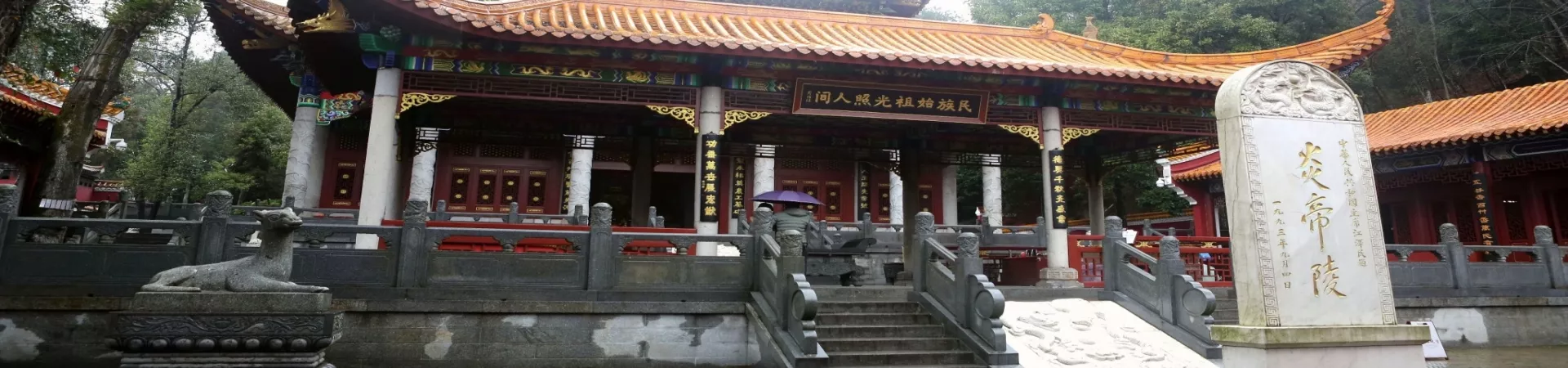
Subtitle: A Journey to the Origins: Exploring the Mausoleum of Emperor Yan in Zhuzhou
1. Introduction: The Sacred Resting Place of a Cultural Ancestor
Nestled in the picturesque landscape of Zhuzhou City, Hunan Province, lies a site of profound cultural and historical significance: the Mausoleum of Emperor Yan (Yandi Ling). Revered as the final resting place of Emperor Yan, also known as Shennong, a legendary sovereign and one of the mythical ancestors of the Chinese civilization, this mausoleum holds a unique position in the heart of the nation. Often honored with the title "The First Mausoleum in China," it is more than an archaeological site; it is a spiritual homeland, a place where history, mythology, and collective memory converge. For over a millennium, since the initial construction of its temple in 967 AD during the Song Dynasty, it has stood as a testament to the enduring legacy of Emperor Yan, surviving the rise and fall of dynasties through repeated reconstructions. Today, it offers visitors a comprehensive and immersive experience, blending solemn worship, cultural education, and scenic beauty across its expansive grounds.
2. Historical Significance and Cultural Heritage
2.1. A Legacy Spanning Millennia The history of the Mausoleum of Emperor Yan is a narrative of resilience and reverence. Its origins trace back to the Song Dynasty, specifically the fifth year of the Qiande era (967 AD), when the first temple was erected. Throughout the subsequent centuries, mirroring the turbulence and transitions of imperial China, the complex faced destruction and was faithfully rebuilt time and again. This cyclical process of ruin and restoration itself embodies the persistent veneration the Chinese people have held for their cultural forebears. Each reconstruction was not merely an architectural endeavor but a reaffirmation of cultural continuity.
2.2. Emperor Yan: The Divine Farmer and Cultural Hero Understanding the site requires an appreciation of the figure it commemorates. Emperor Yan, often paired with the Yellow Emperor (Huangdi) as a common ancestor of the Han Chinese, is a central figure in Chinese mythology and early cultural history. He is traditionally credited with seminal inventions and discoveries that laid the foundation for agrarian society and traditional medicine. His most celebrated contributions include: * The invention of farming: Introducing the use of wooden plows and teaching people to cultivate crops, earning him the name "Shennong" (Divine Farmer). * The discovery of herbal medicine: Legend holds that he tasted hundreds of herbs to discern their medicinal properties, pioneering Chinese pharmacology. * The establishment of markets: Initiating trade by encouraging people to exchange goods. This legacy transforms the mausoleum from a tomb into a symbol of innovation, sustenance, and the dawn of Chinese civilization.
2.3. The "Yandi Ling Sacrificial Ceremony": An Intangible Cultural Treasure The cultural importance of the site is dynamically expressed through the "Yandi Ling Sacrificial Ceremony." Recognized as one of China's first national-level intangible cultural heritage items, this ritual is a grand, solemn event held to honor the memory of Emperor Yan. Its significance extends beyond national borders, having been successfully入选 "Global Top Ten Most Influential Root-Seeking Cultural Events." The ceremony, often involving traditional music, dance, and offerings, is a powerful, living tradition that connects the present with the ancient past, attracting descendants of Yan and Huang from across the globe to pay their respects.
3. Exploring the Mausoleum: Layout and Key Structures
The mausoleum complex is meticulously organized into three primary functional zones—the Worship Area, the Pilgrimage Area, and the Memorial Area—comprising over 80 natural and cultural landscapes that guide visitors through a journey of reverence and reflection.
3.1. The Worship and Pilgrimage Core This area forms the ceremonial heart of the complex. * The Yandi Mausoleum Hall (Yandi Ling Dian): The central and most sacred structure, housing the tomb of Emperor Yan. It is the focal point for sacrificial ceremonies and solemn contemplation. * The Shennong Grand Hall (Shennong Da Dian): A majestic hall dedicated to Emperor Yan's achievements, often containing statues, murals, or exhibits detailing his contributions to farming and medicine. * The Huaxia Square: A large, open plaza designed for gathering, often used during major ceremonial events. It sets a grand stage for approaching the main halls. * The Que Gates and the Memorial Archway (Yandi Ling Pai Fang): Traditional architectural gateways that mark ceremonial entrances, symbolizing the transition from the secular world into the sacred space of the mausoleum.
3.2. Landscapes of Commemoration and Nature Surrounding the core are spaces designed for contemplation, learning, and enjoying the natural environment. * Shengde Lin (Forest of Sacred Virtue) and Fulin (Forest of Blessings): These wooded areas are tranquil spaces for reflection on the virtuous legacy of Emperor Yan. * Huangshan Stele Forest (Huangshan Bei Lin): A collection of stone tablets inscribed with calligraphy, poems, and historical texts related to Emperor Yan and the site, serving as an open-air museum of cultural artifacts. * Shennong Garden (Shennong Yuan): A garden area likely featuring botanical displays related to the herbs Emperor Yan is said to have tasted, providing a direct, sensory link to his medicinal legacy.
4. Practical Visitor Information
4.1. Admission Details * Ticket Prices: * Adult Ticket: 62 RMB. * Concession Ticket (30 RMB): Available to: * Full-time students below undergraduate level upon presenting valid student ID. * Seniors aged 60 (inclusive) to 65 (exclusive), with age calculated by birth date relative to the visit date. * Note: Visitors from Hong Kong, Macao, Taiwan, and other regions can enjoy the same concession with valid travel permits or student identification. * Opening Hours: * Winter Period (Dec 1 - Feb 28/29): 08:00 - 17:00 (last entry at 17:00). * Summer Period (Jun 1 - Aug 31): 08:00 - 17:30 (last entry at 17:30). * Hours for spring and autumn typically align with or fall between these schedules. * Recommended Visit Duration: Approximately 1 to 3 hours, allowing sufficient time to explore the main halls, steles, gardens, and surrounding landscapes at a comfortable pace.
4.2. Contact Information For the most current information, especially regarding specific event schedules or changes in operating hours, visitors can contact the site directly: * Telephone: 0731-26325111; 18273319969.
A visit to the Mausoleum of Emperor Yan is thus a multifaceted experience—a walk through serene landscapes, an encounter with deep history and mythology, and participation in a living cultural tradition that continues to shape Chinese identity. It stands as a powerful destination for anyone seeking to understand the historical and spiritual roots of Chinese civilization.