Chaling Gongnongbing Government Former Site
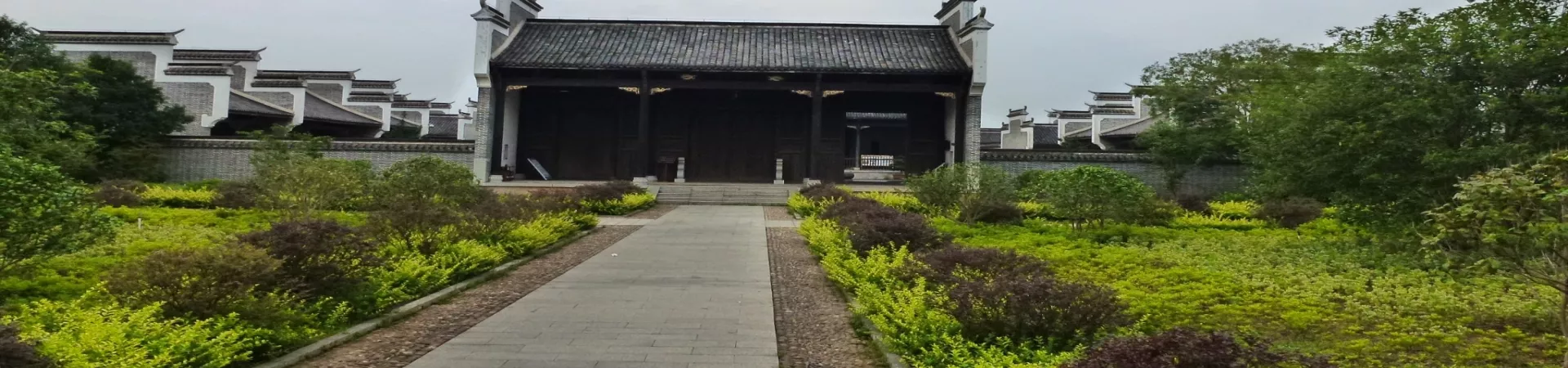
Subtitle: A Pioneering Chapter in China's Revolutionary History
1. Introduction: The Cradle of a Revolutionary Idea
Nestled in Chaling County, Zhuzhou City, Hunan Province, lies a site of profound historical significance: the Chaling County Workers', Peasants', and Soldiers' Government旧址. More than just a historical building, this site represents the genesis of a political concept that would fundamentally shape modern China. It stands as the very first county-level Soviet-style government established during the formative period of the Chinese Communist Revolution and the creation of the Jinggangshan Revolutionary Base Area. This was not merely an administrative office; it was a bold, groundbreaking experiment in grassroots political power, conceived and put into practice under the guidance of Mao Zedong. Visiting this旧址 is to walk through the doorway into a pivotal moment where theory met practice, setting a tangible precedent for the revolutionary political structures that would follow.
2. Historical Context and Founding Significance
2.1. The Jinggangshan Backdrop To understand the importance of the Chaling Government, one must first consider the context of the Jinggangshan Mountains in the late 1920s. Following the failed urban uprisings, Mao Zedong and other revolutionaries turned to the countryside, establishing the Jinggangshan base as a rural sanctuary for the Red Army. Here, the strategy of "using the countryside to encircle the cities" began to take form. A stable base area required more than military presence; it needed a functioning, legitimate political authority that could mobilize the local population, manage resources, and implement policies.
2.2. The "Great Attempt" in Chaling It was in this environment that Chaling County became the test case. In late 1927, after the Red Army captured Chaling, the immediate task was to establish a new order. The old feudal and bureaucratic apparatus was dismantled. In its place, the Chaling County Workers', Peasants', and Soldiers' Government was founded. This act was what historians refer to as "the great attempt" of the Jinggangshan Revolutionary Base. It was the first concrete effort to translate the idea of "Soviet" or council-based power—representing the workers, peasants, and soldiers who formed the revolution's backbone—into a practical, governing body at the county level.
2.3. Mao Zedong's Practical Exploration This establishment was a direct manifestation of Mao Zedong's evolving ideas on revolutionary power. He theorized about the viability of "red political power" existing in isolated pockets surrounded by hostile forces. The Chaling government became his primary laboratory for this theory. It was a "bold practice and exploration" in every sense: How to organize elections among the common people? How to integrate representatives from different revolutionary classes? How to administer justice, manage land, and support the front lines? The lessons learned here, from both successes and shortcomings, were invaluable. They provided a working model, a "brilliant example" that demonstrated armed struggle could indeed be paired with political construction. This model of "armed establishment of political power" was subsequently studied and adapted in other base areas, making Chaling a prototype for revolutionary governance.
3. The Site Today: Visiting Practicalities
3.1. Location and Accessibility The旧址 is located in Chaling County, which is part of Zhuzhou City in eastern Hunan Province. It is accessible by road and is often included in historical tours focusing on the Jinggangshan revolutionary trail. Visitors can travel from Zhuzhou city center or from the Jinggangshan area in neighboring Jiangxi Province.
3.2. Opening Hours and Admission The site is open to the public year-round, though operating hours shift slightly with the seasons. * Summer Schedule (June 1 - August 31): Open daily from 08:00 to 17:30. Last admission is at 17:00. * Spring Schedule (March 1 - May 31): Open from 08:00 to 17:30 from Tuesday to Sunday. The last admission is at 17:30. Note that the site operates with full 24-hour access on Mondays during this period, though services may be limited. Admission is priced at 25 RMB per person. It is advisable to confirm the latest hours and any potential closures before your visit.
3.3. Contact Information For inquiries, visitors can contact the site at 0731-25218429.
4. Legacy and Reflection
4.1. Architectural and Exhibitory Features While the original structures have been preserved and restored, the site's power lies less in grand architecture and more in its historical authenticity. The simple rooms, meeting halls, and offices have been converted into exhibition spaces. They display historical documents, photographs, artifacts, and detailed explanations (often with English captions) that narrate the government's short but impactful existence. Dioramas and maps help visualize the political and military situation of the time.
4.2. An Educational Journey A visit to the Chaling旧址 is primarily an educational experience. It moves beyond textbook descriptions of the "first red political power" to offer a spatial understanding of that concept. Walking through the corridors and courtyards, one can contemplate the immense challenges faced by the early revolutionaries: building institutions from scratch, under constant military threat, with limited resources. It highlights the pragmatic and adaptive nature of the revolutionary movement in its early rural phase.
4.3. A Cornerstone of Revolutionary Memory In the grand narrative of China's revolution, the Chaling County Government is remembered as a crucial foundational stone. It proved that the revolutionary cause could transition from mobile warfare to settled administration. Its establishment marked a point where the Communist movement began to demonstrate its capacity not just to fight, but to govern according to its new ideals. For students of history, politics, or anyone interested in the origins of modern China, this site offers an unvarnished look at a pioneering experiment that helped define the political trajectory of a nation. It remains a solemn and instructive monument to a pivotal "first step" on the long revolutionary road.