Zhoukou Guandi Temple
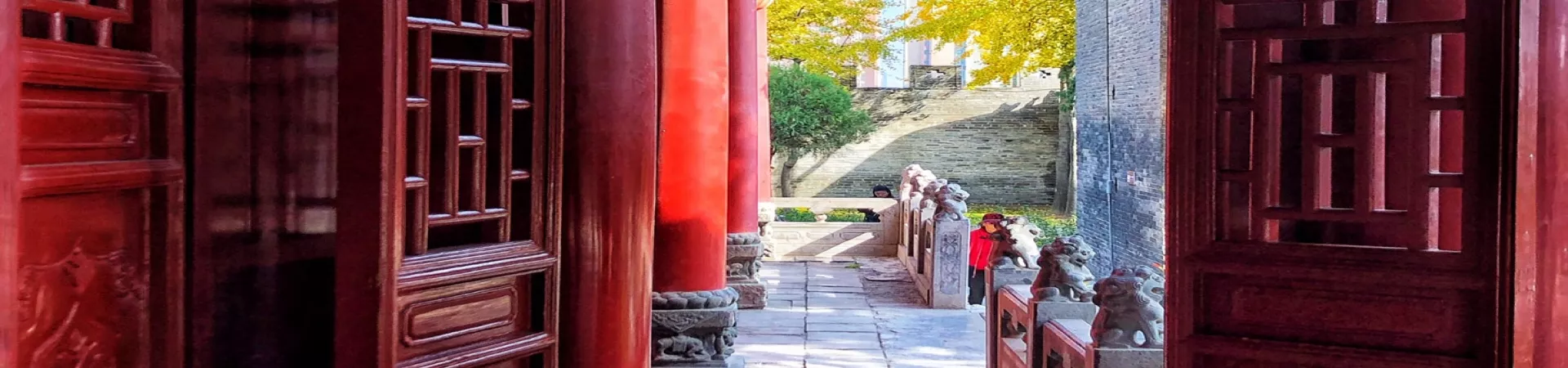
Subtitle: A Masterpiece of Devotion and Craftsmanship: Exploring the Zhoukou Guandi Temple Complex
Introduction: An Imperial-Scale Homage to a Deified Warrior
Nestled in the heart of Zhoukou City, Henan Province, the Zhoukou Guandi Temple stands not merely as a place of worship but as a breathtaking testament to traditional Chinese architecture, artistry, and deep cultural reverence. This temple complex, dedicated to Guandi (deified Guan Yu), the historical general from the Three Kingdoms period revered as a symbol of loyalty, righteousness, and martial prowess, is widely recognized as one of the most significant of its kind in China. It distinguishes itself through its remarkable scale, the exceptional quality of its stone and wood carvings, and its outstanding state of preservation, offering visitors an immersive journey into a world where spiritual devotion is expressed through architectural grandeur and intricate craftsmanship.
Architectural Layout: A Symphony of Symmetry and Hierarchy
The entire complex is designed as a simulation of an imperial palace, characterized by a strict, symmetrical layout along a central north-south axis. This formal arrangement creates a profound sense of order, harmony, and solemn progression, guiding visitors from the secular world into the sacred precincts.
2.1 The Central Axis: The Path of Reverence The core spiritual and architectural journey unfolds along the main axis. Visitors commence their exploration at the Shanmen (Mountain Gate), the formal entrance that marks the transition into the temple grounds. Immediately striking are the towering Iron Flagpoles that flank the gate, intricate cast-iron columns that speak to the temple's historical importance and the metallurgical skills of its creators. Proceeding north, one encounters the Xiangdian (Offering Hall), followed by the architectural and spiritual heart of the complex—the Dadian (Main Hall). This hall, the most elevated and ornate structure, houses the primary statue of Guandi and is the focal point for major ceremonies. Beyond it lies the Baidian (Worship Pavilion), a space for prayer and reflection. The axis culminates at the Chunqiu Ge (Spring and Autumn Pavilion), a two-story structure often associated with Guan Yu's legendary devotion to studying the historical classic "Spring and Autumn Annals."
2.2 The Theatrical and Ceremonial Spaces Integral to the temple's community function is the Xilou (Opera Tower), strategically facing the main hall across a courtyard. This stage was used for performing operas, often with themes from the Romance of the Three Kingdoms, both to entertain and to honor the deity. Flanking the central courtyard, the East and West Viewing Lou provided designated spaces for audiences to watch these performances.
A Pantheon in Miniature: The Auxiliary Halls and Courtyards
The Zhoukou Guandi Temple complex extends beyond the worship of a single figure, embodying the inclusive nature of Chinese folk belief. The auxiliary halls surrounding the main axis are dedicated to a diverse array of deities, each overseeing different aspects of life.
3.1 The Front Courtyard: Deities of Household and Prosperity The front section of the temple features symmetrical halls that create a balanced, welcoming atmosphere. On the eastern side, the Yaowang Dian (Medicine King Hall) and Zaojun Dian (Kitchen God Hall) share the space with the East Gallery Rooms. Opposite them, on the western side, are the Caishen Dian (God of Wealth Hall) and Jiuxian Dian (Wine Immortal Hall), accompanied by the West Gallery Rooms. This arrangement highlights the people's prayers for health, domestic harmony, prosperity, and communal joy.
3.2 The Middle and Side Courtyards: A Broader Spiritual Realm The middle courtyard is framed by the East and West Wu Halls, which often served as supplementary exhibition or ceremonial spaces. Extending to the eastern periphery of the complex are three halls dedicated to more specialized protector figures: the Laojun Dian (dedicated to Laozi, founder of Taoism), the Mawang Dian (Horse King Hall), crucial in an agrarian society, and the Wenshen Dian (Plague God Hall), reflecting historical concerns with disease. In contrast, the West Courtyard was dedicated to practical needs, housing Monks' Quarters and Guest Rooms for temple residents and visiting pilgrims.
The Crown Jewels: Stone and Wood Carvings
While the layout is impressive, the true soul of the Zhoukou Guandi Temple lies in its decorative artistry. It is celebrated nationwide for possessing the highest artistic value in both stone and wood carving among all Guandi temples.
4.1 Narrative in Stone: Gate Pillars, Bas-Reliefs, and Sculptures The stonework throughout the complex is extraordinary. The gate pillars, plinths, and balustrades are adorned with elaborate bas-reliefs and fully sculpted figures. These carvings depict a rich tapestry of scenes: mythological creatures like dragons and phoenixes symbolizing power and auspiciousness; scenes from Chinese folklore; and, most prominently, episodes from the life and battles of Guan Yu himself. Each panel is a masterclass in depth, texture, and narrative clarity, with details that reward close inspection.
4.2 The Flourish of Wood: Beams, Brackets, and Eaves The wood carving complements the stone in its lavishness and skill. The dougong bracket sets—the complex wooden corbels that support the sweeping roofs—are not only structural marvels but also canvases for intricate floral, geometric, and figurative carvings. The beams, lintels, and especially the undersides of eaves are often covered with meticulously carved panels featuring landscapes, symbolic animals, and intricate patterns. The wood, often painted or gilded, creates a warm, luminous counterpoint to the cool, grey stone, showcasing the unparalleled craftsmanship of the artisans.
Visitor Information
For those planning a visit, the temple is accessible throughout the year. The opening hours are from 8:30 AM to 5:00 PM daily, with the last admission at 4:30 PM. The standard admission fee is 25 RMB per person. For any inquiries, the temple can be contacted via telephone at 0394-8592826 or 0394-8582826.