Yuan's Former Residence
Subtitle: A Journey Through History: Exploring the Birthplace of a Controversial Figure
1. Introduction: The Enigmatic Legacy of Yuan Shikai
Nestled within the city of Zhoukou, in China's Henan province, lies a complex and imposing architectural relic that whispers tales of ambition, power, and a pivotal turning point in modern Chinese history. This is the Yuan Shikai Old Residence, the birthplace and ancestral home of one of the most significant and controversial figures of the late 19th and early 20th centuries: Yuan Shikai. More than just a collection of buildings, the old residence serves as a tangible portal into the life of the man who rose from a military commander in the Qing Dynasty to become the first formal President of the Republic of China, and whose actions profoundly shaped the nation's destiny. A visit here is not merely an architectural tour but an engagement with the layered and often contradictory narrative of China's transition from empire to republic.
2. Historical Context and Construction: A Fortified Family Seat
The story of the residence begins not with Yuan Shikai himself, but with the ambitions of his family clan. In the seventh year of the Qing Emperor Xianfeng's reign (1857), the Yuan family, seeking a propitious site to establish a powerful and enduring base, identified the area known as Yuanzhai (Yuan Fortress) as an ideal "feng shui" treasure land. They invested substantial resources to purchase the land and embarked on an ambitious construction project. Completed three years later in 1860, the complex was designed to be both a luxurious dwelling and a formidable stronghold, reflecting the turbulent times of the late Qing Dynasty, marked by internal rebellions and social unrest.
2.1. Scale and Defensive Architecture The sheer scale of the project is staggering. The entire compound occupies approximately 270 acres (about 18 hectares), a vast domain that immediately communicates the family's wealth and status. Its most striking external feature is the massive defensive wall, an imposing structure that stretches for approximately 1,800 meters in perimeter and soars to a height of over 10 meters. This was not a mere boundary but a serious fortification. Enhancing its defensive capabilities were six strategically placed artillery towers, offering overlapping fields of fire, and three concentric moats (护城河) that formed daunting watery barriers against any potential assault. This fortified design underscores the period's instability and the family's priority for security and self-preservation.
3. Architectural Layout and Design: A Microcosm of Tradition and Power
Within these formidable walls, the residence unfolds as a magnificent example of late Qing architectural style, incorporating elements from both Ming and Qing traditions while serving the practical and symbolic needs of a prominent family.
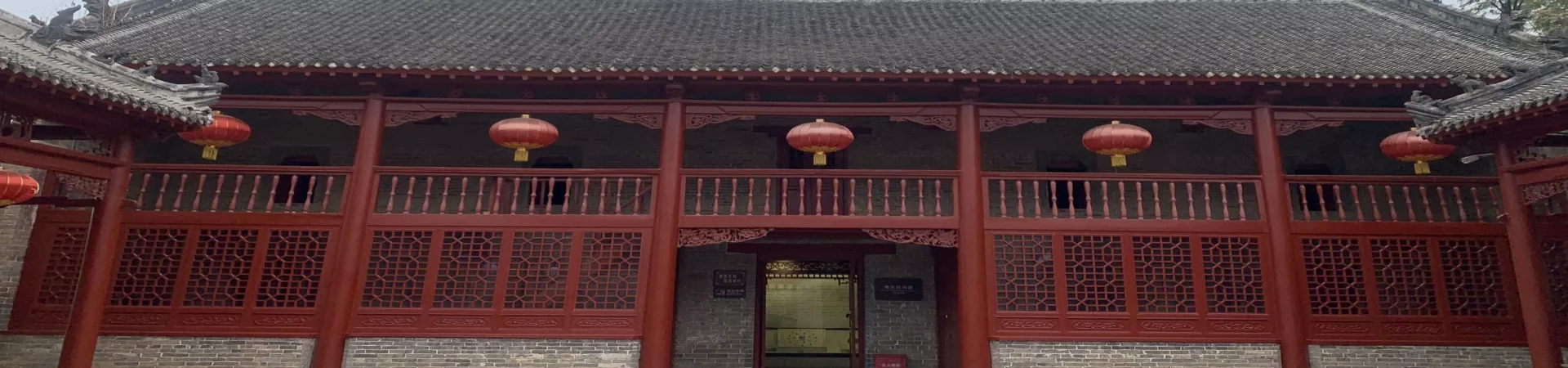
3.1. The Main Complex and Structures The core of the residence consists of 248 rooms distributed across various halls, courtyards, living quarters, and ancillary buildings. The layout typically follows the traditional Chinese siheyuan (courtyard house) principle, with central axis lines organizing major buildings like the main hall, ancestral hall, and reception rooms, while subordinate wings and courtyards branch off for family members, guests, and servants. The architectural details—upturned eaves, intricate wooden carvings, grey brick and tile work, and stone foundations—exemplify the refined craftsmanship of the era. Each courtyard served a specific purpose, from official ceremonies and family gatherings to private study and daily life, creating a self-contained world.
3.2. The Private Garden: An Oasis of Serenity Contrasting sharply with the martial severity of the outer walls is the elegant and beautifully landscaped private garden. This space was designed as a retreat for contemplation and leisure, following the classical Chinese garden philosophy of creating a miniature idealized landscape. It likely featured artificial hills, carefully positioned ponds, winding pathways, pavilions, and a diverse selection of flora. This garden represents the other pillar of elite Chinese culture: the scholarly appreciation for nature, poetry, and art, highlighting the dual identity of the gentry as both military-administrative leaders and cultured literati.
4. Practical Information for Visitors
For those planning a visit to this remarkable historical site, the following practical details are essential.
4.1. Admission Fees Access to the Yuan Shikai Old Residence requires an admission ticket. The current standard ticket price is set at 25 Chinese Yuan (RMB). It is always advisable to check for any potential updates regarding pricing, discounted rates for students, seniors, or children, or special combined tickets before your visit, either through official tourism channels or upon arrival.
4.2. Operating Hours The residence is open to the public throughout the year. The general operating hours are from 8:30 in the morning until 17:00 in the afternoon. These hours apply from Monday through Sunday, across all seasons (January 1st to December 31st). As with many cultural sites in China, it is prudent to arrive well before closing time to ensure a complete and unhurried exploration of the extensive compound.
4.3. Navigating the Experience Given the historical complexity of the figure associated with the site, visitors are encouraged to approach the residence with a mindset geared towards understanding rather than simple judgment. The architecture itself tells a story of family, power, and historical context. While on-site information may provide basic facts, supplementing the visit with prior knowledge about the late Qing Dynasty, the Xinhai Revolution, and Yuan Shikai's multifaceted role will significantly deepen the experience. The contrast between the fortified exterior and the cultivated interior spaces offers a powerful visual metaphor for the era's tensions and the personal complexities of its key actors. Walking through its courtyards and halls, one walks through the physical stage of a crucial chapter in China's modern formation.