Luyi Taiqing Palace
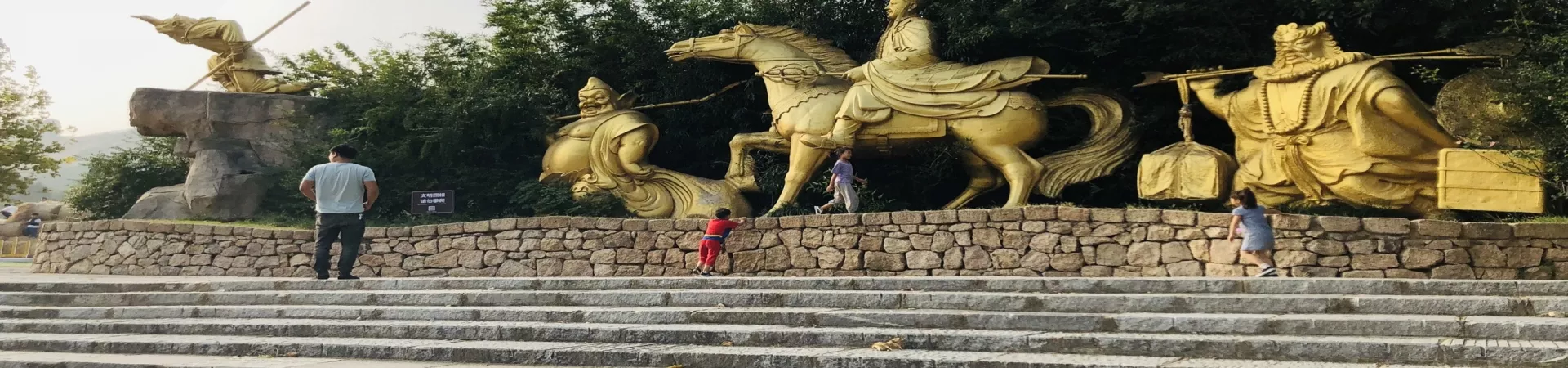
Subtitle: A Pilgrimage to the Birthplace of Laozi, Founder of Taoism
1. Introduction: The Cradle of a Philosophy
Nestled approximately 5 kilometers east of Luyi County's town center in Henan Province lies the Taiqing Palace, a site of profound historical and spiritual significance. This hallowed ground is recognized as the birthplace of Laozi, the revered ancient philosopher and foundational figure of Taoism. Known in antiquity as Lixiang Qurenli, this very land, now part of Taiqinggong Township, witnessed the arrival of Li Er (courtesy name Boyang, posthumous title Dan) during the turbulent twilight of the Spring and Autumn period. The name "Taiqing" itself, meaning "Grand Clarity" or "Supreme Purity," holds deep cosmological meaning in Taoist thought, representing the highest realm of heaven, the dwelling place of the divine. It is a fitting appellation for a palace complex dedicated to the venerated sage whose teachings on the Dao (the Way), wu wei (non-action), and natural harmony have resonated for millennia.
2. Historical and Cultural Significance
2.1. Laozi and the Dao De Jing The paramount importance of Taiqing Palace stems intrinsically from its connection to Laozi. While historical details of his life are interwoven with legend, this site is traditionally and culturally embraced as his origin. It was here, according to tradition, that the sage whose insights would shape Chinese thought was born. His legacy, the seminal text Dao De Jing (Tao Te Ching), a concise yet infinitely profound compilation of 81 verses, was composed as he departed westward. This text laid the philosophical groundwork for Taoism, influencing not only religion but also Chinese aesthetics, medicine, governance, and martial arts. Visiting Taiqing Palace is, therefore, a journey to the very source of this influential worldview.
2.2. Architectural and Religious Heritage While the current structures largely date from later periods, notably Ming and Qing dynasty reconstructions, they stand on sacred ground with a continuous history of worship. The palace complex served as a major center for Taoist ritual and pilgrimage for centuries. The architecture, with its traditional Chinese palatial layout, grand halls, and serene courtyards, reflects the solemnity and spiritual aspirations of Taoist practice. It embodies the physical manifestation of reverence for Laozi, transforming a place of birth into a perpetual sanctuary for contemplation and homage.
3. Practical Visitor Information
3.1. Location and Transportation Taiqing Palace is situated in Taiqinggong Township, Luyi County, Zhoukou City, Henan Province. Potential visitors should note that public transportation links to the site are limited and not highly developed. * Recommended Option: Driving yourself offers the greatest flexibility. * Local Alternative: For those arriving by bus or train to Luyi county town, hiring a local three-wheeled motor vehicle (sanlunche) is a common and practical way to reach the palace.
3.2. Admission and Opening Hours * Admission Fee: The standard entrance ticket is priced at 60 RMB per person. * Operating Schedule: Opening hours vary seasonally to accommodate daylight changes. * Summer Season (June 1 - August 31): 08:00 - 18:00 (last admission at 17:30). * Winter Season (December 1 - February 28/29): 08:00 - 17:00 (last admission at 16:30). It is always advisable to confirm the latest timings before your visit, as schedules can be subject to change.
4. The Visitor Experience
4.1. Exploring the Complex A visit typically requires 1 to 3 hours, allowing time to appreciate the site without rush. Walking through the gates, visitors leave the mundane world behind and enter a space dedicated to philosophical and spiritual heritage. The central axis often features main halls housing statues of Laozi and other Taoist deities, where the air may carry the scent of incense. Steles (stone tablets) inscribed with classical texts, ancient cypress trees, and quiet gardens contribute to an atmosphere of timelessness and reflection.
4.2. A Journey of Reflection More than just a historical monument, Taiqing Palace offers a tangible connection to Laozi's teachings. The environment encourages visitors to ponder the principles of the Dao De Jing—simplicity, humility, and alignment with the natural order. Whether one is a student of philosophy, a Taoist practitioner, or a culturally curious traveler, the site provides a unique opportunity to stand at the legendary beginning of a great intellectual and spiritual tradition. The experience is one of quiet immersion, inviting personal contemplation on the enduring ideas born in this corner of China over two thousand years ago.
Information last updated: August 9, 2023.