Tianluokeng tulou cluster
Subtitle: A Journey Through Time and Architecture: Unveiling the Tulou Clusters of Tianluokeng
1. An Iconic Silhouette: The "Four Dishes and One Soup" Nestled within the lush, rolling hills of Zhangzhou, in China's Fujian province, lies one of the most iconic and photographed scenes in all of traditional Chinese vernacular architecture: the Tianluokeng Tulou Cluster. This ensemble of five monumental earthen buildings presents a breathtaking and almost whimsical layout: four circular structures gracefully encircling a single square one in the center. This distinctive arrangement has affectionately earned the cluster the nickname "Si Cai Yi Tang" or "Four Dishes and One Soup," a testament to its unique and harmonious composition. The poetic beauty of Tianluokeng is not lost on scholars; the renowned Chinese architect and poet, Wu Liangyong, once captured its essence in verse: "Looking down, it resembles a blossoming flower; from the side, it evokes the majesty of the Potala Palace." This description perfectly encapsulates the cluster's dual charm—its delicate, organic pattern from above and its formidable, fortress-like grandeur when viewed from the slopes.
2. A 360-Degree Spectacle: Perspectives of Tianluokeng The true magic of Tianluokeng lies in the multiplicity of experiences it offers. Unlike many historical sites best viewed from a single vantage point, Tianluokeng invites exploration from every angle, each revealing a different facet of its character. The play of perspectives is a fundamental part of the visit, making it a truly interactive encounter with living history.
2.1. The Breathtaking Vista: The Mountain Viewing Platform The most classic and essential perspective is undoubtedly the panoramic bird's-eye view. A short drive or walk up the winding mountain road leads to the primary viewing platform. Standing here, visitors are rewarded with the postcard-perfect, full panorama of the "Four Dishes and One Soup." From this elevation, the geometric precision and symbiotic relationship between the buildings are fully apparent. The tiled roofs, the concentric circles, and the central square form a captivating pattern against the backdrop of terraced tea fields and dense forests, especially enchanting at sunrise or sunset when the light paints the earthy walls in warm hues.
2.2. Immersion and Scale: The Eye-Level Approach Descending from the platform to enter the village itself shifts the experience from observation to immersion. Walking on the ancient stone paths between these towering structures allows one to appreciate their sheer scale and defensive might. The weathered, windowless outer walls, some over a meter thick, speak of a bygone era where these were fortified community homes. Peering through a main gateway offers a glimpse into a completely different world—a bustling, inward-focused communal life.
2.3. The Upward Gaze: Architectural Grandeur from Below Finally, standing at the base of a tulou and looking upwards inspires awe. The sheer verticality of the multi-storied facades, with their rows of wooden balconies and uniform windows under the sweeping, overhanging roofs, highlights the ingenious and monumental nature of Hakka engineering. This angle truly reinforces why these structures are often likened to mountainous castles or monumental arenas.
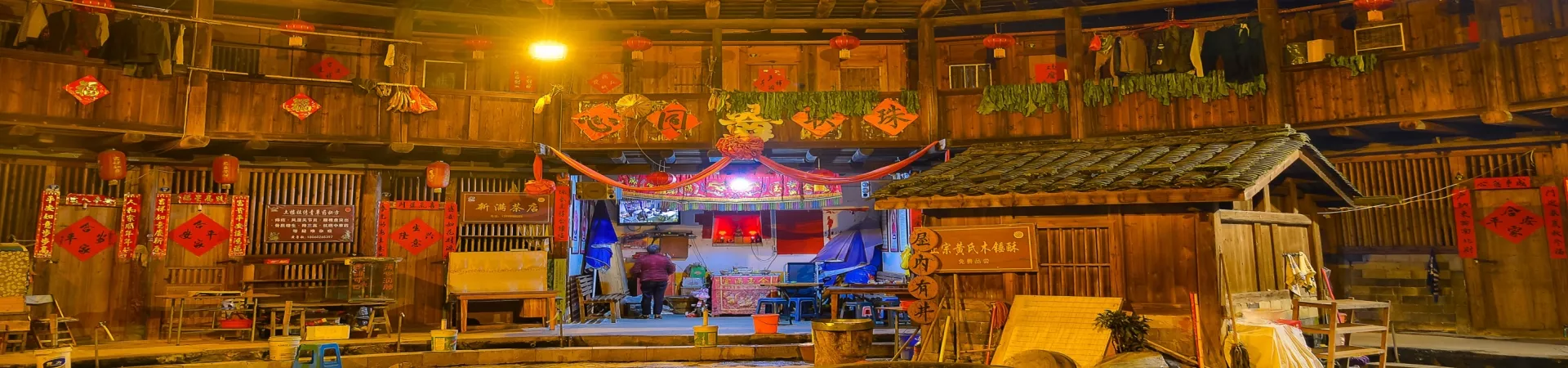
3. Life Within the Walls: The Interior Experience Crossing the threshold of any of the Tianluokeng tulous transports visitors from the 21st century into a unique social and architectural space. Built by the Hakka people between the 15th and 20th centuries, each tulou was designed as a self-contained vertical village, housing up to 80 families of the same clan. The interior is organized around a vast, open central courtyard, which served as the communal heart for gatherings, ceremonies, and daily chores.
3.1. The Evolving Courtyard: Commerce and Culture Today, the ground floors of most tulous in Tianluokeng have adapted to modern times. The once purely functional spaces along the inner perimeter are now often vibrant with small stalls and shops. Visitors can browse for local handicrafts, sample Fujian teas (like the famous Tieguanyin), purchase dried mushrooms and herbs, or savor homemade snacks. While this commercial activity marks an evolution from the past, it also provides a lively atmosphere and a chance to interact with resident families.
3.2. A Night in History: Overnight Stays For a deeper experience, some families offer simple accommodations on the upper floors. Spending a night inside a tulou is an unforgettable opportunity. Guests can sleep in a traditional wooden room, listen to the echoes of the courtyard at night, and witness the quiet morning routines. It’s a chance to feel the enduring spirit of these communal homes long after the day-trippers have departed. The accommodations are basic, prioritizing authenticity over luxury, offering a genuine connection to the history of the building.
4. Practical Information for Your Visit To plan your exploration of Tianluokeng effectively, please note the following practical details.
4.1. Admission Fees: * Standard Ticket: 90 RMB per adult. * Concession Ticket: 45 RMB for students (with valid ID), teachers, children, and seniors. * Free Admission: Individuals aged 70 years and above.
4.2. Opening Hours: The site is open daily from 08:00 to 17:00. The last entry is typically one hour before closing. The morning light is ideal for photography from the upper platform, while the late afternoon offers softer shadows and a glimpse of local life as residents return from the fields.
4.3. Suggested Duration: A comprehensive visit to appreciate both the panoramic views and the interior of several tulous requires approximately 2 to 3 hours. Those opting for an overnight stay will, of course, have a more extended and immersive experience.
4.4. Contact: For general inquiries, you may contact the site management at 400-888-5111.