Yunshui Folk Town - Huaiyuan Tower
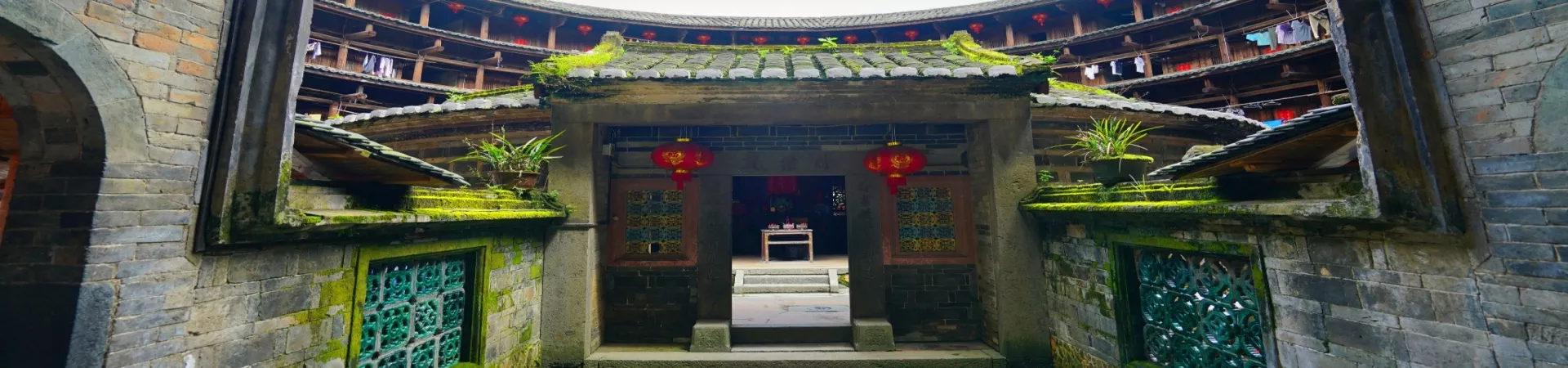
Subtitle: A Masterpiece of Hakka Circular Architecture and Scholarly Heritage
1. Introduction: The Crown Jewel of Yunshuiyao
Nestled within the serene, ancient village of Yunshuiyao in Zhangzhou, Fujian province, stands Huaiyuan Lou, a structure that transcends mere architecture to become a profound cultural statement. Constructed between 1905 and 1909, this magnificent tulou (earthen building) is universally acclaimed as the most exquisitely crafted and best-preserved double-ring circular tulou in existence. Its exceptional historical and artistic value was formally recognized in May 2006 when it was designated as a Major National Historical and Cultural Site. More than just a defensive communal residence, Huaiyuan Lou embodies the Hakka people's philosophies on family, education, and ambition, encapsulated within its unique circular walls.
2. Architectural Grandeur and Symbolic Meaning
2.1. The Double-Ring Design Huaiyuan Lou presents a stunning architectural form: two concentric circular rings. The outer ring is a four-story rammed earth structure, standing over 13 meters tall, with a diameter of 38 meters. It contains 34 rooms on each floor, designed for living quarters. Inside this protective outer ring lies a lower, single-story inner ring, creating a unique "circle within a circle" layout. This ingenious design maximized living space and defensive capabilities but also results in a softly lit, introspective interior atmosphere, focusing life inward toward the central courtyard.
2.2. The Three Meanings of "Huaiyuan" The building's name, "Huaiyuan Lou," carries three layers of meaningful interpretation, each reflecting core Hakka values. Firstly, it means "Cherishing Those Far Away," expressing the clan's enduring remembrance of distant relatives and ancestors. Secondly, it denotes "From the Distant Land of 'Huai'," indicating the ancestral origins of the Jian clan who built it, tracing their roots back to the Huai region of Henan Province. Lastly, and perhaps most importantly, it serves as an admonition: "To Cherish Far-Reaching Ambitions," a constant reminder to the descendants to nurture lofty aspirations and broad minds.
3. The Spiritual and Scholarly Heart: "Si Shi Shi"
3.1. Function and Significance The most captivating feature within Huaiyuan Lou's central courtyard is its ancestral hall, uniquely named "Si Shi Shi" ("This Is the Room"). This structure was the spiritual and intellectual core of the clan, functioning simultaneously as a place for ancestral worship and a schoolhouse for the family's children. This dual purpose highlights the inseparable Hakka ethos that venerates ancestors while placing supreme importance on education as the pathway to a better future.
3.2. Architectural and Artistic Details The "Si Shi Shi" is a refined and elegant structure built in the "Four Beams, Three Bays" style, covering an area of 190 square meters. Its interior is a testament to classical Chinese artistry, featuring intricately carved beams, painted pillars, and antique decorations that feel both ornate and naturally graceful. The room is permeated with a profound scholarly spirit, adorned with poetic couplets and horizontal inscribed boards.
3.3. Inscriptions of Wisdom Above the main hall hangs the central horizontal plaque bearing the bold, powerful characters "Si Shi Shi" in running script. Flanking it on pillars is a couplet that encapsulates the room's purpose: "This hall is hardly built for leisure and sightseeing, but to encourage study which opens ears and eyes" / "Why嫌弃嫌 this room be narrow? Only the cultivation of virtue and the teaching of children are contemplated." Inside the upper hall, further couplets reinforce this creed: "Studying is the foremost good under heaven and the root of worldly wealth" / "The world's good deeds are loyalty and filial piety; the world's best plans are reading and farming." This philosophy extends even to the outer gate tower, where another couplet reads: "Reading and teaching sons prolongs strategic plans; Courtesy and humility passed through the family extend blessings long," topped with the horizontal inscription "Hall of Poetry and Propriety."
4. Practical Visitor Information
4.1. Location and Access Huaiyuan Lou is located within the Yunshuiyao Ancient Village scenic area in Nanjing County, Zhangzhou. The most common access route involves taking a high-speed train to Nanjing Railway Station. From the Nanjing Railway Station bus stop, visitors can take public bus Nanjing Route 6 to the Yunshuiyao bus stop. From there, it is approximately a 2.3-kilometer walk to reach Huaiyuan Lou itself, a pleasant stroll through the ancient village paths.
4.2. Admission and Opening Hours Admission to Huaiyuan Lou is included in the general entrance ticket for the Yunshuiyao Scenic Area. The building is open to visitors daily from 8:00 AM to 6:00 PM, with the last admission at 6:00 PM. This schedule is maintained throughout the year, from January 1st to December 31st.
4.3. Suggested Visit Duration To fully appreciate the architectural details, understand the cultural symbolism, and absorb the atmosphere of this scholarly hall, a visit of 1 to 3 hours is recommended. This allows sufficient time to explore both the exterior rings, the central courtyard, and the "Si Shi Shi" ancestral hall in detail. The interplay of light and shadow within the circular compound and the profound messages of its inscriptions invite quiet contemplation, making it more than just a quick photographic stop.