Tulou Complex at Hekeng Village
Subtitle: A Journey Through Time: Exploring the Architectural Marvels and Cultural Tapestry of Hekeng Tulou Cluster
1. Introduction: A Stargazer's Village Nestled in the Mountains
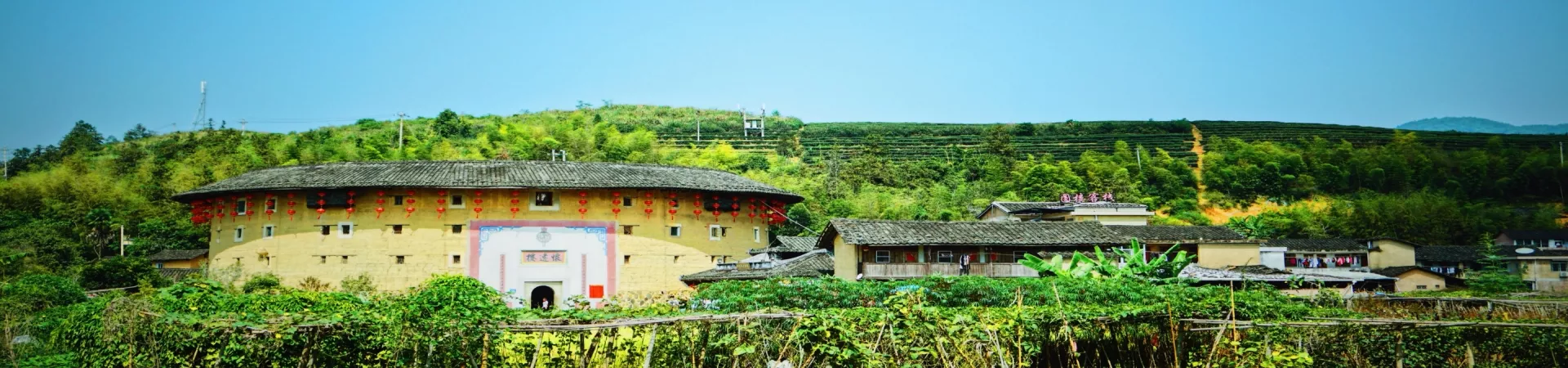
Nestled against the verdant slopes of the Shizi (Lion) Mountain in Zhangzhou, Fujian province, lies the Hekeng Tulou Cluster, a serene and profound testament to the ingenuity of the Hakka people. More than just a collection of ancient buildings, Hekeng is a living village, a historical manuscript written in earth and timber, and a breathtaking astronomical diagram etched into the landscape. Comprising fifteen distinct earthen structures of varying shapes and sizes, this cluster offers an unparalleled glimpse into a unique communal lifestyle that has endured for centuries. The village's layout and its harmonious integration with the natural environment reveal a deep understanding of feng shui, defense, and social cohesion, making a visit here a journey into the philosophical and practical wisdom of ancient China.
2. The Heart of Hekeng: Architectural Symphony and the "Big Dipper"
2.1. A Diverse Ensemble of Earthen Dwellings The fifteen tulous of Hekeng form a captivating architectural gallery. Unlike some clusters dominated by a single shape, Hekeng showcases a remarkable variety. Here, you will find the imposing circular yuanlou, with their vast, inward-facing courtyards; the stately rectangular fanglou; and the elegant, rare oval-shaped structures. This diversity reflects different construction periods, family clan sizes, and adaptations to the local terrain. Walking through the village, you can observe the distinct features of each: the thick, windowless lower walls made of compacted earth, stone, and bamboo designed for defense; the symmetrical wooden interiors with rooms stacked three to four stories high; and the central ancestral hall, the spiritual and social heart of each tulou.
2.2. Decoding the Celestial Pattern: The "Big Dipper" from Above The true magic of Hekeng's layout reveals itself from a vantage point. The village is famously arranged to mirror the seven stars of the Big Dipper (北斗七星, Běi Dǒu Qī Xīng). This is not immediately apparent from within the winding village paths. To witness this celestial alignment, one must take a short journey to the dedicated Shizi Mountain Observation Deck opposite the village.
3. The Panoramic Vista: Shizi Mountain Observation Deck
3.1. The Unforgettable Panorama The climb or drive to the Shizi Mountain Observation Deck is rewarded with one of the most iconic views in all the Fujian Tulou regions. From this elevated platform, the entire Hekeng cluster unfolds beneath you like a meticulously crafted model. The arrangement of the major tulous suddenly clarifies, and with a guide's explanation or a discerning eye, the pattern of the Northern Dipper emerges from the landscape. The larger, brighter stars of the asterism are represented by the bigger tulous, creating a stunning fusion of human habitation and cosmic symbolism.
3.2. The "丁" (Dīng) Shaped Waters: Feng Shui in Practice From this same vantage point, another layer of ancient planning becomes visible. Observe the two clear mountain streams that flow through the village. They converge at the foot of the left-side mountain, forming a distinct "丁" (Dīng) shaped water feature. In Chinese geomancy (feng shui), water represents wealth and vitality, and the "丁" shape is a highly auspicious symbol, signifying stability, prosperity, and the addition of male heirs to a family. This intentional geographical feature is considered the feng shui crystallization of Hekeng Village, believed to bless the community with harmony and fortune. The observation deck thus provides not only a photographic opportunity but also a lesson in the profound cultural and philosophical principles that guided the settlement's founders.
4. Practical Visitor Information
4.1. Location and Transportation Hekeng Tulou Cluster is located in Nanjing County, Zhangzhou City. The most common access point is via the Nanjing Railway Station. * By Tourist Bus: Upon exiting the station, you can board a direct tourist bus. These depart approximately every hour, cost around 20 RMB per person, and the journey takes about 1.5 hours. * By Special Line Bus: Alternatively, take a local taxi or bus to the Nanjing Bus Station and transfer to a dedicated tulou line bus, also priced around 20 RMB. * By Private Car/Taxi: For greater flexibility and time efficiency, hiring a private car or taxi is recommended. The cost is typically around 40 RMB per person for a shared vehicle, depending on negotiation and group size.
4.2. Admission and Opening Hours * Ticket: Admission to the Hekeng Tulou Cluster is approximately 398.00 RMB. This fee often includes access to the village and the Shizi Mountain Observation Deck, and may be part of a combined ticket for multiple tulou sites in the area. It is advisable to confirm the latest pricing and inclusions at the ticket office or via official channels before your visit. * Opening Hours: The village is accessible 24 hours a day, every day of the year. However, the best lighting for photography from the observation deck is during daylight hours, and access to the interior of specific tulou buildings may be limited in the early morning or late evening when families are resting.
4.3. Suggested Duration and Tips A comprehensive visit to Hekeng requires 1 to 3 hours. This allows sufficient time to walk from the village entrance, explore several key tulous from the inside, interact with residents, and then travel to the observation deck (usually a short drive or a 20-30 minute walk) to absorb the panoramic view. For a more immersive experience, consider visiting during the early morning to see the village awaken or in the late afternoon when the setting sun casts a warm glow on the earthen walls. Wearing comfortable walking shoes is essential, as the village paths are made of stone and can be uneven.