Taierzhuang War History Exhibition Hall
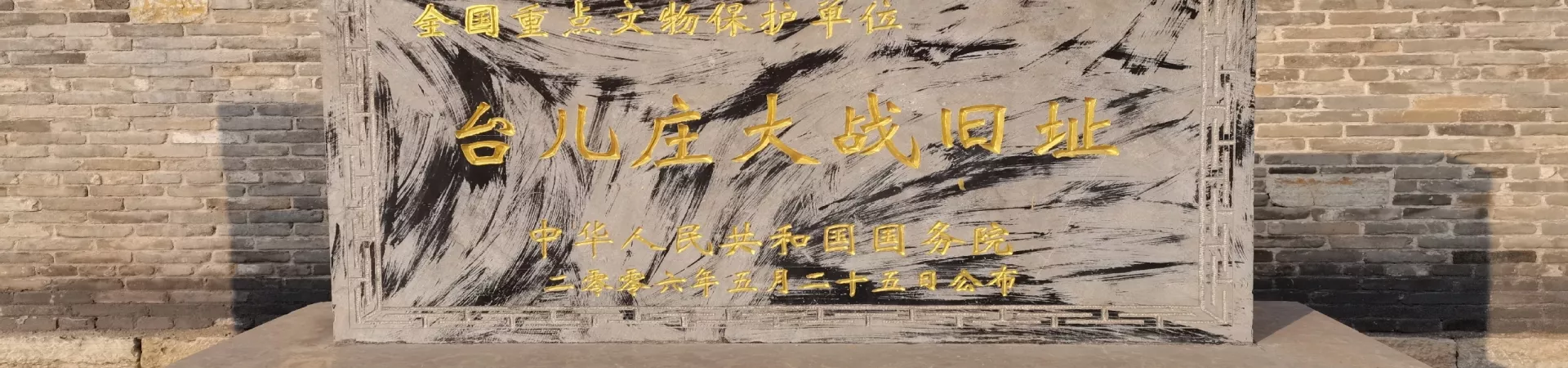
Subtitle: A Journey Through History: Exploring the Tai'erzhuang Battle History Exhibition Hall
1. Introduction and Significance
Nestled on the northern bank of the ancient Grand Canal in the heart of Tai'erzhuang city, the Tai'erzhuang Battle History Exhibition Hall stands as a profound testament to courage, sacrifice, and national resilience. Officially approved by the Shandong Provincial Department of Civil Affairs, this institution serves a multifaceted purpose, seamlessly integrating as a site for remembrance, an immersive educational experience, and a scenic destination. Its core mission is to function as a pivotal base for patriotism, revolutionary tradition, and national defense education. The hall is dedicated to preserving the memory of pivotal historical conflicts that shaped the region, with a particular emphasis on honoring the great victories achieved by the people under the leadership of the Communist Party of China. A visit here is not merely a tour but an evocative journey into the soul of a heroic land, where the echoes of the past are made vividly present through comprehensive exhibits and solemn memorials.
2. Architectural Layout and Key Components
The exhibition hall complex is thoughtfully organized into five distinct sections, each contributing to a holistic understanding of its themes.
2.1. The Heroic Square Spanning an area of 3,000 square meters, the Heroic Square forms the grand entrance and the symbolic heart of the complex. Its most dominant feature is the majestic Revolutionary Martyrs Monument, soaring 31.8 meters into the sky. This obelisk is a powerful representation of the glorious deeds and immortal contributions of the people's heroes. The monument's facade is inscribed with eight bold red characters in Chairman Mao Zedong's calligraphic style, reading "Eternal Glory to the Revolutionary Martyrs." The reverse side features a commemorative stele text composed by General Zhang Zhen, former Vice Chairman of the Central Military Commission. The square provides a vast, contemplative space for ceremonial gatherings and personal reflection.
2.2. The Battle History Exhibition Hall This is the central narrative core of the complex. Inside, visitors encounter a rich and detailed chronicle of the battles that have defined Tai'erzhuang across different historical periods. The exhibition employs a diverse array of methods to bring history to life: * Historical Artifacts and Documents: Extensive use of authentic, well-researched historical materials, documents, and relics provides a factual and tangible connection to the past. * Modern Multimedia and Lighting Technology: Advanced photoelectric technologies, including interactive displays, soundscapes, and lighting effects, create dynamic and engaging presentations. * Dioramas and Scale Models: Intricately detailed miniature landscapes and dioramas offer three-dimensional, panoramic views of key ancient and modern battle scenes, allowing visitors to grasp the topography and scale of the conflicts.
2.3. The National Defense Education Garden Adjacent to the main hall, this garden serves as an open-air extension of the educational mission. It is designed to promote awareness and understanding of national defense concepts in a more relaxed, natural setting. The space likely features informational plaques, displays of historical military equipment (or replicas), and thematic landscaping that encourages visitors to contemplate the importance of peace and security.
2.4. The Zhuangguo Garden and Audio-Visual Theater * Zhuangguo Garden: This garden area is dedicated to the theme of national rejuvenation and strength ("Zhuangguo"). It symbolizes the prosperous and powerful nation built upon the sacrifices of the past, offering a serene environment for visitors to reflect on the journey from war to peace and development. * Audio-Visual Theater: This facility screens documentary films and historical footage related to the Tai'erzhuang battles and broader revolutionary history. These screenings provide a powerful, narrative-driven complement to the static exhibits, offering emotional depth and contextual storytelling.
3. Practical Visitor Information
3.1. Opening Hours * Monday to Friday: 09:00 - 17:00 (Last admission at 17:00). * Saturday, Sunday, and Public Holidays: Open all day. It is advisable to confirm the specific weekend hours locally before planning a visit.
3.2. Suggested Duration A comprehensive visit to explore all sections of the exhibition hall complex typically requires 1 to 3 hours, depending on individual interest and pace.
3.3. Contact Details * Telephone: +86 632 6681090
4. Transportation Guide
4.1. External Transportation (Getting to Zaozhuang/Tai'erzhuang) * By High-Speed Rail (HSR): Zaozhuang Station is well-connected via the Beijing-Shanghai High-Speed Railway. Direct HSR services link it to major hubs including Beijing South, Shanghai Hongqiao, Tianjin West, Nanjing South, Jinan West, Qingdao, Hangzhou, and Xuzhou East. Zaozhuang West Station offers conventional train services connecting to various provincial capitals and key cities within and outside Shandong. * By Air: Zaozhuang does not have its own commercial airport. The most convenient options are to fly into one of the nearby regional airports: * Linyi Qiyang Airport (Shandong) * Xuzhou Guanyin International Airport (Jiangsu) * Lianyungang Baitabu Airport (Jiangsu) From these airports, visitors can continue their journey to Tai'erzhuang by intercity bus, train, or taxi. * By Car: Self-driving is a flexible option for visitors with access to a vehicle, utilizing the expressway network connecting to Tai'erzhuang.
4.2. Internal Transportation (Within Tai'erzhuang) * Local Public Bus: The urban public bus system in Tai'erzhuang is an economical way to reach the exhibition hall. The standard fare is 1 RMB per ride. Most buses operate on a self-service, unmanned ticketing system (exact change may be required). It is recommended to check the specific bus routes that stop near the "Tai'erzhuang Zhan Shi Chenlieguan" (Battle History Exhibition Hall) station.