Taierzhuang Ancient Canal
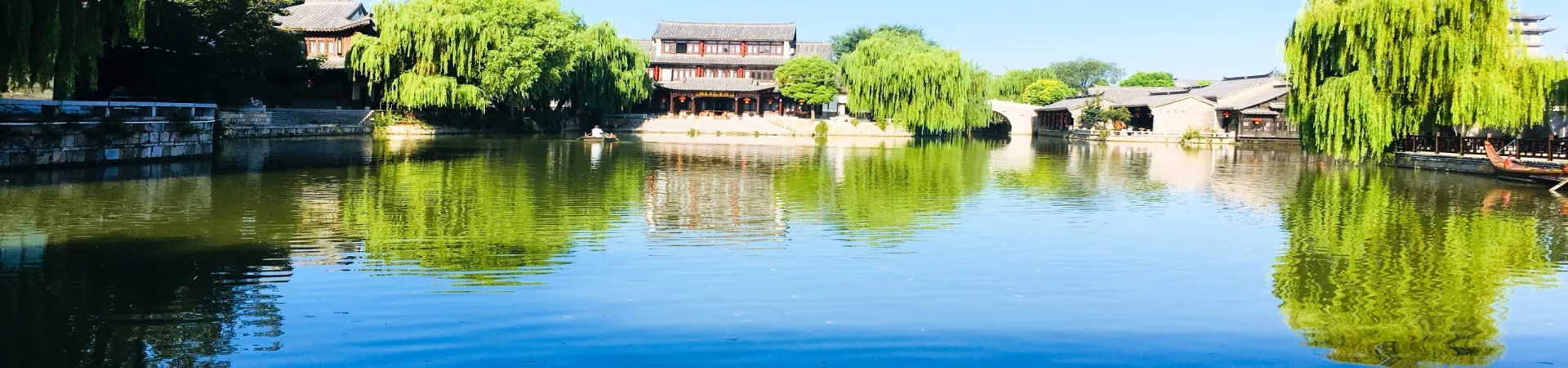
Subtitle: A Journey Through Time Along the Ancient Canals
1. Introduction: The Heartbeat of the Grand Canal
Nestled within Zaozhuang City in Shandong Province, the Tai'erzhuang Ancient Canal section represents a vital and remarkably preserved segment of the UNESCO World Heritage-listed Beijing-Hangzhou Grand Canal. Flowing east-west for approximately 42.5 kilometers, this waterway is far more than a historical relic; it is a living artery of culture and commerce. Its unique topography and enduring legacy have earned it the evocative title "The Living Canal," offering visitors an immersive portal into China's illustrious past, where the bustling energy of a bygone era still resonates along its banks.
2. Historical Significance: From Quiet Village to Thriving Port
2.1. Engineering Marvel and Commercial Catalyst The Tai'erzhuang Canal's historical importance stems directly from its challenging geography. With a significant elevation drop from west to east, this relatively short stretch required an extraordinary feat of hydraulic engineering: the construction of eight sequential lock gates. These locks regulated the water flow and allowed safe passage for vessels but also created inevitable delays.
2.2. Birth of a Bustling Metropolis This bottleneck became the catalyst for profound transformation. As north-south traffic along the Grand Canal converged at Tai'erzhuang, countless ships and junks laden with goods found themselves moored, waiting their turn to pass through the locks. The river became a forest of masts and sails. With journeys interrupted for extended periods, merchants, sailors, and travelers disembarked, flooding into the once-obscure village. Almost overnight, Tai'erzhuang evolved into a renowned hub—a vital "land and water terminal" and a thriving commercial town.
2.3. A Scene of Unparalleled Prosperity The influx of people and wealth sparked a vibrant, round-the-clock economy. Historical records vividly describe a scene of endless streams of merchants, a river aglow with the lights of fishing boats after dark, the sound of music carrying for miles, and markets that remained active long into the night. This period of flourishing activity, captured by the phrase "merchants winding along, at night, a river of fishing lights, songs heard for ten miles, markets never closing," cemented Tai'erzhuang's status as a jewel of the Grand Canal.
3. The Visitor Experience: Stepping into a Living Museum
3.1. A Preserved Qing Dynasty Legacy What sets Tai'erzhuang apart is its exceptional state of preservation. Unlike sections of the Grand Canal that have been modernized or fallen into disrepair, Tai'erzhuang's ancient streets, waterways, and architecture remain largely intact. Recognized by the World Tourism Organization as "the surviving Qing Dynasty cultural heritage" of the Beijing-Hangzhou Grand Canal, the area authentically recreates the atmosphere of the Ming and Qing dynasties. The seamless integration of daily life within this historical setting—where residents go about their business amidst ancient shops and canals—truly makes visitors feel they have stepped back in time.
3.2. Exploring the Water Town The primary way to experience the canal is through the encompassing Tai'erzhuang Ancient City zone. This restored area, built along the canal's banks, features cobblestone lanes, traditional courtyard buildings, stone-arch bridges, and bustling waterfront promenades. A boat ride along the calm canal waters provides a unique, tranquil perspective of the ancient architecture and the daily rhythms of life.
4. Practical Travel Information
4.1. Location and Access Tai'erzhuang is located within Zaozhuang City, Shandong Province. Reaching it involves a combination of transport modes. * By Rail: Zaozhuang is well-connected by high-speed rail (G-trains). Zaozhuang Station services the Beijing-Shanghai high-speed line, with direct links to major cities like Beijing South, Shanghai Hongqiao, Tianjin West, Nanjing South, Jinan West, and Qingdao. Zaozhuang West Station offers conventional train services connecting to various provincial and national capitals. * By Air: As Zaozhuang has no commercial airport, the most convenient options are flying into nearby regional hubs: Linyi Qiyang Airport (Shandong), Xuzhou Guanyin International Airport (Jiangsu), or Lianyungang Baitabu Airport (Jiangsu). From these airports, visitors can continue their journey to Tai'erzhuang via train or long-distance bus. * By Road: Self-driving is a flexible and popular option, with good highway connections to the region.
4.2. Local Transportation Within Tai'erzhuang, local public buses provide basic connectivity with a standard fare of 1 RMB (exact change required for unmanned buses). For exploring the ancient city itself and the canal banks, walking is the most rewarding mode of transport.
4.3. Admission and Hours Access to the Tai'erzhuang Ancient Canal is included within the general admission ticket for the Tai'erzhuang Ancient City scenic area. Visitors must purchase this single ticket to enter the preserved zone where the canal is located. The scenic area, and by extension the canal banks, are officially open to visitors 24 hours a day, every day of the year. However, it is advisable to check for any seasonal variations in ticket booth hours or specific attraction operating times within the ancient city. For any specific inquiries, contact can be made at 0632-6621295. A comprehensive visit to the ancient city and a leisurely exploration of the canal typically requires a minimum of half a day, though many visitors choose to stay longer to experience the enchanting atmosphere at different times of day.