Guanshi Pomegranate Garden
Subtitle: A Journey Through Millennia of Blossoms and Stone: Exploring Zaozhuang's Crown Jewel of Pomegranate Gardens
1. Introduction: The "World's Premier" Pomegranate Realm Nestled on the sun-drenched slopes of the mountainous terrain south of Zaozhuang City and west of Yicheng District in Shandong Province, lies a living tapestry of agricultural heritage and natural splendor—the Zaozhuang Guanshi Pomegranate Garden Ecological and Cultural Tourism Zone. This is not merely an orchard; it is a vast, breathing monument to history, horticulture, and serene beauty. Stretching approximately 22.5 kilometers (45 li) from east to west and 3 kilometers (6 li) from north to south, the garden encompasses a staggering 12,000 acres (roughly 80 square kilometers). Its claim to fame is rooted in four profound superlatives: its ancient history, immense scale, astonishing number of trees, and unparalleled diversity and quality of fruit. Home to over 5.3 million pomegranate trees spanning 48 distinct varieties, this landscape holds the prestigious title of China's largest pomegranate garden, a fact officially certified by the Shanghai Great World Guinness Headquarters, which bestowed upon it the honor of a "Guinness World Record." This accolade solidifies its local moniker, "Guanshi Liuyuan" or "The World's Premier Pomegranate Garden." As a key stop on the renowned "Flower Route" tourist circuit, a provincial-level scenic area, and a national AAA tourist attraction, it offers visitors a comprehensive experience that seamlessly blends natural landscapes, ecological agriculture, folk customs, religious sites, and opportunities for leisure and retreat.
2. A Legacy Carved in Stone and Branch: Historical and Cultural Significance 2.1. Roots in the Han Dynasty The genesis of this pomegranate empire traces back to the reign of Emperor Cheng during the Western Han Dynasty, over two millennia ago. This deep historical lineage means the garden has silently witnessed the rise and fall of dynasties, making it not just a botanical wonder but a cultural relic. The tradition of pomegranate cultivation, introduced along the ancient Silk Road, found a perfect home in Zaozhuang's unique microclimate and rocky soil, initiating a legacy of cultivation that has been lovingly preserved and expanded through generations.
2.2. Cultural Integration: Temples, Tombs, and Folklore The garden is far more than rows of trees. It is a cultural corridor where history and nature converse. * 2.2.1. Qingtan Temple: Tucked within a serene valley, this ancient Buddhist temple is surrounded by ancient pomegranate trees and spectacular rocky outcrops. The harmonious coexistence of vibrant red blossoms or fruits with the temple's tranquil architecture and the gnarled, centuries-old Qingtan (Lacebark Pine) trees creates a profoundly spiritual and picturesque setting. * 2.2.2. Kuang Heng's Tomb: The garden pays homage to Kuang Heng, a famous statesman and scholar from the Western Han Dynasty known for his diligence and the idiom "carving a hole on the wall to borrow light" for studying. His tomb within the grounds adds a layer of historical and intellectual reverence to the visit. * 2.2.3. The Garden within the Garden (Yuanzhongyuan) & Wangyue Pavilion: These sites offer curated and panoramic experiences. The "Garden within the Garden" showcases premium pomegranate varieties and exquisite horticultural artistry, while the Wangyue Pavilion provides a commanding vantage point. From here, visitors are treated to a breathtaking sea of green foliage that, in season, is dotted with fiery red blossoms or heavy, ripening fruit, stretching as far as the eye can see.
3. Planning Your Visit: Practical Information 3.1. Admission and Operating Hours The garden operates on a modular ticketing system, allowing visitors to choose their areas of interest. * General Admission/Scenic Area Pass: Approximately 32 RMB. * Individual Site Tickets: Qingtan Temple scenic area is priced around 80 RMB per person; the Garden within the Garden (Yuanzhongyuan) is 5 RMB; Wangyue Pavilion is 5 RMB per person; and Kuang Heng's Tomb is 2 RMB per person. * Operating Schedule: The garden is open daily from 8:30 AM to 5:00 PM, with last admission at 5:00 PM. This schedule is maintained throughout the year.
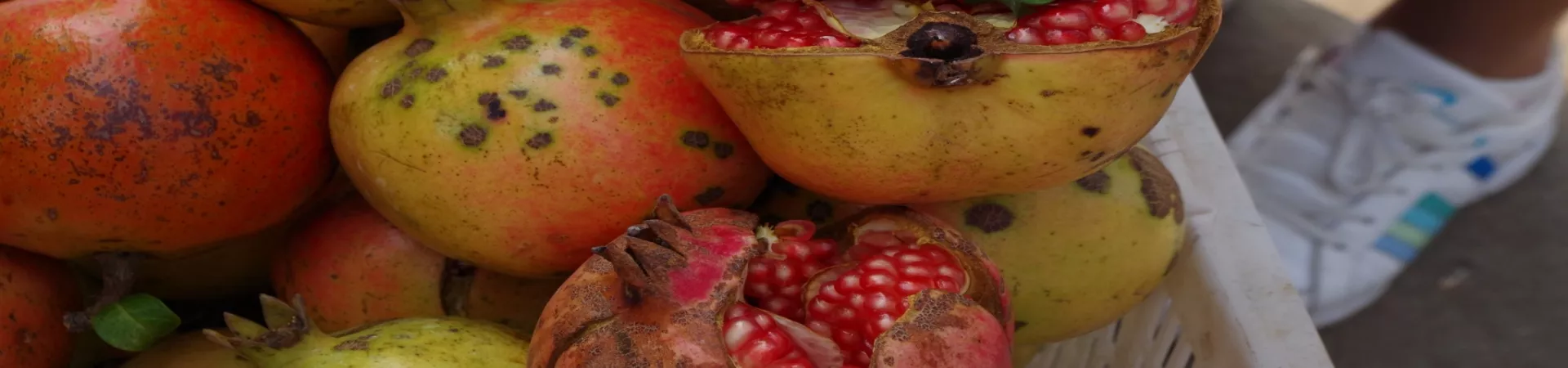
3.2. Optimal Times for Visit The garden presents dramatically different yet equally captivating faces across the seasons. * Late Spring (May-June): This is the peak blooming season. The entire landscape transforms into a breathtaking canvas of intense crimson flowers, creating a visually stunning and fragrant environment perfect for photography and nature walks. * Autumn (September-October): The harvest season arrives. Trees bow under the weight of large, ripe pomegranates with skins ranging from deep red to golden yellow. This period is ideal for fruit picking experiences and tasting the fresh, sweet-tart arils, symbolizing abundance and joy.
4. Accessibility: How to Get There Zaozhuang's Guanshi Pomegranate Garden is accessible via several convenient routes. 4.1. By Public Transport from Zaozhuang City: A dedicated tourist bus line departs from the Sanjiao Huayuan (Triangle Garden) bus hub in downtown Zaozhuang. It travels along Jiefang Road and National Highway 206 directly to the entrance of the Guanshi Pomegranate Garden scenic area. The total distance is 15 kilometers, with buses departing approximately every 15 minutes.
4.2. By Private Vehicle or Long-Distance Bus: * Via Beijing-Fuzhou Expressway (G3): Whether traveling north or south, exit at the "Zaozhuang" interchange. Proceed to Zaozhuang's main bus station, then follow National Highway 206 southwestwards. Clear signage will guide you to the main entrance of the Guanshi Pomegranate Garden. * Via Beijing-Shanghai Expressway (G2): For those coming from the north or south on this route, exit at the "Linyi Tangzhuang" interchange. From there, drive towards Zaozhuang City, connect to National Highway 206 heading south, pass by the Yicheng District bus station, and continue to the garden's entrance.
4.3. Contact Information: For specific inquiries or to confirm details before your visit, you may contact the scenic area administration at: 0632-5760199 or 0632-5760089.