Boat shaped Street
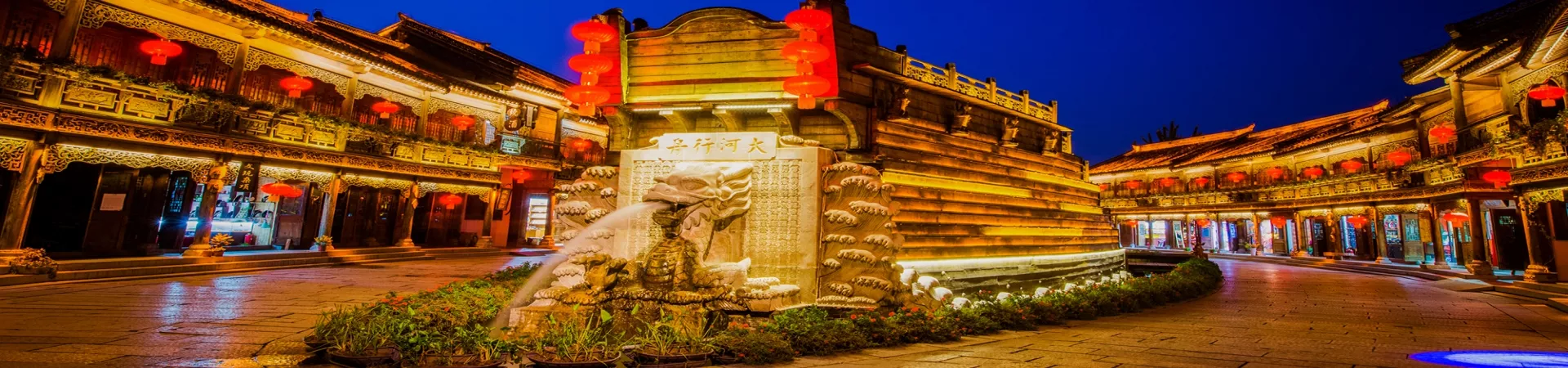
Subtitle: Sailing Through Culture: A Journey into Zaozhuang's Boat-Shaped Street
1. Introduction: An Architectural Marvel on Water
Nestled within the city of Zaozhuang in Shandong Province, China, lies a unique and captivating cultural landmark known as the Boat-Shaped Street, officially designated as the Intangible Cultural Heritage Exhibition Park. This is not merely a street in the conventional sense but a breathtaking architectural spectacle, a monumental artistic installation designed to resemble a giant, ancient vessel perpetually ready to set sail. The entire complex is a profound metaphor, embodying the spirit of "sailing on a great river, with smooth winds and favorable currents," a traditional blessing for success and safe journeys. It stands as a testament to regional craftsmanship, cultural preservation, and imaginative design, offering visitors an immersive experience where architecture, folklore, and living traditions converge on a tranquil body of water.
2. Architectural Grandeur and Symbolism
2.1 The Grand Vessel: Scale and Form The defining feature of the park is its colossal central structure, an awe-inspiring ship-shaped edifice. This architectural wonder stretches an impressive 110 meters in length and reaches a width of 60 meters at its broadest point. It is strategically surrounded by a moat-like body of water, which not only enhances its visual authenticity as a floating ship but also creates a serene, reflective boundary separating the vessel from the everyday world. The clever design, with its sweeping lines and elevated prows, gives a powerful impression of a majestic ship caught in a moment of graceful departure, its sails billowing with an unseen wind. This grand scale immediately establishes the site as a place of significance and wonder.
2.2 Layers of Nautical Motifs: From Macro to Micro The commitment to the nautical theme extends far beyond the overall shape. Upon closer inspection, visitors discover that the Boat-Shaped Street is a fractal homage to waterborne travel. The surfaces of the main structure, the surrounding walkways, and interior spaces are adorned with countless sculptures, carvings, and paintings of smaller boats. This intricate detailing transforms a simple visit into a treasure hunt of maritime imagery, emphasizing the deep historical connection between the local culture and riverine life. It represents a fleet within a fleet, suggesting a community journeying together.
2.3 Imperial Inspiration and Mythical Guardians Two particularly notable artistic features anchor the site's historical and mythological narrative. At the heart of the giant vessel lies a meticulously crafted stone representation of a dragon boat, modeled after the luxurious barges used by Emperor Qianlong of the Qing Dynasty. This inclusion elevates the street's prestige, linking it to imperial Chinese history and notions of power, elegance, and ceremonial travel by water.
Furthermore, guarding this aquatic domain are stone sculptures known as Zhenshui Shou, or "Water-Calming Beasts." Rooted in ancient Chinese folklore and hydraulic engineering traditions, these mythical creatures are believed to possess the power to suppress turbulent waves and ensure safe passage. Their presence adds a layer of spiritual protection and cultural depth, reminding visitors of the traditional beliefs developed to contend with the forces of nature.
3. A Living Stage for Intangible Culture
3.1 The Houle Pavilion: A Performance Deck Integral to the ship's structure is the Houle Pavilion, an open-air stage situated on the deck of the giant boat. This pavilion serves as the dynamic cultural heart of the entire exhibition park. Its name, suggesting "joy after performance," hints at its purpose: to host artistic displays that entertain and enrich. The pavilion is strategically placed to allow audiences to gather on the "banks" of the surrounding water or on other parts of the ship, creating a natural amphitheater effect.
3.2 The Sound of Liuqin Opera The most vibrant performance regularly featured here is the Liuqin Opera, a cherished local opera form originating from the surrounding Lunan region. Recognized as a National Intangible Cultural Heritage of China, Liuqin Opera is characterized by its lively, melodic tunes sung in the local dialect, accompanied by the distinctive, high-pitched sound of the liuqin (a four-stringed lute). The performances often depict folk tales, historical stories, and scenes of daily life, filled with robust singing, expressive acting, and colorful costumes. Witnessing a Liuqin Opera performance on the Houle Pavilion is an authentic cultural immersion—the traditional art form resonating within a traditional architectural setting, bringing the entire concept of the Intangible Cultural Heritage Park to life.
4. Practical Information for Visitors
To facilitate a smooth and enjoyable visit to this unique destination, the following practical details are essential.
4.1 Location and Contact The Boat-Shaped Street (Intangible Cultural Heritage Exhibition Park) is located in Zaozhuang City, Shandong Province. For specific inquiries regarding events, performances, or group visits, you may contact the park administration at 0632-6679788.
4.2 Operating Hours The park is accessible to the public 24 hours a day, every day of the week, throughout the entire year. This open schedule allows for great flexibility in planning. Visitors can experience the site under the bright sun, seeing the vivid colors of the structures and boats, or explore it in the evening when strategic lighting transforms the giant vessel into a luminous spectacle reflected upon the calm waters. The all-day access encourages leisurely strolls, photography at different times, and the chance to attend scheduled performances, which typically occur during daylight or early evening hours.
The Boat-Shaped Street of Zaozhuang ultimately transcends being a simple tourist attraction. It is a physical narrative—a story about journey, heritage, and community told through stone, water, and song. It invites visitors to step aboard, not just a replica of a ship, but a vessel carrying the living soul of a region's culture forward into the future.