Ba Pai Shan
Subtitle: A Hidden Gem in Guangdong: Exploring the Natural Wonders of Bapai Mountain
Introduction to Bapai Mountain
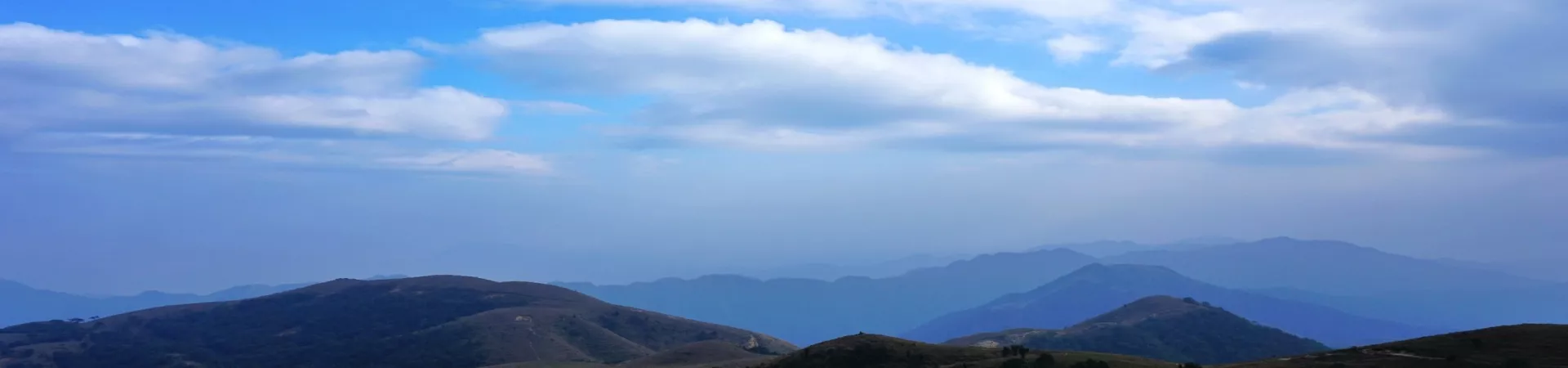
Nestled within the Yunfu region of Guangdong Province, China, Bapai Mountain stands as a majestic and often-overlooked natural sanctuary. With an elevation of approximately 1080.5 meters, it ranks as the fifth-highest peak in the neighboring Luoding area. Its unique geographical position straddles the boundaries of three administrative cities, making it a significant landmark in western Guangdong. The mountain is renowned among locals and discerning hikers for its pristine ecological environment, dramatic landscapes characterized by peculiar rock formations and ancient, twisted trees, and its frequent shroud of mist and clouds that lends an ethereal, almost mystical atmosphere. This guide provides a detailed overview for visitors seeking to experience the untamed beauty and serene solitude of Bapai Mountain.
The Natural Landscape and Key Features
2.1 The "Heavenly Peak" Alpine Meadow The crown jewel of Bapai Mountain is a vast, natural alpine grassland locally revered as "Tiantang Ding" or "Heavenly Peak." This is not a cultivated garden but a breathtaking, expansive meadow that carpets the mountain's high-altitude slopes. Particularly during the spring and summer months, this area transforms into a vibrant tapestry of wildflowers and lush green grasses, contrasting starkly with the rugged rocky outcrops and dwarf forests that surround it. The "Heavenly Peak" offers panoramic, unobstructed views and is the primary destination for most visitors, providing a sense of openness and tranquility reminiscent of a scene from a classical Chinese landscape painting.
2.2 Unique Geological and Ecological Formations The mountain's terrain is a fascinating study in natural sculpture. 3.1 Spectacular Rock Formations: Eons of wind and water erosion have carved the granite bedrock into an array of striking shapes. Visitors will encounter boulders balanced precariously, stone pillars reaching for the sky, and smooth, weathered slabs, all contributing to a surreal and otherworldly landscape. 3.2 Ancient and Resilient Flora: Complementing the rocks is the resilient vegetation. Hardy, windswept trees and shrubs cling to life in crevices and on slopes, their gnarled and twisted forms telling stories of survival against the elements. This combination of "奇石满布" (ubiquitous strange stones) and "怪树丛生" (groves of peculiar trees) creates a uniquely photogenic and contemplative environment.
2.3 The Enchanting Sea of Clouds A quintessential Bapai Mountain experience is witnessing its famous "云遮雾绕" (cloud- and mist-veiled) conditions. Due to its significant altitude and humidity, the mountain is frequently enveloped in rolling mists and clouds, especially in the early mornings and after rainfall. These conditions dramatically transform the scenery, with peaks appearing as islands in a white, fluffy sea and vistas disappearing and reappearing in a dynamic display. For photographers and nature lovers, this atmospheric phenomenon adds a layer of profound beauty and mystery to the hike.
Practical Visitor Information
4.1 Admission and Costs One of the most appealing aspects of Bapai Mountain is its accessibility. There is no entrance fee to access the mountain trails and scenic areas. It remains a publicly accessible natural site, allowing visitors to enjoy its splendors without a ticket. However, it is always advisable for travelers to check for any updates in local policy before their visit, as management rules can evolve.
4.2 Operating Hours The mountain trails are open 24 hours a day, every day of the year. This round-the-clock access allows for flexibility in planning. Many adventure seekers choose to start their hike very early in the morning to reach the "Heavenly Peak" for a spectacular sunrise above the clouds. Similarly, overnight camping (where permitted and with appropriate preparation) can enable visitors to experience sunset and stargazing in this remote setting.
4.3 Tips for a Successful Visit * Preparation is Key: As a free, natural area, facilities are extremely limited or non-existent. Visitors must be self-sufficient. Essential items include ample water, high-energy food, appropriate hiking footwear, weather-appropriate clothing (layers are recommended due to temperature shifts), rain gear, a first-aid kit, and a fully charged phone with a power bank. * Navigation and Safety: The trails can be rugged and may not be consistently well-marked. Using a reliable GPS hiking app or downloading an offline map is crucial. It is safer to hike with a partner or group. Always inform someone of your itinerary and expected return time. * Weather Awareness: Mountain weather is highly changeable. Check the forecast for Yunfu or Luoding before departure but be prepared for sudden changes. The mist and clouds, while beautiful, can reduce visibility and make paths slippery. * Leave No Trace: Preserving the pristine environment is a collective responsibility. All visitors must carry out all their trash, avoid disturbing wildlife, and refrain from picking plants or defacing the rock formations. The goal is to leave no trace of your visit for those who follow. * Physical Fitness: The hike to the summit and the "Heavenly Peak" is moderately to strenuously challenging, involving sustained uphill climbs over uneven terrain. A good level of physical fitness is required to enjoy the journey safely.
Bapai Mountain offers a compelling escape from urban life, presenting a raw and authentic slice of Guangdong's natural heritage. Its combination of high-altitude meadows, sculpted geology, and atmospheric mists provides a profound and memorable experience for hikers, photographers, and anyone seeking tranquility in the heart of nature.