Yueyang Tower
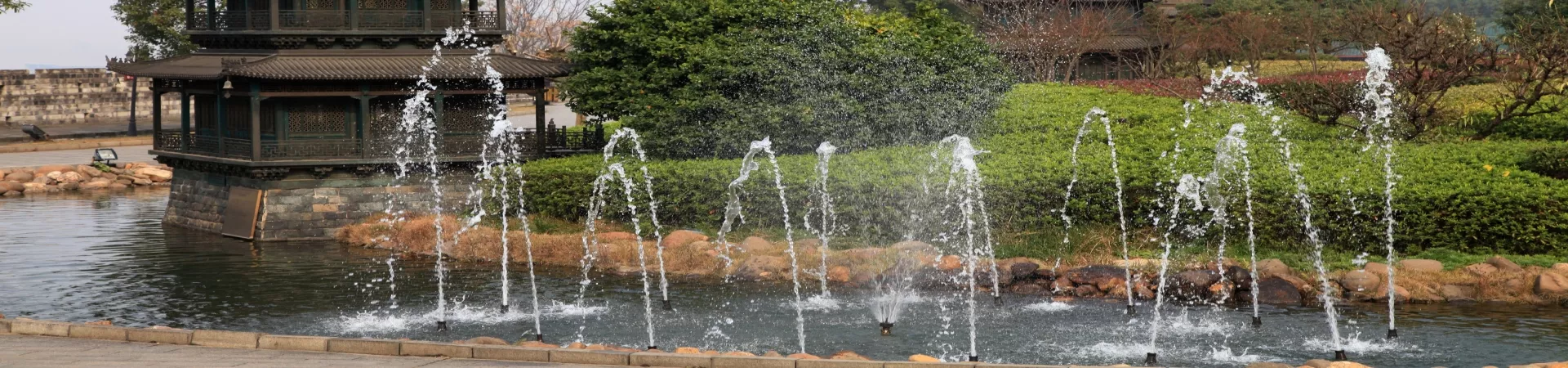
A Journey Through Time and Verse: Exploring Yueyang Tower
Nestled against the ancient western city wall of Yueyang City, Hunan Province, and standing sentinel beside the vast expanse of Dongting Lake, Yueyang Tower is not merely an architectural relic; it is a living page of Chinese literary and historical heritage. Alongside the Tengwang Pavilion in Nanchang, Jiangxi, and the Yellow Crane Tower in Wuhan, Hubei, it is revered as one of the "Three Great Towers of Jiangnan," a title that speaks to its profound cultural significance and enduring beauty.
The Soul of the Tower: Fan Zhongyan's Immortal Prose
While its physical structure is remarkable, the true soul of Yueyang Tower was forged not by mortar and wood, but by ink and intellect. Its global fame is inextricably linked to the seminal prose-poem "Memorial to Yueyang Tower" (Yueyang Lou Ji) penned by the Northern Song Dynasty (960-1127) statesman and literary giant, Fan Zhongyan. Although historical records suggest Fan may never have actually set foot on the tower, his friend Teng Zijing sent him a painting of the newly renovated structure, inspiring one of the most famous texts in Chinese history.
Fan's work transcended simple description. It used the ever-changing moods of Dongting Lake—from tempestuous storms to serene, sunlit beauty—as a metaphor for the human condition and the moral responsibilities of a scholar-official. The culminating lines, "Be the first to bear the world's hardships, and the last to share its pleasures" (xian tianxia zhi you er you, hou tianxia zhi le er le), have resonated for nearly a millennium. These words elevated the tower from a scenic spot to a timeless symbol of altruism, political integrity, and Confucian ideal, etching it permanently into the Chinese cultural consciousness. To visit Yueyang Tower is to walk into the very heart of this literary masterpiece.
An Architectural Marvel: The Helmet in the Sky
Beyond its literary fame, the tower itself is a masterpiece of ancient Chinese wooden architecture. The current structure, primarily dating from the Qing Dynasty (1880 reconstruction), is a stunning three-story, three-eaved pavilion. Its most distinctive feature is the unique pyramidal roof, designed to resemble the helmet of an ancient general—a powerful visual statement of strength and guardianship over the lake and land.
This imposing "helmet" crown rests upon a framework of incredible sophistication. Constructed entirely through an intricate system of interlocking wooden brackets and joints known as dougong, the entire tower was built without the use of a single iron nail or crossbeam. This ingenious technique, which allows for flexibility and resilience against wind and even earthquakes, represents the pinnacle of traditional Chinese carpentry. The harmony of its form, the elegance of its upturned eaves, and the sheer audacity of its nail-less construction make it a unique and invaluable study in architectural history.
The View from the Top: A Landscape of Poetry
The ultimate experience at Yueyang Tower awaits at the top of its third story. Stepping onto the encircling veranda, visitors are greeted by a breathtaking panorama that has inspired poets for centuries. Before you lies the seemingly endless, mist-shrouded waters of Dongting Lake, once known as the "Eight Hundred Li Dongting." On a clear day, the lake shimmers under the sun; on others, it merges with a grey sky, creating a scene of profound, melancholic beauty.
It is here that the words of Fan Zhongyan, Du Fu, Li Bai, and countless other literary figures cease to be mere text and become a visceral experience. Gazing at the same waters and distant mountain silhouettes they described, one can almost hear the echoes of their verses carried on the wind. The view is a living painting, a physical manifestation of the "yin" (overcast) and "yang" (sunny) scenes depicted in Fan's memorial, prompting personal reflection on the vastness of nature and the flow of history.
Practical Information for Your Visit
Getting There: Yueyang Tower is conveniently accessible within Yueyang City. Visitors can take public bus routes 10, 15, Tourist Bus 15, 19, or 22 and alight at the Yueyang Tower Scenic Area (Yueyang Lou Jingqu) station. From the bus stop, the tower is a short and pleasant walk away.
Ticket Information: * Standard Adult Ticket: 70 RMB. * Concession Ticket (35 RMB): Applies to: * Seniors aged 60-64 (inclusive). * Minors aged 14-17 (inclusive). * Full-time undergraduate students and below, with valid student ID. * Free Admission: Applies to: * Children under 14 (not inclusive). * Seniors aged 65 and above. * Visitors with disabilities, active-duty military personnel, and retired army officers (with valid certification).
Please note: Ticket prices and policies are subject to change. It is always advisable to verify the latest information on the official website or at the ticket office before your visit.
Opening Hours: * May 1st - September 30th: 07:00 - 18:30 (last entry at 18:15). * October 1st - April 30th: 07:30 - 18:00 (last entry at 17:45).
Suggested Duration: A comprehensive visit to the tower, its surrounding pavilions, steles, and the nearby city wall typically requires 1 to 3 hours. This allows ample time to appreciate the architecture, absorb the views, and explore the on-site cultural exhibits.
Contact: For any inquiries, you can reach the scenic area at: 0730-8899980.
A visit to Yueyang Tower is more than a tourist stop; it is a pilgrimage to a site where architecture, nature, and profound humanistic thought converge. It is an opportunity to touch the timber of history, gaze upon a poetic horizon, and contemplate the enduring ideals that have shaped a civilization.