Huilong Park
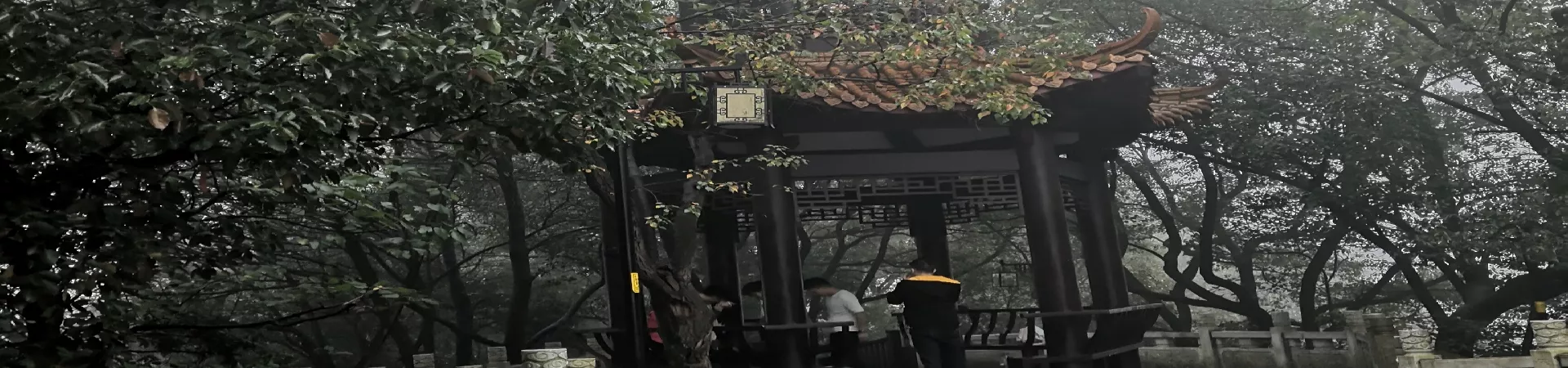
Subtitle: A Verdant Sanctuary of History, Nature, and Serenity in Yiyang
1. Introduction to Huilong Park Nestled upon the slopes of Huilong Mountain in the southwestern district of Yiyang City, Huilong Park is a magnificent urban oasis that seamlessly blends profound historical heritage with captivating natural beauty. Encompassing an area of 18,600 square meters (approximately 1.86 hectares), the park is a testament to the harmonious integration of ancient cultural sites and modern landscape architecture. Its name, derived directly from the mountain it crowns, hints at its elevated status as a premier destination for both locals and visitors seeking tranquility, historical exploration, and a deep connection with nature. The park's terrain is characterized by winding, secluded paths that meander through dense, aged woodlands, creating an atmosphere of serene seclusion amidst the city's bustle.
2. A Living Botanical Museum 2.1. Diverse and Ancient Flora Huilong Park is, first and foremost, a remarkable natural arboretum. Its ecosystem boasts an impressive collection of 157 species of woody plants, spanning 52 families and 110 genera. This rich biodiversity includes 54 species of arbor trees, 36 species of ornamental trees, and 27 species valued as either precious or fast-growing timber. The park serves as a sanctuary for several ancient relict plant species, offering a living glimpse into botanical history. The canopy is dominated by a well-preserved tract of natural secondary evergreen broad-leaved forest, where some specimens have stood sentinel for over 400 years. A stroll through the park is a journey under a majestic, green cathedral of towering ancient trees, their intertwined branches filtering sunlight and casting dappled shadows on the forest floor.
2.2. Landscape and Architectural Harmony Complementing its natural wonders, the park features thoughtfully designed modern landscape elements that enhance its aesthetic appeal without disrupting the peaceful ambiance. Visitors will discover elegant and distinctive structures such as octagonal and hexagonal pavilions, strategically placed to offer restful spots and picturesque viewing points. Artfully constructed rockeries (artificial hills) blend with the natural topography, adding layers of texture and traditional Chinese garden artistry to the environment. These man-made features provide focal points for contemplation and leisure, perfectly integrated into the lush, green tapestry of the mountain.
3. Monuments to History and Memory The grounds of Huilong Park are also a hallowed repository of local and national history, housing several significant memorials.
3.1. The Tomb of Deng Baoyan One of the prominent historical sites is the tomb of Deng Baoyan, a Major General in the National Revolutionary Army. He fell during the Northern Expedition, a military campaign led by the Kuomintang (Nationalist Party) in the mid-1920s to unify China. His burial here commemorates his sacrifice during a pivotal period of early 20th-century Chinese history, specifically marked by the First United Front between the Kuomintang and the Communist Party.
3.2. The Tomb of Zhou Zefan Another important memorial is the final resting place of Zhou Zefan, a revered elder of the 1911 Xinhai Revolution. He was also a significant military leader who opposed the Beiyang军阀 (warlords) that controlled much of China after the revolution. His presence in the park links the space to the tumultuous and transformative era that ended imperial rule in China.
3.3. The Stupa of Monk Yuyuan Adding to the site's spiritual and historical layers is the preserved funeral stupa (a mound-like structure containing relics) of Monk Yuyuan. This structure represents the deep Buddhist heritage of the mountain and provides a tangible connection to the monastic life that has characterized this site for centuries.
4. The Spiritual Heart: Qixia Temple 4.1. Ancient Origins and Historical Significance Dominating the mountain's summit is the venerable Qixia Temple (Qixia Si), the spiritual and historical cornerstone of Huilong Park. Founded between 373 and 396 AD during the reign of Emperor Xiaowu of the Eastern Jin Dynasty, the temple boasts a history spanning over 1,500 years. Its establishment is attributed to the Indian Buddhist monk Śrimitra (Shi Ru Mi Duo), who traveled to China to spread Buddhist teachings. The temple's longevity and association with such an early cultural exchange underscore its immense historical value. Its legacy continued through the ages; during the Tang Dynasty, the famous chancellor Pei Xiu frequented the temple, often stopping here during his lecture tours in Yiyang.
4.2. Architectural Presence Adjacent to the ancient temple stands the imposing Qixia Pavilion (Qixia Ge), a majestic structure that adds to the grandeur of the mountaintop complex. The sight of the temple's traditional architecture and the towering pavilion against the backdrop of the mountain and sky is a breathtaking highlight for any visitor. This area is not only a site for historical appreciation but also remains an active place for Buddhist worship and spiritual reflection, where the chants and incense of the present day mingle with the echoes of the past.
5. Visitor Information To facilitate a visit, please note the following practical details: * Admission Fee: The park charges an entrance fee of 15 RMB per person. * Operating Hours: The park is open to the public daily from 8:00 in the morning until 18:00 in the evening.
A visit to Huilong Park is thus a multifaceted experience. It is a peaceful retreat into a pristine natural environment, an educational walk through a living botanical garden, a poignant journey past monuments commemorating modern China's formative struggles, and an opportunity to stand in a sacred space of ancient spiritual practice. Each path and clearing offers a different perspective, making it a comprehensive cultural and recreational destination within Yiyang.