San You Dong Scenic Area
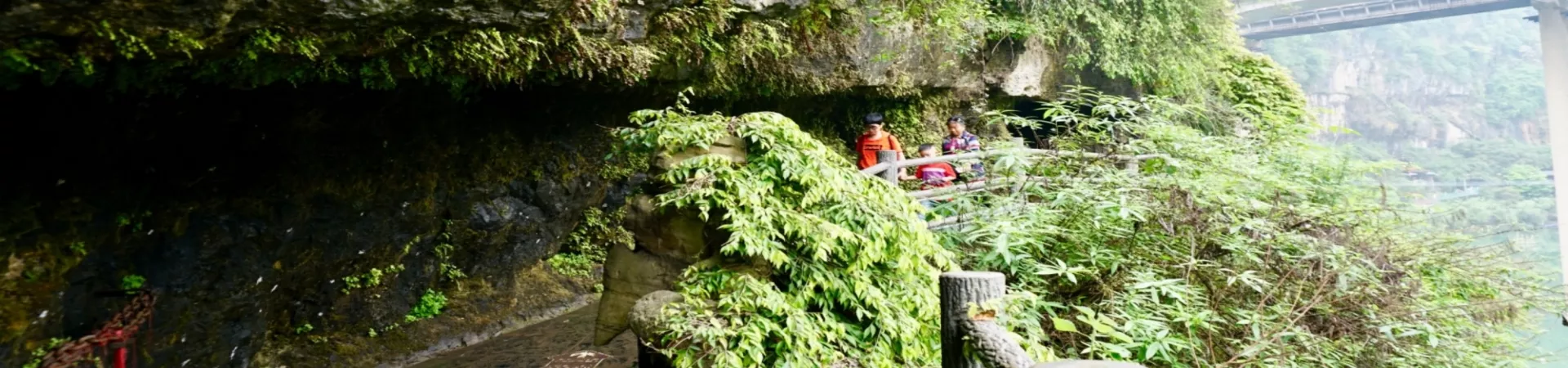
Subtitle: A Journey Through Time and Nature: Exploring the SanYou Cave Scenic Area
Introduction: A Portal to Poetry and Landscape
Nestled at the entrance of the magnificent Xiling Gorge, the westernmost gate of the legendary Three Gorges of the Yangtze River, and facing the serene Xialao Stream, lies the SanYou Cave Scenic Area. This is not merely a geological wonder but a profound cultural tapestry woven into the very cliffs and caves of the landscape. For over a millennium, its unique combination of奇异洞景 (strange and beautiful cave scenery) and秀丽山水 (elegant mountains and waters) has captivated travelers, most notably the literati of China's golden ages. Their visits, inspired by the sublime scenery, transformed the site into an open-air museum of classical Chinese art and thought, where poetry and calligraphy were etched directly onto nature's canvas. Today, the area offers visitors a multifaceted experience, seamlessly blending historical exploration, poetic contemplation, and natural appreciation into a single, unforgettable journey.
1. The Historical and Cultural Core
The heart of the scenic area is its namesake and the historical relics that surround it, each telling a part of a story that stretches from ancient warfare to scholarly retreats.
1.1. The SanYou Cave: Where Poets Left Their Mark The central attraction, SanYou Cave (Three Travelers Cave), derives its name from two famous historical visits. The first was by the Tang Dynasty poets Bai Juyi, his brother Bai Xingjian, and their friend Yuan Zhen. Decades later, during the Song Dynasty, the father-son scholars Su Xun, Su Shi, and Su Zhe also visited. These two groups of "three travelers" immortalized the cave in Chinese literary history. Following their lead, generations of scholars, officials, and artists pilgrimaged here, carving hundreds of poems, prose pieces, and inscriptions onto the interior and exterior walls of the limestone cave. Wandering through the cavern, one is surrounded by the tangible echoes of the past, with verses from different dynasties visible alongside striking natural rock formations, creating a powerful dialogue between human creativity and geological time.
1.2. Key Historical Sites Around the Cave Flanking the main cave are several structures and sites of deep historical significance: * Zhixi Pavilion (至喜亭): This pavilion, whose name translates to "Pavilion Reaching Joy," was traditionally a place where travelers, having safely navigated the treacherous rapids of the upper Yangtze, would stop to give thanks and celebrate their arrival in calmer waters. It offers some of the first breathtaking panoramic views of the Xiling Gorge. * Chusai Tower (楚塞楼): Standing as a sentinel over the gorge, this tower marks the ancient western frontier of the Chu State during the Warring States period. It serves as a reminder of the area's long-standing strategic military importance. * Ancient Barracks Site (古军垒遗址): The remnants of an ancient military fortification, this site provides a glimpse into the area's role in controlling river traffic and defending territory throughout various dynasties. * Zhang Fei’s Drumming Platform (张飞擂鼓台): Legend associates this large, flat rock with the fierce Three Kingdoms general Zhang Fei, who is said to have beat a war drum here to rally his troops. It adds a layer of popular legend and martial history to the site. * Lu You Spring (陆游泉): Named after the renowned Southern Song Dynasty patriotic poet Lu You, who discovered and praised this clear, perennial spring during his visit. Drinking from or simply viewing this spring connects one to the poet's search for purity and inspiration in nature.
2. Modern Additions and Cultural Expansions
In recent years, the scenic area has thoughtfully expanded to include new cultural facilities that enrich the visitor's understanding of the regional and global Chinese heritage.
2.1. The Ba-Chu Music Palace (巴楚乐宫) This venue offers dynamic live performances of ancient music and dance from the Ba and Chu cultures, two powerful states that flourished in the region during antiquity. The performances, featuring reproductions of historical instruments and costumes, bring to life the artistic and spiritual world of the area's earliest civilizations, providing context to the landscape that inspired later poets.
2.2. The World Chinese National Seal Engraving Stone Garden (世界华人国家印章刻石园) This unique garden presents a collection of stone carvings featuring the national seals or emblematic motifs of countries around the world with significant Chinese diaspora communities. It symbolizes the global connections of Chinese culture and serves as a testament to the homeland's recognition of its overseas descendants.
2.3. The Sinian Horn Stone Garden (震旦角石园) This garden introduces a fascinating paleontological dimension to the visit. It displays fossils of Sinoeragonites, ancient nautiloid cephalopods commonly known as "horn stones" due to their conical shape. These fossils, found in the local limestone, tell a story hundreds of millions of years old, grounding the human history of the site in the deep time of geological and evolutionary history.
3. Practical Information for Visitors
3.1. Location and Transportation The SanYou Cave Scenic Area is situated within the broader Xiling Gorge Scenic Area, near Yichang City, Hubei Province. The most straightforward public transportation option from downtown Yichang is to take Public Bus No. 10, which goes directly to the Xiling Gorge entrance.
3.2. Tickets and Opening Hours * Ticket: Access to SanYou Cave is included in the general admission ticket for the Xiling Gorge Scenic Area, priced at 148 RMB. * Opening Hours: * Main Operating Hours: 08:30 - 16:00 (Last entry at 16:00). * Note: Slight variations may occur, with some days operating from 09:00 - 16:00. It is always advisable to confirm the schedule on the day of your visit.
3.3. Suggested Duration To fully appreciate the cave inscriptions, explore the various historical pavilions, enjoy a cultural performance, and stroll through the themed gardens, a visit of at least 3 hours is recommended. Visitors with a deep interest in history, poetry, or geology may wish to allocate more time.