Shi Nai'an Memorial Hall
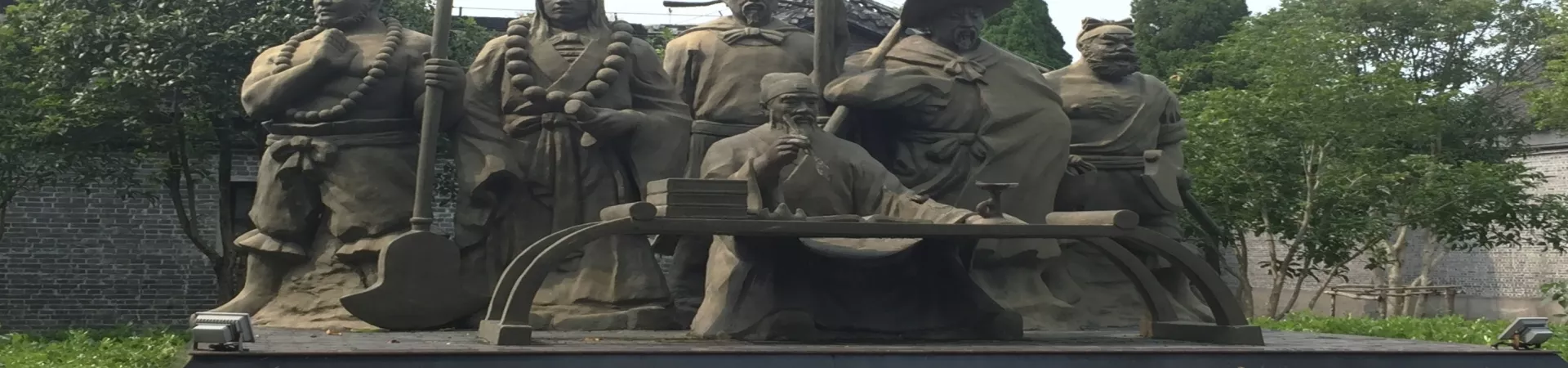
Subtitle: A Journey into the World of "Water Margin": Exploring the Shi Naian Memorial Hall
Introduction: An Island Sanctuary of Literary Legend
Nestled on Huajiaduo Island, in the western outskirts of Baiju Town, Dafeng City, stands the Shi Naian Memorial Hall. This serene location, historically linked to Xinghua, is traditionally revered as the very place where Shi Naian, the masterful novelist, composed his magnum opus, "Water Margin" (Shuihu Zhuan). The setting itself feels like a page torn from the epic. Encircled by waterways and thick with whispering reeds, the atmosphere is profoundly imbued with the spirit of the classic. Visitors often find themselves transported, half-believing they have stepped onto the marshy shores of Liangshan Marsh, the legendary rebel stronghold from the novel. The memorial hall, a tranquil sanctuary at the heart of this aquatic landscape, serves not only as a museum but as a portal into the 14th-century world that gave birth to one of China's Four Great Classical Novels.
Architectural Harmony: A Traditional Residence in a Waterbound Setting
2.1 Layout and Structure The Memorial Hall is a fine example of traditional Hui-style architecture, seamlessly integrated into its natural surroundings. The complex is a compact, elegant ensemble featuring the classic "three rows deep with east and west wings" layout, constructed from grey brick and topped with small, dark tiles. A whitewashed perimeter wall encloses the compound, emphasizing its quiet, scholarly seclusion.
2.2 The Entrance and First Courtyard Passing through the outer wall, visitors arrive at the first major structure: the gatehouse. Its most striking feature is the vibrant vermilion lacquer of the main doors. Above them hangs the inscribed nameboard, "Shi Naian Memorial Hall," bearing the distinguished calligraphy of the renowned modern master, Qi Gong. This entrance sets a tone of cultural reverence, bridging contemporary respect with historical legacy.
The Life and Times of Shi Naian: Scholar, Official, and Recluse Author
3.1 Early Life and Scholarly Success Born Shi Yanduan into a family of boatmen near Suzhou's Changmen Gate, Shi Naian was a descendant of Shi Zhichang, one of Confucius' seventy-two esteemed disciples. Demonstrating early intellectual promise, he entered private school at 13, earned the xiucai (cultivated talent) degree at 19, and married a woman from the Ji family. His scholarly ascent continued with the juren (provincial graduate) degree at 29, culminating at age 35 in achieving the jinshi (metropolitan graduate) degree—on the same prestigious examination list as the future Ming dynasty strategist, Liu Bowen.
3.2 Official Disillusionment and Withdrawal His official career began with a post as a magistrate in Qiantang. However, his tenure was brief. Unable to endure the overbearing arrogance and autocratic behavior of his Mongol superior (the Darughachi), a symbol of Yuan dynasty rule, Shi Naian resigned in protest after just one year. This act marked a turning point, leading him to a life of teaching and, crucially, writing.
3.3 War, Refuge, and Literary Creation The turmoil surrounding the fall of the Yuan Dynasty and the rise of rebel forces profoundly shaped his later life. Folklore suggests he briefly served as a military advisor to the rebel leader Zhang Shicheng. After Zhang's controversial surrender to the Yuan, Shi Naian, finding his counsel ignored, left his post. The escalating warfare, including Zhu Yuanzhang's (the future Ming founder) campaigns, eventually forced him to seek a safe haven. He recalled his friend Gu Ti, a former official in Songjiang and Jiaxing, who was from the remote, water-locked region of Xinghua—a place proverbially known as "Zhaoyang (Xinghua's ancient name), a good place to escape the soldiers."
3.4 The Journey to Huajiaduo In a poignant appeal, Shi Naian sent Gu Ti a letter accompanied by a poem: "In this famine and chaotic age I wander the world, / Seeking a good home on Yang Hill (referring to Zhaoyang). / I wish to clear the wilds to plant many trees, / Lest the plums bear fruit like gourds." This last line alluded to a contemporary lament about displacement. Gu Ti's warm reply, with its own answering verse, welcomed him: "You come from south of the river to ask the way; / With a smile I greet an old colleague. / This is no Peach Blossom Spring, / But where else is there a better haven to escape the Qin?" Thus, Shi Naian found his refuge on the secluded island of Huajiaduo in Baiju. It was in this tranquil, water-girt environment, reminiscent of his fictional Liangshan Marsh, that he is believed to have dedicated himself to compiling and crafting the stories of heroes and outlaws that would become "Water Margin."
The Visitor Experience: Immersion and Information
4.1 Navigating the Memorial Hall While the provided text focuses on the historical context, a visitor today would explore the hall's successive courtyards and wing rooms. These spaces typically house exhibitions detailing Shi Naian's life, the historical background of the Yuan-Ming transition, and the enduring cultural impact of "Water Margin." Artifacts, ancient editions of the novel, and illustrative materials help bring the narrative to life.
4.2 Practical Information for Planning a Visit For those wishing to embark on this literary pilgrimage, the following details are essential: * Location: Huajiaduo, Baiju Town, Dafeng District, Yancheng City, Jiangsu Province. (The area was historically part of Xinghua City.) * Contact: +86-523-83612938 * Opening Hours: The memorial is open daily from 09:00 to 17:00 throughout the year.
The Shi Naian Memorial Hall, therefore, is more than a collection of relics. It is an experiential site where architecture, landscape, and history converge. Walking through its quiet courtyards, surrounded by the murmuring water and reeds, one gains a tangible sense of the environment that nurtured one of the world's great adventure stories—a tale of rebellion, loyalty, and justice that began in the mind of a disillusioned scholar on a secluded island in Jiangsu.