Dongtai Xixi Tourist and Cultural Scenic Area
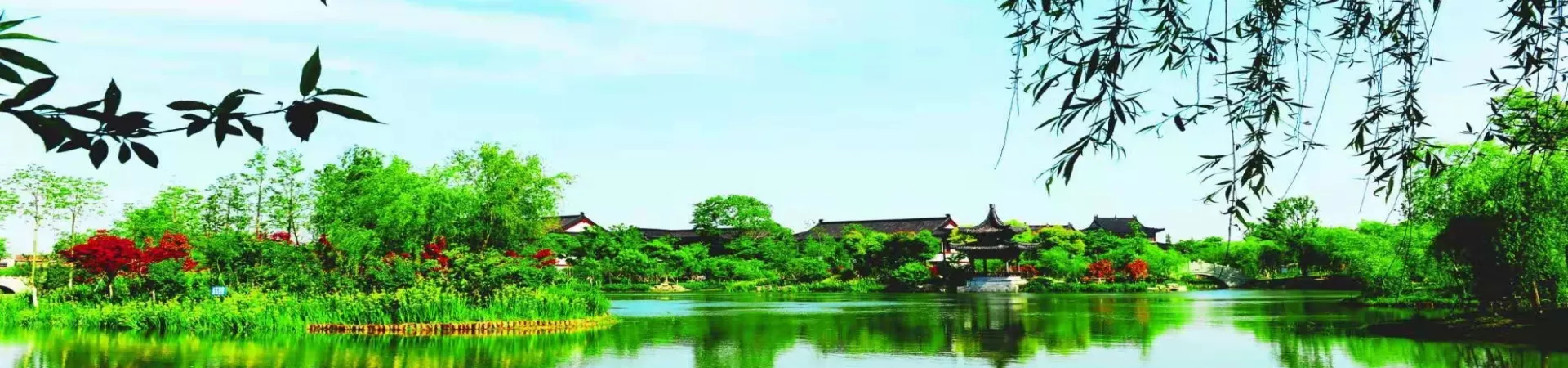
Subtitle: A Journey Through Time, Legend, and Culture in Yancheng
1. Introduction: The Cradle of Dongtai's Civilization Nestled on the banks of the ancient Salt Transport Canal, Xixi in Dongtai is universally recognized as the cultural root of the region. This historic area is far more than a scenic spot; it is a living tapestry woven with threads of mythology, literary brilliance, administrative history, and profound religious heritage. Its significance is nationally acknowledged as the birthplace of the intangible cultural heritage, "The Legend of Dong Yong and the Seventh Fairy," a timeless Chinese love story that continues to captivate hearts. Xixi's formal establishment as a town dates back to 117 BC during the Western Han Dynasty, marking the beginning of its enduring legacy. Its importance grew through the centuries, serving as the seat of Jianling County in 397 AD during the Eastern Jin Dynasty and later becoming a crucial official salt storage center (Xixi Salt Granary) in 968 AD during the Northern Song Dynasty, underpinning its historical economic vitality.
2. A Legacy of Literary and Administrative Excellence Xixi's landscape is indelibly marked by the footprints of China's most revered scholars and statesmen, earning its reputation as a fertile ground for talent.
2.1. The Xixi Academy and Poet-Statesman Yan Shu The intellectual tradition of Xixi is powerfully embodied in the Xixi Academy, founded by the renowned Song Dynasty poet and statesman Yan Shu. This institution stands as one of the earliest academies in Chinese history. It was here that Yan Shu, inspired by the surroundings, penned the immortal lines: "Flowers fall, do what one may; Swallows return, no strangers they." This couplet, reflecting on the passage of time and the return of the familiar, remains a cornerstone of Chinese poetic heritage and speaks directly to the contemplative beauty of Xixi.
2.2. The Revered Fan Zhongyan and His Dyke Another colossal figure, the Song Dynasty philosopher-official Fan Zhongyan, left a permanent physical and poetic mark on Xixi. He oversaw the construction of the Fan Gong Dyke, a massive coastal embankment critical for flood control and agricultural development, showcasing early advanced hydraulic engineering. His deep admiration for the area is preserved in his verse: "Do not say that Xixi is small, for Xixi produces great talent. Two councilors and chancellors once came from here." This praise underscores Xixi's outsized role in nurturing individuals who shaped national history.
3. Pillars of Cultural Heritage Beyond literature and governance, Xixi's culture is built upon two profound pillars: a celebrated ancient legend and a deep-seated Buddhist tradition.
3.1. The Birthplace of an Enduring Legend The cultural identity of Xixi is inseparable from "The Legend of Dong Yong and the Seventh Fairy." This story, classified as a National Intangible Cultural Heritage, is a central pillar of the local narrative. The legend tells of the mortal Dong Yong's filial piety and his magical romance with a heavenly fairy, weaving themes of love, sacrifice, and virtue. This story is not merely folklore; it is actively celebrated within the Dong Yong and Seventh Fairy Cultural Park, making Xixi a pilgrimage site for those enchanted by this classic tale.
3.2. A Center of Buddhist Heritage Xixi's spiritual landscape has been shaped by a long and distinguished Buddhist history. The renowned Guangfu Temple was established here as early as 76 AD during the Western Han Dynasty, signaling the early arrival and importance of Buddhism. At its zenith, the Xixi area was home to an astonishing constellation of over 800 temples of various sizes, indicating its status as a major religious center. The Taishan Temple complex, which remains a key site for visitors, is a testament to this enduring devotional legacy.
4. Practical Visitor Information 4.1. Ticketing and Opening Hours The main attractions within the Xixi Tourist Cultural Area have separate admissions: * Haichun Pagoda Garden: Adult ticket priced at 20 RMB. * Dong Yong and Seventh Fairy Cultural Park: Adult ticket priced at 30 RMB. The general operating hours for the area are from 09:00 to 17:00 daily, with last admission typically at 16:00. It is advisable to confirm any seasonal changes before your visit.
4.2. Transportation and Accessibility Xixi is accessible via Dongtai's public bus system. Key routes include: * Take Dongtai Bus No. 12 and alight at the Dong Yong Qixiannü Cultural Park (Bus Stop). The attractions are within walking distance. * Take Dongtai Bus No. 15 or No. 3 and alight at the Taishan Temple (Bus Stop). The site is a short walk from the stop.
4.3. Suggested Duration and Contact A comprehensive visit to explore the cultural parks, historical sites, and temples typically requires 1 to 3 hours. For the latest information, visitors can contact the area via phone at 400-926-1520.
Information update reference: 2022-11-16