Fangchuan Scenic Area
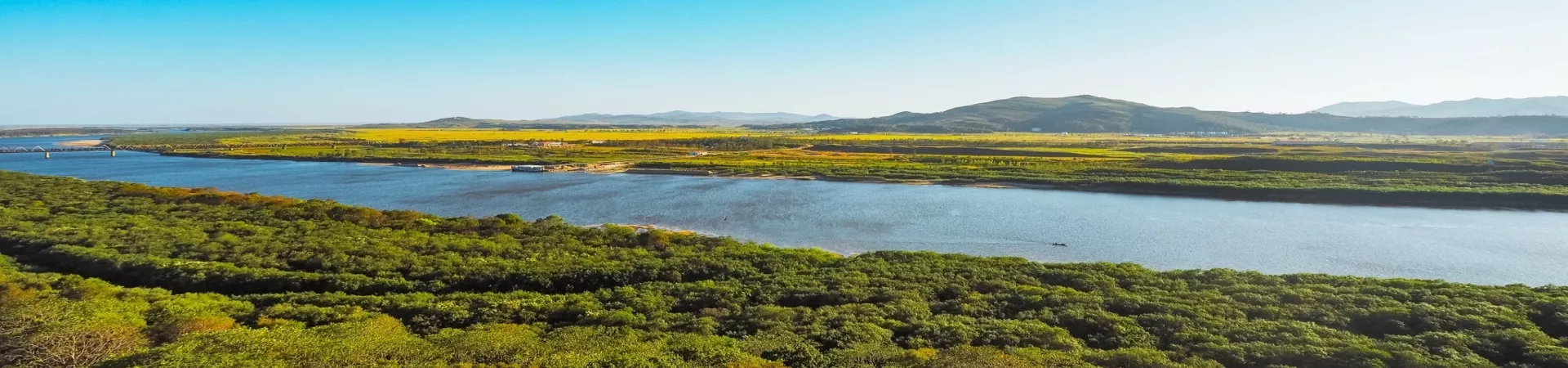
Subtitle: Where Three Nations Meet: A Journey to the Edge of China at Fangchuan Scenic Area
Introduction: A Pinnacle of Geography and History
Nestled at the southeasternmost tip of Jilin Province, the Fangchuan Scenic Area is not merely a destination; it is a profound geographical statement and a living history book. Its paramount claim to fame is its unique status as the place where the territories of three sovereign nations—China, Russia, and North Korea—converge. Visitors stand on the very frontier, where the Tumen River, acting as a natural boundary, completes its journey into the Sea of Japan. This convergence creates a panorama unmatched anywhere else in China, offering a silent yet powerful narrative of borderlands, cultural intersections, and strategic significance. More than just a scenic spot, Fangchuan is a symbol, often poetically referred to as "Seeing Three Countries with One Glance."
1. The Core Experience: "One Eye Viewing Three Lands"
The heart of the Fangchuan experience is the iconic viewing platform, often associated with the Longhu Pavilion complex. Ascending to this vantage point is the culmination of the journey.
1.1. The Unforgettable Panorama From this strategic height, the vast landscape unfolds in a single, breathtaking sweep. To the east, across the final stretch of the Tumen River, lies the Russian territory of Primorsky Krai, with its coastal features and the distant glimpse of the Pacific Ocean (via the Sea of Japan). To the south, just a stone's throw across the narrow river, are the low hills and fields of North Korea's Rason Special Economic Zone. Directly below and stretching westward is the land of China. This visual trifecta is a powerful and immediate lesson in political geography, allowing one to literally observe the distinct developments and tranquil coexistence of three different worlds from a single, stationary point.
1.2. The "Earth's Ear" Sculpture Enhancing this symbolic location is the notable "Earth's Ear" sculpture. This artistic installation represents China's easternmost point listening to the sounds of the sea. It serves as a poignant metaphor for the nation's connection to the wider world from this remote frontier, emphasizing Fangchuan's role as a sentinel on the edge of the continent.
2. Historical Depth: The "Fangchuan Beacon Tower" and Border Memories
The scenic area is steeped in a history that adds a layer of solemnity to the beautiful views. A key site that anchors this history is the Fangchuan Beacon Tower.
2.1. A Relic of the Ming Dynasty This ancient beacon tower, a sturdy stone structure, dates back to the Ming Dynasty. It served as a critical military communication post, used for transmitting signals via smoke or fire along the frontier. Its preservation here connects the modern visitor to centuries of border defense and vigilance.
2.2. Witness to Modern Boundary Changes The tower stands as a silent witness to more recent historical chapters, particularly the complex border negotiations and territorial changes in the late 19th and early 20th centuries. Its presence reminds visitors that the current borders, now peaceful observation points, were shaped by treaties like the Sino-Russian Treaty of Peking (1860), which left China with no direct coastline in this region despite being so close to the sea. The history embodied here transforms the landscape from simply scenic to deeply meaningful.
3. Cultural and Ecological Context
While the geopolitical spectacle is paramount, the area surrounding Fangchuan offers its own subtle charms.
3.1. The Yanbian Korean Autonomous Prefecture Fangchuan is part of the larger Yanbian Korean Autonomous Prefecture, an area rich in Korean-Chinese culture. Visitors traveling to Fangchuan will pass through communities where bilingual signs (Chinese and Korean) are common, and the unique cultural blend of ethnic Korean and Han Chinese traditions is evident in architecture, cuisine, and daily life. This cultural backdrop enriches the journey to the border.
3.2. Wetlands and Natural Beauty The region near the Tumen River estuary features wetlands and natural reserves. These areas are havens for migratory birds, especially in spring and autumn. The flat, riverine landscape, often dotted with reeds and small lakes, provides a serene contrast to the monumental political geography of the main viewing area, showcasing a different, ecological value of this borderland.
4. Practical Information for Visitors
To ensure a smooth and fulfilling visit, please note the following essential details.
4.1. Operating Hours The scenic area is open daily from 8:30 AM to 4:00 PM. The last admission is strictly at 3:00 PM. It is highly advisable to arrive well before the last entry time to allow for transportation within the area (which often involves shuttle buses from the main entrance to the viewing sites) and to fully experience the location without rush. These hours apply throughout the year, from January 1st to December 31st.
4.2. Access and Transportation Fangchuan is located approximately 70 kilometers from the city of Hunchun. The most convenient way to visit is by private vehicle or hired taxi from Hunchun. The drive itself is scenic, passing through rural landscapes and small villages. Upon arrival at the scenic area's main gate, visitors typically purchase a ticket that includes access to the park and the necessary shuttle transport to the core viewing sites near the riverfront.
4.3. Contact and Planning For specific inquiries or to confirm details before your trip, you may contact the local tourism services. One relevant contact number is +86 137-0443-0307. Given the area's status as a sensitive border zone, visitors should always carry official identification (passport for foreigners, ID card for Chinese citizens), as checks may occur. It is also recommended to check the local weather forecast, as visibility is crucial for the "one glance" experience, and to dress appropriately for the often windy and cooler conditions on the open viewing platform.