Wenfeng Pagoda
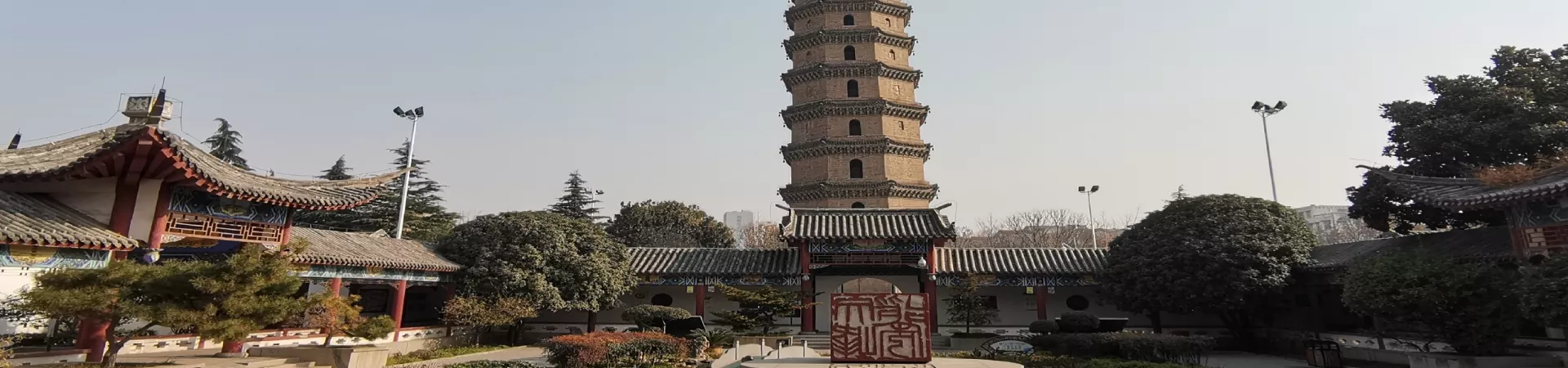
Subtitle: A Journey Through Time and Tranquility at Xuchang's Ancient Landmark
1. Introduction: The Sentinel of Xuchang
Rising gracefully from the slopes of Fenghuang Mountain (Phoenix Mountain) on the southern edge of Xuchang, the Wenfeng Pagoda stands as a silent, enduring witness to centuries of history. More than just an architectural relic, it is a cultural beacon, a vantage point offering breathtaking panoramas, and a serene sanctuary where the past gently intertwines with the present. This hexagonal brick-and-stone structure, now a county-level key cultural relics protection unit, invites visitors to step away from the modern bustle and embark on a journey through time, art, and spiritual reflection.
2. Historical Origins and Architectural Grandeur
2.1. A Ming Dynasty Legacy The pagoda's story began in the 32nd year of the Wanli era during the Ming Dynasty (1604 AD). It was initiated by the local magistrate, Li Xibi, whose vision was to construct a landmark that would cultivate literary culture and bring prosperity to the region—a purpose embedded in its name "Wenfeng," which translates to "Literary Peak" or "Cultural Pinnacle."
2.2. Structural Elegance in Brick and Stone The pagoda is a masterpiece of classical Chinese brick pagoda design. Its form is a elegant hexagon, spanning five distinct tiers and reaching a height of 33.5 meters. The base, with a diameter of 7.3 meters, provides a solid foundation for the tapering structure. Inside, a spiral stone staircase winds its way upwards, allowing for an atmospheric ascent. The exterior is characterized by its overhanging eaves, which once held melodious wind chimes that sang with the breeze. Crowning the pagoda is a distinctive iron finial shaped like a precious hulu (calabash gourd), a traditional symbol of good fortune and spiritual power in Daoist and Buddhist architecture, adding a final touch of grace against the sky.
3. The "Pagoda Ridge High Gaze": A Panoramic Masterpiece
3.1. The Celebrated Vista The primary allure of the Wenfeng Pagoda has always been the spectacular view from its summit. Historically known as "Taluan Gaotiao" or "Pagoda Ridge High Gaze," it was proudly counted among the famed "Twelve Scenes of Meicheng." Upon reaching the top, visitors are rewarded with a commanding, unobstructed vista. The cityscape, rivers, and the undulating embrace of distant mountains unfold in a majestic tapestry.
3.2. Poetic Immortality This very view inspired generations of scholars and poets. Mei Yong, an educational official during the Qing Dynasty's Tongzhi reign, immortalized the scene in his poem for The Twelve Scenes of Meicheng. His lines, "Palms turn, two rivers float low in green; A glance, a thousand peaks send distant azure," beautifully capture the feeling of holding the landscape in one's gaze—the winding rivers like ribbons of jade and the layered mountain ranges fading into a hazy blue horizon. It is an experience that continues to evoke a sense of awe and poetic contemplation in every visitor today.
4. The Spiritual Enclave: Past and Present at the Pagoda's Base
4.1. A Lost Monastery The pagoda did not stand alone historically. The mountain hollow at its foot was once the site of a tranquil Buddhist monastery, completing the spiritual and architectural complex. This monastery, unfortunately, was dismantled in the years following the founding of the People's Republic of China, leaving only the pagoda as a solitary reminder of the site's sacred past.
4.2. Revival of Sanctity In recent years, the spiritual heartbeat of the location has been revived. A new Chan (Zen) Buddhist temple has been constructed in the vicinity. The gentle scent of incense once again perfumes the air, the sound of chanting and temple bells complements the whispering wind, and the flicker of oil lamps signifies renewed devotion. This harmonious coexistence of the ancient, secular pagoda and the active, modern temple creates a unique layered atmosphere of cultural history and living faith.
5. Practical Information for the Visit
5.1. Location and Accessibility The Wenfeng Pagoda is situated on Fenghuang Mountain in the southern part of Xuchang city, Henan Province. It is easily accessible by local taxi or public transportation.
5.2. Visiting Details A modest entrance fee of 15 RMB is required for access to the pagoda area. The site is officially open 24 hours a day, throughout the year. This allows for flexible visiting, whether under the bright sun, during the golden hour of sunset, or even for a unique perspective under moonlight, much like the "new crescent moon overhead" described in classical couplets.
5.3. Suggested Duration To fully appreciate the site—climbing the pagoda at a leisurely pace, absorbing the views, exploring the grounds, and visiting the adjacent temple—a visit of 1 to 3 hours is recommended.
A classical couplet perfectly encapsulates the enduring appeal of the Wenfeng Pagoda: "Leaning on the railings, viewing the scenery outside: fine mountains arrayed, girdling waters meandering. Here, even the chickens and dogs are hushed. With rising spirits, let us ascend this hundred-foot high tower, cup in hand. Discussing the strategic landscape before our eyes: the ancient pagoda, steep and lofty; the solitary city, ruggedly perched. Gazing into the distance, the dwellings are dense. Finding leisure for carefree revelry, a hook of the new moon hangs overhead." It is a place where history is palpable, views are transformative, and a profound sense of peace is the ultimate souvenir.