Cao Wei Ancient City
Subtitle: Tracing the Footsteps of an Empire: A Visitor's Guide to Cao Wei Ancient City in Xuchang
Introduction: Where History Comes Alive
Nestled in the heart of Henan Province, the city of Xuchang holds a unique and pivotal place in Chinese history. For over two millennia, it has been a witness to the rise and fall of dynasties, but its most celebrated chapter is undoubtedly its role as the capital of the Cao Wei state during the tumultuous Three Kingdoms period (220-280 AD). The Cao Wei Ancient City (曹魏古城) is not merely a tourist attraction; it is a sprawling, immersive historical and cultural district designed to transport visitors back to the era of legendary strategists, warrior kings, and poetic brilliance. More than a simple reconstruction of old walls, it is a vibrant tapestry woven from archaeological sites, meticulous replicas, cultural performances, and living traditions, offering a profound journey into the foundation of what would become a unified China under the Jin Dynasty.
1. The Historical Significance: Xuchang as the Cradle of Cao Wei
1.1. From Strategic Command to Imperial Capital The story of Cao Wei Ancient City is inextricably linked to the formidable Cao Cao, one of history's most brilliant and controversial figures. Initially serving as the de facto power behind the weakened Han Dynasty, Cao Cao established Xuchang as his primary military and political base around 196 AD. Its strategic location made it an ideal center for administering his territories and commanding his campaigns. Following Cao Cao's death, his son Cao Pi formally ended the Han Dynasty and proclaimed the Wei Empire in 220 AD, with Xuchang serving as its inaugural capital before later moving to Luoyang. This period cemented Xuchang's status as the political heart where the policies, laws, and cultural frameworks of the Cao Wei state were solidified.
1.2. An Era of Legends and Literary Flourishing The Cao Wei period was not just about military conquest and political maneuvering; it was a golden age of poetry, philosophy, and art. The "Jian'an style" of literature, characterized by its emotional depth and realism, flourished here under the patronage of Cao Cao and his sons, Cao Pi and the renowned poet Cao Zhi. Visiting the ancient city, one walks the same conceptual ground that inspired the "Seven Scholars of Jian'an." This era, immortalized in the classic novel Romance of the Three Kingdoms, pulses through the district's very design, connecting visitors to the tales of loyalty, strategy, and ambition that define Chinese historical consciousness.
2. Exploring the Cao Wei Ancient City District
2.1. Architectural Grandeur and Urban Layout The district is master-planned to reflect the architectural aesthetics and urban structure of the Han-Wei period. While not a single archaeological site, it incorporates and is built around genuine historical relics, creating a seamless blend of old and new.
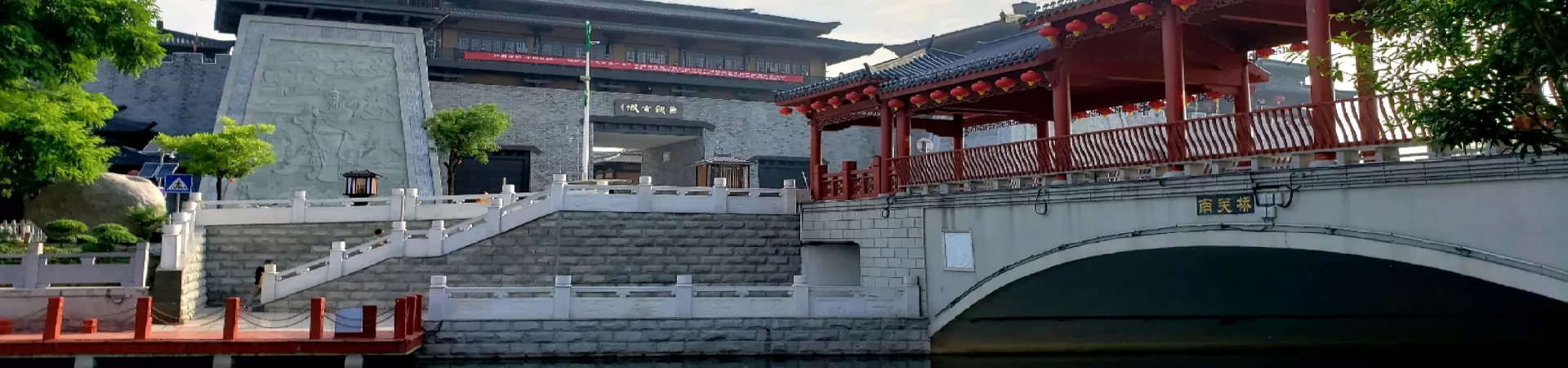
2.1.1. The City Gates and Walls Impressive city walls and towering gates, such as the magnificent South Gate, recreate the imposing grandeur of an ancient capital. Walking along the ramparts offers panoramic views of the district and a tangible sense of the city's defensive might.
2.1.2. The Central Axis: Chunqiu Tower and Beyond The spiritual and architectural core of the complex is the Chunqiu Tower (春秋楼), a majestic structure dedicated to Guan Yu, the deified general of the Three Kingdoms. According to lore, this was where Guan Yu resided temporarily. The building's intricate wooden carvings, sweeping eaves, and solemn atmosphere are highlights. This central axis is lined with government office replicas, temples, and grand halls, all built in the distinct style of the era—solemn, robust, and elegant.
2.2. Cultural Immersion and Lively Atmosphere Beyond the architecture, the district thrives as a living cultural center. The main streets and alleys are bustling with activity.
2.2.1. Traditional Crafts and Culinary Delights Shops and stalls showcase traditional handicrafts, calligraphy, pottery, and replicas of ancient artifacts. The air is filled with the aromas of local Henan cuisine and Three Kingdoms-themed snacks, allowing visitors to taste history. Restaurants and teahouses styled in the ancient manner provide perfect spots for respite.
2.2.2. Performances and Interactive Experiences Throughout the day, the district comes alive with scheduled performances. These may include reenactments of historical scenes, traditional music and dance shows, martial arts demonstrations, and grand ceremonies that depict court life or military parades from the Cao Wei period. Visitors are often encouraged to participate, donning Hanfu (traditional clothing) to fully immerse themselves in the experience.
3. Key Sites Within and Near the District
3.1. The Cao Cao Mausoleum (Cao Cao Gaoling) Located nearby, the archaeological site identified as the tomb of Cao Cao is a crucial companion visit to the ancient city. The relatively modest scale of the tomb, compared to other imperial mausoleums, aligns with historical records of Cao Cao's order for a simple burial. The museum on-site displays many of the artifacts excavated, offering a direct, poignant connection to the man himself.
3.2. Baling Bridge This historic bridge, associated with the poetic farewells of the era, is another significant cultural site in the area. It evokes the literary and emotional landscape of the time, reminding visitors that this was a world of deep human sentiment as much as of warfare.
4. Practical Information for the Visit
4.1. Location and Accessibility Cao Wei Ancient City is situated in the central urban area of Xuchang City, Henan Province. It is easily accessible by public bus, taxi, or ride-sharing services from anywhere in the city. Xuchang itself is well-connected by high-speed rail to major hubs like Zhengzhou (approximately 30 minutes), Luoyang, and beyond.
4.2. Opening Hours and Best Time to Visit The Cao Wei Ancient City district is an open-area cultural and commercial zone. As such, its exterior areas, streets, shops, and many public squares are accessible to visitors 24 hours a day, throughout the year. This allows for romantic evening strolls under illuminated traditional architecture. However, it is important to note that specific indoor attractions, museums, paid performance venues, and historical sites within the district (such as Chunqiu Tower) have their own operating hours. These typically operate from approximately 8:30 or 9:00 in the morning until 17:30 or 18:00 in the evening. It is always advisable to check the latest schedules for specific venues on the day of your visit. The district is vibrant year-round, but spring (April-May) and autumn (September-October) offer the most pleasant weather for exploration.
4.3. Suggested Itinerary A comprehensive visit requires at least a full day. A recommended approach is to arrive in the morning to explore the key indoor historical halls and museums, witness the midday performances, enjoy a traditional lunch, and spend the afternoon browsing shops, participating in interactive activities, and visiting peripheral sites like the Cao Cao Mausoleum. Returning in the evening to see the district lit up by traditional lanterns provides a completely different and magical perspective.