Cao Chengxiang's Mansion
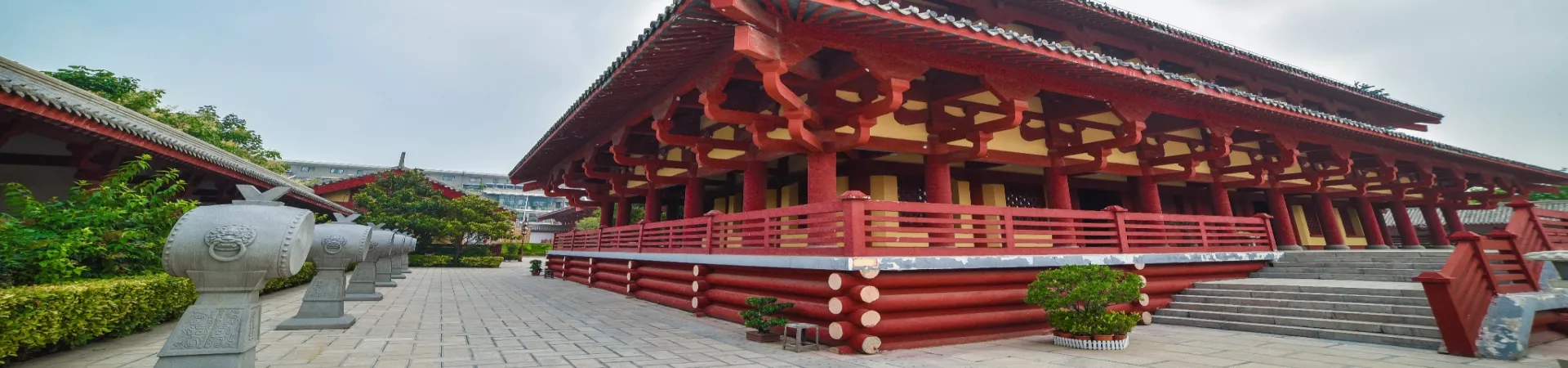
Subtitle: A Journey into the Heart of the Three Kingdoms: The Prime Minister Cao's Mansion in Xuchang
1. Introduction: Stepping onto the Stage of History
Nestled in the heart of Xuchang city, at the very site of the Weiwu Emperor Square, lies a portal to one of China's most legendary and tumultuous eras. The Prime Minister Cao's Mansion (Cao Chengxiang Fu) is not merely a reconstructed historical complex; it is a vibrant, immersive experience that resurrects the world of the Three Kingdoms. Built upon the authentic ruins where the formidable Cao Cao, King of Wei and posthumously Emperor Wu of Wei, governed military and state affairs and resided with his family, this site offers a unique tangible connection to the past. Unlike traditional museums that often maintain a distant, academic perspective, this景区 (scenic area) consciously adopts a平民立场 (commoner's standpoint) and a modern lens. It seeks to demystify and humanize one of Chinese history's most complex and debated figures, Cao Cao, while showcasing the profound depth of Cao-Wei culture. It stands as a pioneering national model, uniquely blending deep人文历史 (humanistic history) with cutting-edge high-tech手段 (methods), seamlessly fusing historical landscapes with interactive visitor experiences to create the definitive Three Kingdoms cultural tourism destination.
2. Historical Context: The Xuchang Epoch of Cao Cao
2.1. The Strategic Heart of a Kingdom To understand the mansion's significance, one must journey back to the dramatic period of the Three Kingdoms (220-280 AD), an age immortalized in literature and folklore. Following the collapse of the Han Dynasty, China fractured into three warring states: Wei, Shu, and Wu. Cao Cao, a brilliant strategist, ruthless politician, and accomplished poet, emerged as the de facto ruler of the northern Kingdom of Wei. The city of Xuchang served as his capital and power base for a pivotal 25-year period. This era was marked by monumental battles, intricate political machinations, and a flourishing of culture and military thought. The Prime Minister's Mansion was the very nerve center of this empire-in-making, where world-shaping decisions were deliberated and decreed.
2.2. From Ruins to Resurrection For centuries, the physical traces of this powerhouse lay buried and fragmented. The modern reconstruction is a careful archaeological and historical endeavor, aiming to reflect the architecture, layout, and atmosphere of the original compound. Walking through its gates, visitors are transported to the epicenter of Cao-Wei authority. The restoration covers the key functional and residential areas, including grand halls for receiving officials and discussing strategy, administrative offices, private family quarters, and tranquil gardens. This physical reconstruction provides the essential stage upon which the story of Cao Cao and his era is vividly told.
3. The Immersive Experience: History Reanimated
3.1. Interpreting the Enigma: Cao Cao A core mission of the景区 is its multidimensional interpretation of Cao Cao. Moving beyond the simplistic "villain" archetype often found in popular culture rooted in the novel Romance of the Three Kingdoms, the exhibition employs its平民立场 (commoner's standpoint). It explores his multifaceted personality as a military genius who unified northern China, a pragmatic ruler who implemented agricultural reforms, a patron of the arts who fostered the Jian'an literary style, and a complex family man. Through detailed exhibits, narrative panels, and audiovisual presentations, visitors are encouraged to engage with the contradictions and achievements of this historical giant, forming their own nuanced understanding.
3.2. Technology Meets Tradition This is where the Prime Minister Cao's Mansion truly distinguishes itself. It is acclaimed as the nation's premier site where history and technology converge to enhance storytelling. Visitors can expect a range of high-tech engagements: * Virtual Reality (VR) and Augmented Reality (AR) Experiences: These might allow guests to "witness" a key battle unfold, "sit in" on a strategic meeting, or see ancient rituals performed overlaid onto the physical space. * Holographic Displays and 3D Projections: Lifelike holograms of historical figures, including Cao Cao, his sons Cao Pi and Cao Zhi, and his advisors, could explain their roles or recite poetry, creating a ghostly yet compelling presence. * Interactive Multimedia Installations: Touchscreens and interactive maps might detail military campaigns, political alliances, and the geographical scope of the Cao-Wei territory. * Immersive Sound and Light Shows: Particularly in the evenings, the architecture itself may become a canvas for narrating famous stories from the period, blending drama with spectacle.
3.3. Activities and Cultural Engagement Beyond passive viewing, the景区 encourages active participation to deepen the connection to Cao-Wei culture. * Role-Playing and Dress-Up: Opportunities to wear replica Han Dynasty clothing, especially the robes of an official, scholar, or soldier, for photographs. * Cultural Workshops: Potential activities like ancient seal carving, calligraphy practice (perhaps copying Cao Cao's verses), or simplified versions of traditional games. * Themed Performances: Scheduled short plays or demonstrations of ancient music and dance in the courtyards, depicting scenes from court life or famous anecdotes. * Strategic Games: Interactive areas might be dedicated to the game of Go (Weiqi) or displays on ancient Chinese military strategy and weaponry.
4. Practical Information for Visitors
4.1. Location and Accessibility The景区 is centrally located at Weiwu Emperor Square in Xuchang, making it easily accessible by public city transport, taxi, or ride-sharing services. Its central position also allows for easy combination with visits to other local historical sites related to the Three Kingdoms period.
4.2. Opening Hours and Admission * Opening Hours: The schedule varies seasonally to accommodate daylight and visitor flow. * March 1st - May 31st: 08:00 - 18:00 (Last entry at 18:00) * September 1st - November 30th: 08:00 - 17:30 (Last entry at 17:30) * It is advisable to check for specific hours during summer (June-August) and winter (December-February) periods not listed here, as they may differ. * Admission Fees: The standard ticket price is 60 RMB per person. Concessions for students, seniors, and group bookings may be available; inquiring in advance is recommended.
4.3. Planning Your Visit * Suggested Duration: Allocating a minimum of 3 hours is essential to fully appreciate the exhibits, technological displays, and atmosphere without rushing. History enthusiasts may wish to spend half a day or more. * Best Times to Visit: Spring (March-May) and autumn (September-November) offer the most pleasant weather in Xuchang for exploring both indoor and outdoor sections of the complex. * Contact Information: For the most current information regarding special events, temporary closures, or group tours, visitors can contact the景区 at 0374-2785588.
(Information last updated: September 26, 2023.)