Xuchang Balingqiao Scenic Area
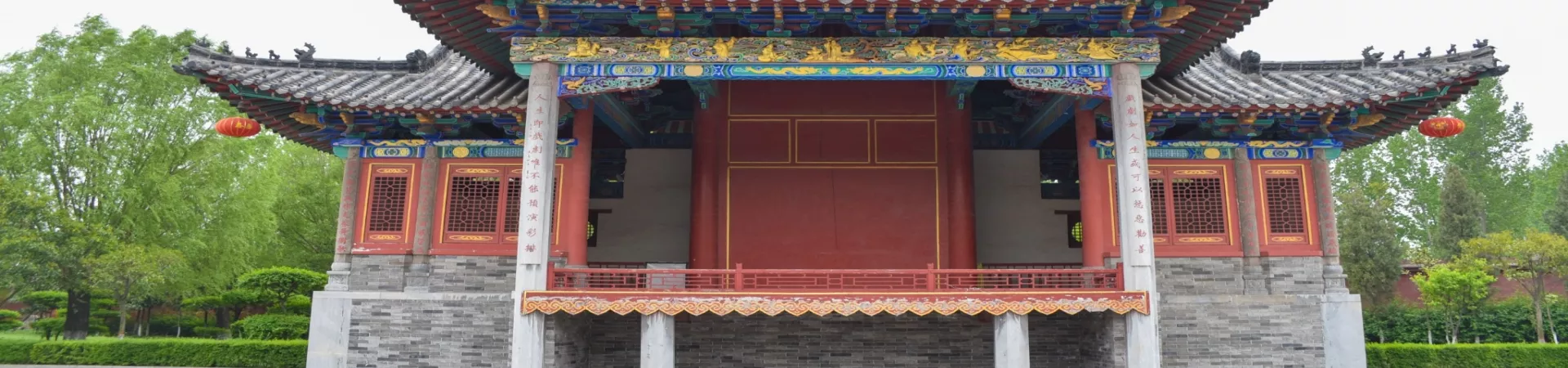
Subtitle: Tracing the Steps of a Legend: A Journey Through Xuchang's Baling Bridge
1. Introduction: Where History Meets the Riverbank
Nestled approximately 4 kilometers west of Xuchang city center, where the gentle Qingni River flows, lies a site steeped in both architectural charm and legendary lore—the Baling Bridge Scenic Area. More than just a historical crossing, this location is a tangible portal into the turbulent and romanticized era of the Three Kingdoms (220-280 AD). Originally named the Eight-Mile Bridge (Bali Qiao), its transformation into the revered "Baling Bridge" is inextricably linked to one of Chinese history's most iconic figures: General Guan Yu, the paragon of loyalty and righteousness. For visitors seeking to move beyond textbook history and stand where legendary events purportedly unfolded, the Baling Bridge offers a uniquely evocative experience, blending natural scenery with profound cultural narrative.
2. The Heart of the Legend: Guan Yu's Fateful Departure
2.1 The Historical and Literary Context To appreciate the bridge's significance, one must understand the legend it commemorates. Following a series of battles in the late Eastern Han dynasty, the mighty warrior Guan Yu, along with his sworn brothers Liu Bei and Zhang Fei, was temporarily separated. Guan Yu found himself under the hospitality, and some would say detention, of the warlord Cao Cao in Xuchang (then known as Xudu). Cao Cao, deeply admiring Guan Yu's prowess and character, bestowed upon him numerous gifts and honors in an attempt to win his allegiance.
2.2 The Act of Defiance and Loyalty However, Guan Yu remained unwaveringly loyal to his sworn brother Liu Bei. Upon learning of Liu Bei's whereabouts, Guan Yu resolved to leave immediately to reunite with him. He returned all of Cao Cao's gifts, sealed his official title in a mansion, and prepared for his journey. The legend, immortalized in the classic novel Romance of the Three Kingdoms, reaches its dramatic climax at this very bridge. As Guan Yu departed, Cao Cao, in a final act of respect and perhaps reluctant admiration, rushed after him. At the bridge, Cao Cao offered a parting gift of a luxurious robe as a token of esteem.
2.3 The Iconic "Picking Up the Robe" Moment Guan Yu, suspicious of treachery and refusing to dismount from his legendary steed, Red Hare, did not accept the robe directly. Instead, he used the tip of his formidable weapon, the Green Dragon Crescent Blade, to skillfully "pick up" the robe from a distance, donning it without ever alighting. This act—proud, cautious, and respectful in its own way—became the immortal "Picking Up the Robe" (Tiao Pao) scene. It perfectly symbolized Guan Yu's unwavering principles: he acknowledged Cao Cao's gesture but maintained his physical and symbolic distance, prioritizing his loyalty above all. This event transformed the structure from a mere bridge into the "Baling Bridge," a monument to integrity.
3. Exploring the Scenic Area: Architecture and Artifacts
3.1 The Architectural Profile of the Bridge While the original bridge from the Han dynasty no longer stands, the current structure has been meticulously reconstructed to reflect its historical grandeur. The bridge is an elegant three-arch stone construction, built from durable bluish-grey stone. It spans an impressive 90 meters in length and originally stood over 3 meters above the river's surface. Its width was historically noted as sufficient for two carriages to pass abreast, indicating its importance as a major thoroughfare. The graceful arches reflected in the calm waters of the Qingni River create a picturesque scene, especially when framed by the willow trees that line the banks.
3.2 Key Monument: The "Imperial Brother Picks Up the Robe" Stele Adjacent to the bridge, one of the most significant historical artifacts anchors the legend in physical form. This is a stone stele erected by the Ming dynasty general Zuo Liangyu in the 17th century. Inscribed with the characters "Han Shou Ting Hou Ci Cao Tiao Pao Chu" (The Place Where the Marquis of Hanshou Left Cao Cao and Picked Up the Robe), the stele serves as an official historical marker, linking the physical site to the narrative across centuries. It provides a tangible connection to the past and was a key element in preserving the memory of the event long before the modern scenic area was developed.
3.3 The Ambiance: Willows and Waterways The scenic area is designed for contemplation. The weeping willows (liu) along the riverbanks are not merely decorative; in Chinese culture, the willow is a symbol of farewell, making their presence here poetically apt. The rustle of their leaves in the breeze and their reflection in the river enhance the serene and somewhat poignant atmosphere, allowing visitors to imagine the solemnity of Guan Yu's departure.
4. Practical Visitor Information
4.1 Operating Hours and Admission The Baling Bridge Scenic Area is open year-round to accommodate visitors. Operating hours are consistent, but the last admission time varies slightly by season. * May 31st to October 7th: The site is open from 8:00 AM to 5:30 PM, with the last ticket sold and final entry permitted at 5:00 PM. * October 8th to May 30th of the following year: The site maintains the same opening hours of 8:00 AM to 5:30 PM, with last entry also at 5:00 PM. The standard admission fee for the scenic area is 25 Chinese Yuan (RMB) per person.
4.2 Location and Contact Details The scenic area is conveniently located at Baling Bridge on Baling Road in Xuchang City, Henan Province. For any specific inquiries regarding accessibility, group visits, or confirmation of hours, visitors can contact the management office directly at 0374-3261111.
4.3 The Visitor Experience A visit typically begins at the entrance, leading towards the river and the central focus—the bridge itself. Walking across the stone-paved bridge is the highlight, offering views of the river and the surrounding parkland. The stele is a mandatory stop for photography and reflection. The area is not overly large, allowing for a leisurely exploration within two to three hours. Informational plaques in both Chinese and English explain the history and key features. The site is less about thrilling entertainment and more about historical immersion and cultural appreciation, making it ideal for history enthusiasts, those familiar with the Three Kingdoms saga, and travelers looking for a peaceful yet meaningful stop in Xuchang.