Taohuatan Scenic Area
Subtitle: A Journey to the Peach Blossom Pool: Where Poetry Meets Timeless Landscape
1. Introduction: The Allure of a Poetic Legacy Nestled within the boundaries of Jing County, adjacent to the serene Taiping Lake, lies the Peach Blossom Pool Scenic Area (Taohuatan Fengjingqu), a destination forever immortalized by the brushstroke of China's most celebrated poet. It was here, over twelve centuries ago, that Li Bai, the "Banished Immortal" of the Tang dynasty, penned his famous farewell lines: "However deep the Peach Blossom Pool may be, / It's not so deep, O Wang Lun! as your love for me." This single couplet transformed a picturesque stretch of water into a timeless symbol of profound friendship, drawing visitors not just to a scenic spot, but to the very wellspring of Chinese poetic sentiment. The area offers more than literary pilgrimage; it is a harmonious blend of lyrical natural beauty and remarkably preserved ancient Huizhou architecture, providing a tranquil escape into a landscape that feels suspended between verse and reality.
2. The Heart of the Scenery: The Pool and Its Environs
2.1. The Poetic Waters Contrary to what its name might suggest, the Peach Blossom Pool is not an isolated pond but a particularly serene and deep section of the Qingyi River. The water, often a clear, emerald green, reflects the surrounding hills and ancient village architecture with mirror-like calmness. Its depth and beauty, which so inspired Li Bai, remain palpable. The primary mode of experiencing the pool is via the included ferry boat, which shuttles visitors between the east and west banks. This short journey on the gentle waters is essential, allowing one to appreciate the scene from the poet's vantage point and feel the depth of the history these waters hold.
2.2. The Facing Villages: Chen Village and Wan Village The true cultural soul of the Peach Blossom Pool resides on its banks, where two ancient villages face each other across the water. To the east lies Chen Village (also often referred to in historical context with the area), and to the west, Wan Village. Both are exquisite examples of Ming and Qing dynasty Huizhou architecture, characterized by their elegant white-walled, black-tiled houses, ornate horse-head gables (feng hu qiang), and intricate wood carvings that speak of a prosperous mercantile past. The ferry connects these two living museums, each village telling a quieter, more residential side of the region's story compared to some of the more commercialized ancient towns.
3. Immersive Exploration: Alleys, Architecture, and Atmosphere
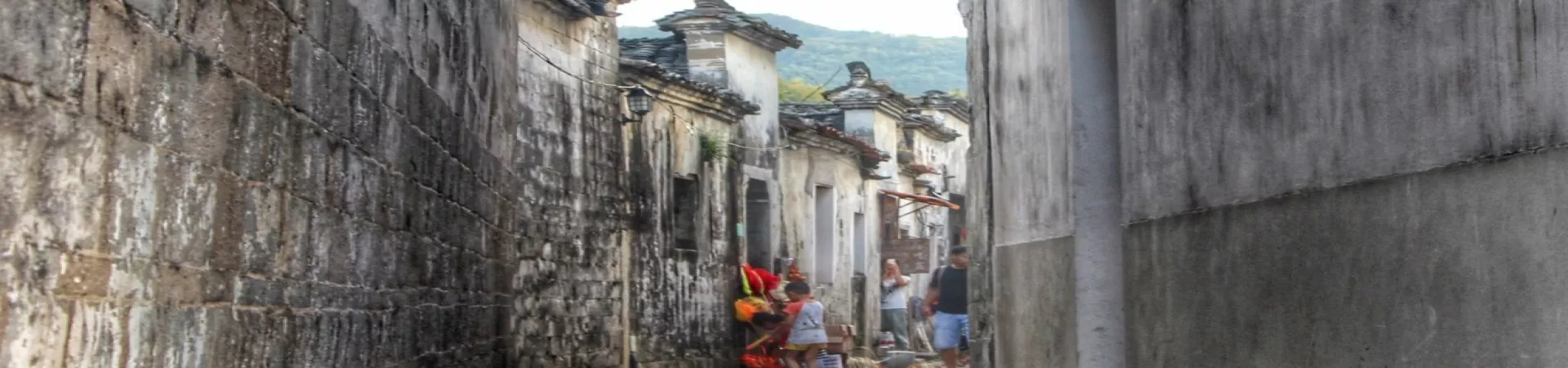
3.1. The Old Street of Wan Village Disembarking on the west bank at Wan Village, visitors step into a different era. A narrow, winding old street paved with irregular, time-worn cobblestones serves as the main thoroughfare. The walls lining the alley are beautifully斑驳 (bānbó), their white plaster showing patches of age and texture, adorned with creeping plants. Walking through this cool, shaded passage, with glimpses of traditional courtyard homes and the occasional local resident going about their day, is a journey back in time. The alley eventually opens up to reveal the stunning vista of the calm, expansive pool, creating a dramatic and unforgettable visual transition from enclosed history to open, poetic nature.
3.2. Architectural Highlights and Cultural Sites Scattered throughout the villages are significant historical structures. Look for ancient ancestral temples (citang), which were the centers of clan life and feature some of the finest woodwork. Memorial archways (pailou), though perhaps less grandiose than those in other Huizhou areas, stand as silent testaments to local virtues and achievements. Key sites often include the "Taohuatan Anthology" stone inscriptions and various pavilions dedicated to the memory of Li Bai and Wang Lun. Exploring these sites connects the dots between the landscape, the architectural environment, and the literary legend that binds them all.
4. Practical Information for Visitors
4.1. Tickets, Fees, and Opening Hours * Ticket: A combined ticket (including the mandatory ferry ride) is priced at 65 RMB for adults. This fee covers entrance to the scenic area and boat transportation between the villages. * Ferry Note: It is important to note that all visitors, including those eligible for free admission (such as children under a certain height, seniors over a specific age with valid ID, etc.), are required to pay a separate boat fee of 10 RMB. * Operating Hours: The scenic area is open from 8:00 AM to 4:30 PM daily. The last admission and last ferry departure from either shore is at 4:00 PM. It is advisable to arrive with at least 3 hours to fully explore both villages and enjoy the boat ride without rush.
4.2. Getting There and Suggested Itinerary The scenic area is located in Jing County, Xuancheng, Anhui Province. It is most conveniently accessed by private vehicle or hired taxi from nearby cities like Huangshan (Tunxi) or Xuancheng. Public buses from Jingxian county town are also available but may have less frequent schedules. A typical visit involves taking the ferry from the main entrance side (often the east) to Wan Village, thoroughly exploring its old street and lanes, then taking the ferry back or on a loop to see the perspectives from the water again, and finally exploring the Chen Village side. The entire experience is best enjoyed at a leisurely pace, allowing time for photography, quiet reflection by the pool, and soaking in the atmospheric details of the ancient alleyways.
4.3. Contact Information For any inquiries prior to your visit, you may contact the scenic area at: * 0563-5870418 * 0563-5024118
(Information last updated: April 2023)