Jingting Mountain
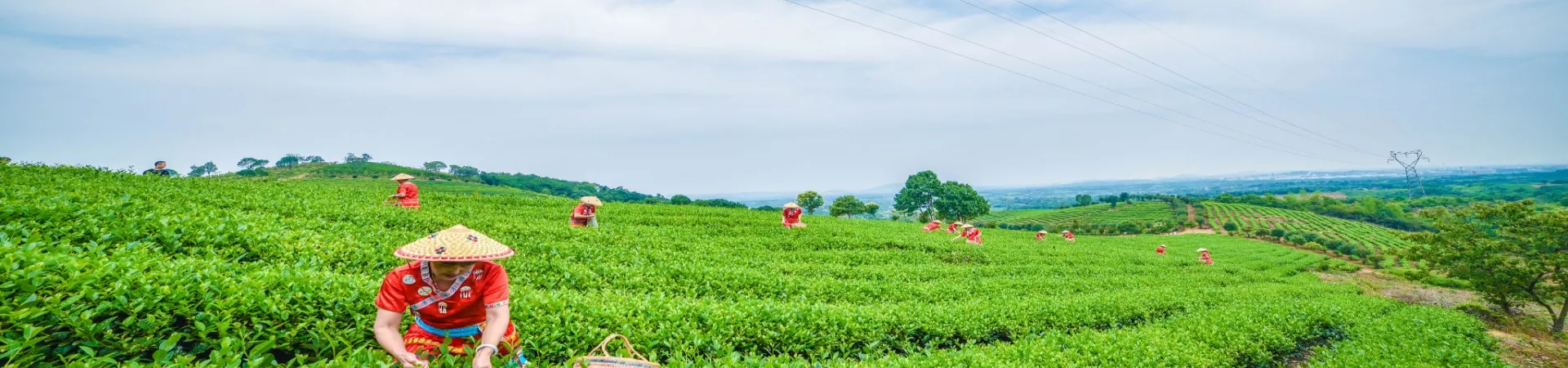
Subtitle: A Journey Through China's Poetic Landscape: Jingting Mountain National Forest Park
Introduction: The Mountain of a Thousand Poems Nestled on the banks of the Shuiyang River, approximately five kilometers north of Xuancheng city in Anhui Province, lies Jingting Mountain National Forest Park. More than just a scenic natural reserve, this mountain is a profound cultural artifact, a living testament to over a millennium of Chinese literary and artistic brilliance. Originally named Zhaoting Mountain, it was renamed Jingting during the early Jin Dynasty to avoid using a character from the name of Emperor Sima Zhao. As a branch of the majestic Huangshan range, Jingting Mountain stretches over a hundred li from east to west, encompassing about 60 peaks of varying sizes. Its highest point, aptly named "First Peak," rises to a modest 317 meters. However, its true stature is measured not in altitude but in its immense cultural legacy, earning it the revered title of "The Poetic Mountain of Jiangnan."
A Literary Legacy: From Xie Tiao to Li Bai and Beyond The mountain's journey into the annals of Chinese culture began in the Southern Qi Dynasty with the poet Xie Tiao. His poem, "Traveling in Jingting Mountain," captured its ethereal beauty with lines like, "This mountain stretches a hundred li, vast and indistinct, level with the clouds. It is a place for recluses to dwell, where spirits and wonders surely reside." This set the stage for the mountain's poetic destiny.
Yet, it was the Tang Dynasty's "Immortal Poet," Li Bai, who irrevocably cemented Jingting Mountain's fame. His legendary seven visits culminated in the succinct, deeply philosophical quatrain, "Sitting Alone in Jingting Mountain": "All birds have flown away, so high; A lonely cloud drifts on, so free. Gazing on Mount Jingting, nor I Am tired of him, nor he of me." This intimate dialogue between poet and mountain transformed Jingting from a geographical feature into a spiritual companion, a symbol of serene understanding and enduring solace.
Following the trail blazed by Xie and Li, Jingting Mountain became a pilgrimage site for China's literary and artistic elite. The roster of visitors reads like a who's who of Chinese history: Bai Juyi, Du Mu, Han Yu, Liu Yuxi, Wang Wei, Meng Haoran, and Li Shangyin from the Tang; Su Shi, Mei Yaochen, Ouyang Xiu, and Wen Tianxiang from the Song; through the Yuan, Ming, and Qing dynasties, masters like Tang Xianzu, Wen Zhengming, Shi Tao, and Yao Nai all sought inspiration here. They composed poems, penned essays, created paintings, and left inscriptions, using the landscape to express their deepest emotions and thoughts. Preliminary studies estimate thousands of such literary and artistic works dedicated to Jingting, solidifying its reputation as an unparalleled cultural sanctuary that has resonated across centuries and borders.
Modern Echoes and Practical Information for the Visit The mountain's poetic resonance continued into the modern era. During the War of Resistance against Japan, the renowned general Chen Yi passed by Xuancheng and was moved to compose a poem, "Sailing East on the Lake from Xuancheng," which asked: "Under Jingting Mountain the oar sounds soft, Rain sprinkles river and sky like a dream. Do the poetic souls of Li and Xie remain? Lake light pierces ten thousand years of sorrow." This verse beautifully bridges the ancient cultural heritage with the contemporary spirit.
Planning Your Pilgrimage For the modern visitor seeking to walk in the footsteps of these literary giants, Jingting Mountain offers a accessible and enriching experience.
- Transportation: The park is easily reachable from Xuancheng city. Visitors can take public bus routes 16, 23, or 6 and alight at the Jingting Lake Park bus stop, followed by a short walk to the entrance.
- Admission Fees:
- Standard adult ticket is priced at 50 RMB.
- Concession tickets (30 RMB) are available for: children over 1.3 meters tall and under 18 years old; seniors aged 60-64 (inclusive); and full-time students with valid ID.
- Children under 1.3 meters in height enjoy free admission.
- A special national policy offers free admission until December 31, 2024, for medical personnel who aided Hubei province during the pandemic, upon presentation of relevant certificates and ID.
- Opening Hours:
- March 1 to October 31: 8:00 AM - 5:30 PM, with last entry at 5:30 PM.
- November 1 to end of February: 8:00 AM - 5:00 PM, with last entry at 5:00 PM.
- Suggested Duration: To fully appreciate the trails, pavilions, historical sites, and the tranquil atmosphere, a visit of three hours or more is recommended.
The Essence of the Experience Walking through Jingting Mountain National Forest Park is not merely a hike; it is a traversal through layers of cultural history. The rustling pines seem to whisper verses from the Tang Dynasty; the quiet ponds reflect the same skies that inspired Song painters; and the view from the First Peak offers a panorama that has stirred hearts for generations. It is a place where nature and culture are inseparably intertwined, inviting every visitor to find their own moment of quiet reflection—perhaps, in their own way, to sit alone with Jingting Mountain and discover its timeless, unchanging charm.