Xishuangbanna General Buddhist Temple
A Visitor's Guide to Xishuangbanna's Grand Buddha Temple
Nestled in the heart of Xishuangbanna Dai Autonomous Prefecture in Yunnan Province, the Grand Buddha Temple (Zong Fosi) stands as one of the most significant and revered Buddhist sites in the region. More than just a tourist attraction, it serves as a central hub for Theravada Buddhism for the local Dai people and is an active center of monastic learning and daily worship. Its serene atmosphere, intricate architecture, and profound cultural importance offer visitors a deep and authentic glimpse into the spiritual life of Xishuangbanna.
Planning Your Visit: Essential Information
Before embarking on your cultural journey, it's helpful to have the key logistical details at hand to ensure a smooth experience.
Getting There The temple is conveniently located in Jinghong, the capital city of Xishuangbanna. Visitors can take public bus routes Jinghong 7 or Jinghong 3 and alight at the Manting Xiaozhai station. From there, a pleasant walk of approximately 484 meters will lead you to the temple entrance. Taxis and ride-hailing services are also readily available throughout the city for a more direct route.
Admission and Hours The temple grounds are open to the public daily from 8:00 AM to 6:00 PM throughout the year. A highly convenient and cost-effective option for visitors is the combined ticket, which grants access to both the Grand Buddha Temple and the adjacent, historically rich Manting Park (also known as the Garden of the Soul). This combined adult ticket is priced at 40 RMB. Purchasing this ticket is recommended for those wishing to explore the deep historical connection between the temple and the former royal garden.
A Note on Your Visit Allotting approximately 1 to 3 hours for your visit is advisable. This allows sufficient time to appreciate the temple's architecture, observe rituals, and soak in the tranquil environment without feeling rushed. It is important for visitors to note that as of late 2023, certain areas of the temple or its associated facilities might be undergoing renovation or enhancement to preserve and improve the site for future generations. Visitors are encouraged to check for any updated notices upon arrival.
Exploring the Temple Complex: Architecture and Spiritual Significance
Stepping through the temple gates, visitors are transported into a world of spiritual devotion and artistic beauty, distinct from the Han Chinese Buddhist traditions found elsewhere in China.
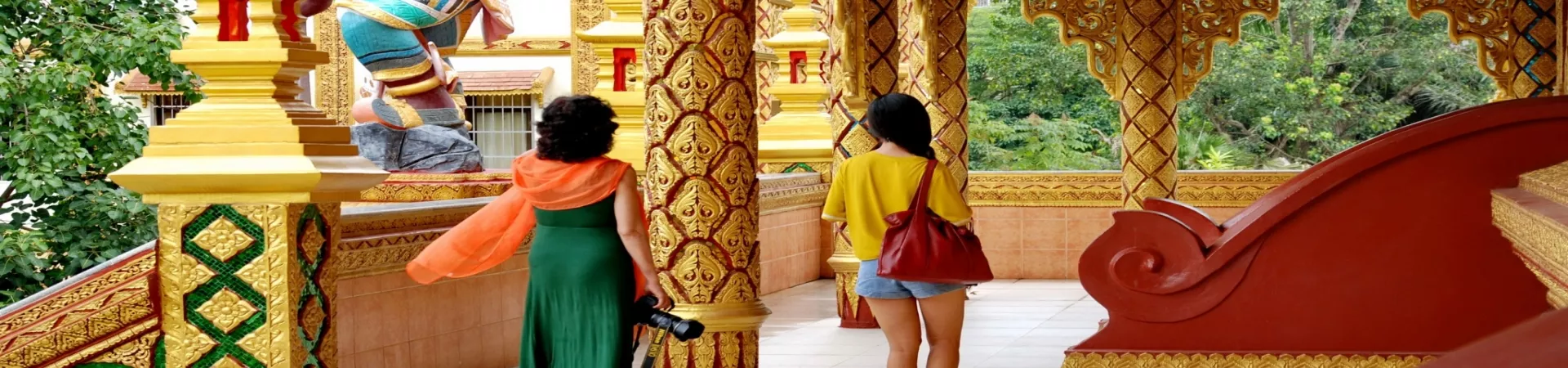
Architectural Splendor The temple's architecture is a stunning example of Dai-style temple design, characterized by sweeping, multi-tiered roofs that resemble the pointed caps of bamboo shoots. These roofs are often adorned with intricate carvings and glazed tiles, shimmering in the tropical sun. The main prayer hall, or vihara, is the focal point. Its interior is often richly decorated with murals depicting scenes from the life of the Buddha and Jataka tales, rendered in a vibrant, distinctive style. Elaborate wood carvings and gold leaf applications further enhance the sense of sacred grandeur.
A Living Center of Buddhism Unlike a museum, the Grand Buddha Temple is a vibrant, living institution. It is common to see monks in their saffron robes going about their daily routines—studying ancient Pali scriptures, engaging in meditation, or performing rituals. The temple often functions as a monastic school, educating young novices in Buddhist philosophy, Dai language, and cultural practices. Visitors may hear the melodic chanting of sutras, a sound that deeply contributes to the site's serene ambiance. Observing these activities offers a rare insight into the preservation of Theravada Buddhist traditions in China.
Cultural Context and Etiquette
Understanding the temple's role and showing appropriate respect will greatly enrich your visit.
Historical and Royal Connections The Grand Buddha Temple holds a special historical status. It was traditionally the primary Buddhist temple for the Dai royalty in the region. Its close proximity to the Manting Park, which served as the royal garden for the rulers of the Sipsongpanna (Xishuangbanna), underscores this deep historical link. Visiting both sites together provides a fuller picture of the region's regal and spiritual heritage.
Visitor Etiquette As a place of active worship, visitors are expected to dress and behave modestly. Shoulders and knees should be covered. It is customary to remove one's shoes before entering the main prayer halls or any building where worship is taking place. Speaking softly, moving calmly, and refraining from using flash photography, especially during prayers or when directed by signs, are essential practices. Always ask for permission before taking photographs of monks or devotees. Circulating stupas and sacred images in a clockwise direction is a sign of respect.
The Combined Experience: Temple and Park
The combined ticket is not merely a financial convenience but a key to a holistic cultural experience. After immersing yourself in the spiritual solemnity of the temple, a stroll through the lush, landscaped grounds of Manting Park offers a beautiful contrast. The park, with its lake, traditional Dai buildings, and the iconic Zongfo Temple (a different structure within the park), was a place of leisure for the monarchy. The transition from temple to park allows visitors to appreciate both the sacred and the secular aspects of Dai royal life, making for a perfectly rounded half-day excursion in Jinghong.
Information last verified: September 28, 2023.