Zhaomingtai
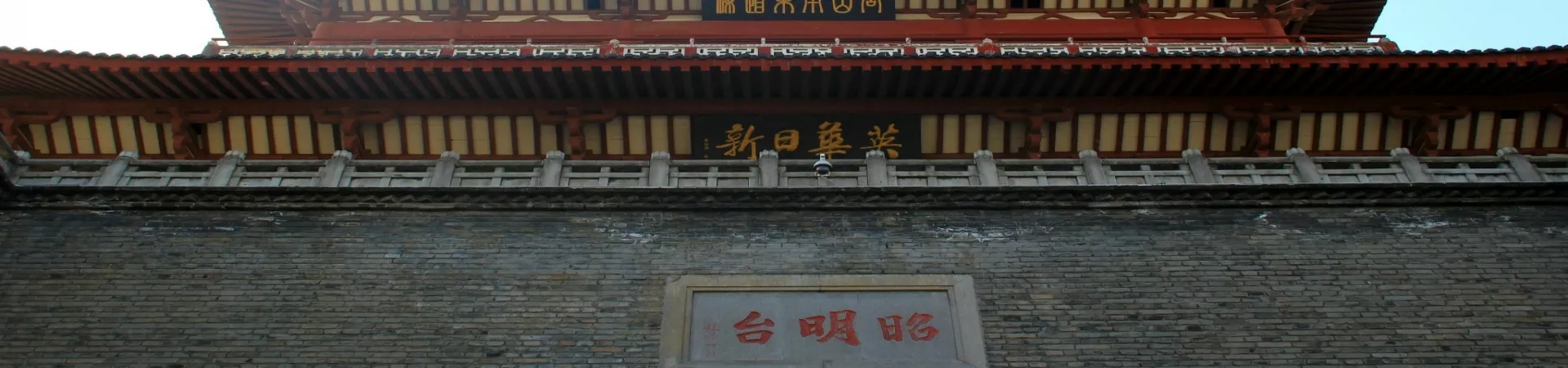
Subtitle: A Journey Through Time at Xiangyang's Ancient Literary Landmark
1. Introduction: The Beacon of Culture in an Ancient City
Standing as a silent yet eloquent sentinel in the heart of Xiangyang City, Hubei Province, the Zhaoming Terrace (昭明台, Zhaoming Tai) is far more than just an architectural relic. It is a profound symbol of Chinese literary heritage, a monument to scholarly pursuit, and a cultural anchor for this historic city, famously known as a fortress along the Han River. For any visitor seeking to understand the soul of Xiangyang beyond its formidable ancient walls, a visit to Zhaoming Terrace is an essential pilgrimage. This structure, though reconstructed, faithfully channels the spirit of the Liang Dynasty (502-557 AD) of the Southern Dynasties period, serving as a lasting tribute to Crown Prince Zhaoming, Xiao Tong, the esteemed compiler of China's first comprehensive literary anthology, Wen Xuan (Selections of Refined Literature). The terrace invites travelers on a journey that intertwines architectural grandeur, deep literary history, and the vibrant, layered past of a strategic city central to China's historical narrative.
2. Historical Significance and Legacy
2.1. Honoring Prince Zhaoming: The Literary Architect The very name of the terrace pays homage to its patron, Crown Prince Zhaoming (Xiao Tong). As a passionate scholar and patron of the arts during the culturally vibrant Liang Dynasty, his most enduring contribution was the commissioning and compilation of the Wen Xuan. This monumental work collected the finest prose and poetry from the Zhou dynasty up to his own time, effectively preserving and defining the Chinese literary canon for subsequent generations. The original construction of Zhaoming Terrace during his era was intended as a place for literary gatherings, scholarly discussion, and the preservation of knowledge—a physical embodiment of his intellectual legacy.
2.2. A Tangible Link to Xiangyang's Scholarly Past While the original structure was lost to the ravages of time and warfare, the decision to reconstruct Zhaoming Terrace on its historical site underscores the city's enduring reverence for this chapter of its history. Xiangyang, primarily celebrated for its military significance as an impregnable fortress during the Three Kingdoms period and the Song-Mongol wars, also fostered a rich intellectual climate. The Terrace serves as a crucial counterpoint to the city's martial narrative, reminding visitors that within these mighty walls, the arts of peace and scholarship flourished under enlightened patronage. It represents the cultural soft power that existed alongside military might.
3. Architectural Experience and Layout
3.1. Exterior Grandeur and Design Philosophy The reconstructed Zhaoming Terrace presents a majestic example of traditional Chinese tower architecture, designed to evoke the style of the Southern Dynasties. It is a towering, multi-eaved structure, typically featuring sweeping roofs with upturned corners, intricate dougong (wooden bracket) systems, and a dignified color scheme often centered on vermilion, white, and gray. Its commanding presence on the city's central axis makes it a focal point in Xiangyang's urban landscape. The design is not merely aesthetic; it reflects traditional Chinese cosmological principles, symbolizing a connection between the earthly realm of scholarly pursuit and the heavens.
3.2. Interior Spaces and Museum Collections Today, the terrace houses the Xiangyang Museum, transforming it from a historical symbol into an active repository of the region's past.
- 3.2.1. Permanent Historical Exhibits: The museum's core collections take visitors on a chronological journey through the area's history. Artifacts span from Neolithic pottery to bronze vessels from the Chu culture, which dominated this region during the Warring States period. A significant portion is dedicated to the Three Kingdoms era, featuring relics that bring to life the legends of figures like Zhuge Liang, who lived in seclusion near Xiangyang, and the protracted battles that defined the era.
- 3.2.2. The Prince Zhaoming and Wen Xuan Gallery: A dedicated section honors the terrace's namesake. It provides detailed biographical information on Prince Xiao Tong, explores the monumental significance of the Wen Xuan, and displays historical texts, calligraphy, and artistic representations related to this literary masterpiece. This gallery directly connects the building's function to its historical inspiration.
- 3.2.3. City Views and Reflective Atmosphere: Ascending the terrace offers more than historical insight. The upper floors provide panoramic views of modern Xiangyang, with the serpentine Han River and remnants of the ancient city walls in sight. This vantage point allows for a powerful reflective experience, juxtaposing the ancient and the contemporary, and offering a physical perspective on the city's geographical and strategic importance.
4. Practical Visitor Information and Cultural Context
4.1. Location and Accessibility Zhaoming Terrace is strategically located in Xiangyang's city center, specifically on Zhongshan Road, easily accessible by public bus, taxi, or ride-hailing services. Its central position makes it an ideal starting or focal point for exploring other nearby attractions, such as the Xiangyang Ancient City Wall and the Moochou Lake area. The surrounding district is often bustling with activity, offering a glimpse into modern city life against a historical backdrop.
4.2. Enhancing the Visit: Tips and Integration To fully appreciate a visit, it is recommended to allocate at least two hours to explore the museum exhibits thoroughly and enjoy the views. Engaging a knowledgeable tour guide or utilizing an audio guide can greatly enrich the experience by providing context to the artifacts and the story of Prince Zhaoming. Combining the visit with a walk along the nearby Ancient City Wall allows one to physically connect Xiangyang's dual identities: the military bastion and the center of culture. The contrast between the imposing, defensive walls and the elegant, scholarly terrace encapsulates the city's complex historical character.
4.3. The Terrace in Local Life Beyond being a tourist site, Zhaoming Terrace remains a cultural beacon for residents. It hosts temporary exhibitions, cultural lectures, and calligraphy displays, continuing its ancient role as a hub for learning and artistic appreciation. For the visitor, observing how locals interact with the space—whether school groups on educational trips or scholars attending an event—adds a layer of living culture to the historical exploration. It stands not as a static monument, but as an active participant in the city's ongoing cultural narrative, bridging a glorious past with a dynamic present.