Green Shadow Wall
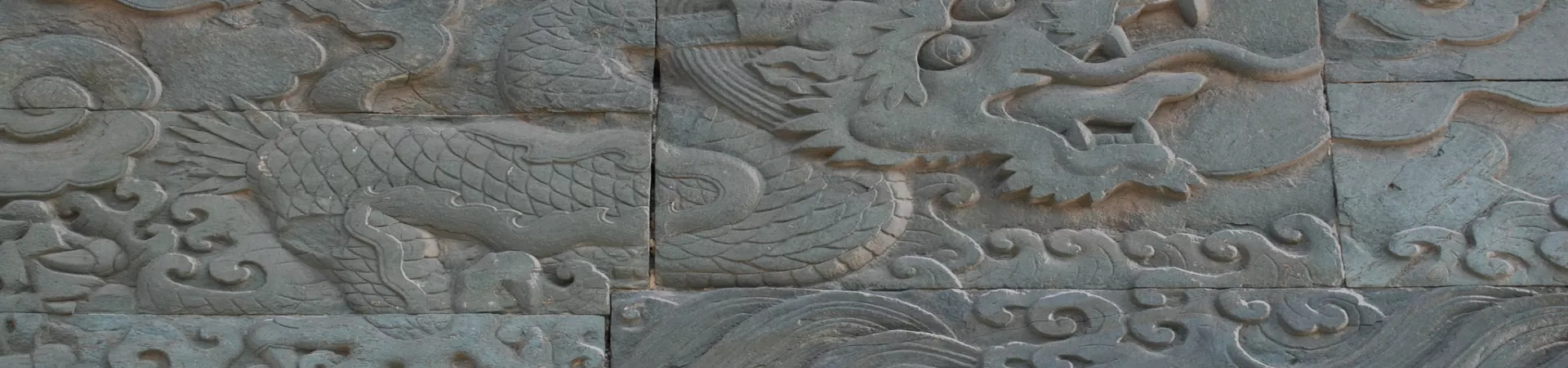
Subtitle: A Silent Guardian of History: Exploring the Green Shadow Wall of Xiangyang's Prince's Palace
Introduction: A Relic of Imperial Ambition
Nestled within the modern urban landscape of Xiangyang City, in China's Hubei province, stands a monument of quiet grandeur and historical intrigue—the Green Shadow Wall of the Xiang Prince's Palace. Unlike the sprawling palace complex it once fronted, this wall has endured the ravages of time, standing today not as a mere architectural fragment, but as a powerful, silent narrator of a bygone era of imperial power, artistic achievement, and turbulent change. For the discerning visitor, it offers a unique and tangible connection to the Ming Dynasty, inviting contemplation on the transience of political fortunes and the enduring legacy of art.
I. Historical Context: The Rise and Fall of the Xiang Prince's Palace
A. The Ming Dynasty and the Feudal System To fully appreciate the Green Shadow Wall, one must understand its origins within the framework of the Ming Dynasty (1368-1644). The Ming emperors consolidated their rule by appointing their sons and close relatives as feudal princes, granting them substantial territories and resources to govern. These princely establishments were microcosms of the imperial court, designed to project authority and ensure loyalty in key regions.
B. The Establishment of the Xiang Principality Xiangyang, a strategically vital city guarding the Han River and a crucial north-south transportation route, was a prize worthy of an imperial son. The Xiang Prince's Palace was constructed in the early 15th century as the seat of power for the appointed princes of Xiang. For over two centuries, it served as the political and ceremonial heart of the region, a symbol of the Ming emperor's far-reaching reach.
C. The Palace's Demise and the Wall's Survival The dynasty's collapse in the mid-17th century, precipitated by peasant rebellions, spelled doom for the palace. The magnificent halls, pavilions, and gardens that constituted the prince's domain were largely destroyed during the turmoil. Miraculously, the screen wall—an external structure facing the main gate—was spared complete destruction. Its survival makes it the largest and most well-preserved glazed screen wall from the Ming Dynasty in China, transforming it from an auxiliary architectural element into a primary historical witness.
II. Architectural and Artistic Analysis of the Green Shadow Wall
A. Form and Function of the Screen Wall The Green Shadow Wall is a zhaobi, or spirit screen wall, a common feature in traditional Chinese architecture, particularly for significant buildings. Positioned directly opposite the main entrance, it served both practical and symbolic purposes. Practically, it provided privacy, shielding the inner courtyards from the direct view of the street. Symbolically, it was believed to ward off evil spirits, which, according to folklore, could only travel in straight lines; the wall would obstruct their path into the residence.
B. Dimensions and Scale The wall's imposing scale immediately commands respect. It stretches approximately 25 meters in length and stands 7 meters tall, with a thickness of over 1.5 meters. This massive scale was a deliberate expression of the princely mansion's prestige and power, designed to awe visitors even before they entered the main gates.
C. The Art of Glazed Ceramic Sculpture The true glory of the wall lies in its breathtaking decoration. It is entirely faced with green-glazed ceramic tiles, from which it derives its name—"Green Shadow Wall." These tiles form the canvas for a series of exquisite, high-relief sculptures.
1. The Central Panel: Dragons Among Clouds The central section is the masterpiece. It features a dynamic scene of two majestic five-clawed dragons (long) playing with a "sacred pearl" amidst swirling clouds. The five-clawed dragon was an emblem strictly reserved for the emperor and his immediate family, boldly proclaiming the royal status of the palace's occupant. The craftsmanship is extraordinary: the dragons seem to coil and leap off the wall, their scales, claws, and expressive faces rendered in intricate detail, capturing a sense of divine power and movement.
2. The Side Panels: A Symphony of Mythical Beasts Flanking the central dragons are two large panels, each dominated by a single, powerful mythical creature—a qilin (a benevolent hooved creature) on one side and a lion on the other. These beasts are shown striding across turbulent waves, symbolizing authority and the suppression of chaos. The backgrounds are filled with an array of other auspicious symbols: bats (representing happiness), deer (symbolizing official salary), and various floral and cloud patterns, creating a rich tapestry of symbolic meaning focused on good fortune, longevity, and prosperous rule.
3. Craftsmanship and Color The uniformity of the vibrant green glaze, fired at high temperatures centuries ago, remains remarkably consistent. The combination of this jade-like green with the detailed sculptural forms represents the pinnacle of Ming-era glazed ceramic art, showcasing the sophisticated technical skills and artistic vision of the craftsmen employed by the princely house.
III. The Visitor Experience: Engaging with a National Treasure
A. Practical Information for Your Visit * Location: The Green Shadow Wall is located on Green Shadow Wall Road (Lüyingbi Lu) in Xiangyang's city center. * Opening Hours: The site is generally open to the public from 8:00 AM to 5:30 PM, Monday through Sunday, throughout the year. It is advisable to confirm the latest hours locally before your visit. * Contact: For specific inquiries, you can reach the site management at +86-710-3433316.
B. On-Site Observation and Interpretation Visiting the wall is an exercise in focused observation. Take time to walk its length, studying the different panels. Notice the play of light and shadow on the reliefs at different times of day, which may enhance the three-dimensional effect and bring the mythical scenes to life. Informational plaques on-site provide historical context, but the true experience is in quietly appreciating the scale and artistry, imagining the wall as it once was—the dazzling prelude to a magnificent palace now lost to time.
C. Reflecting on Historical Layers The site prompts reflection on the layers of Xiangyang's history. The wall stands in contrast to the modern city around it, a solitary remnant of its Ming-era zenith. It also invites consideration of the cultural importance placed on symbolism in Chinese art, where every animal, plant, and pattern carries a deeper wish or meaning, weaving a narrative of power and hope into the very fabric of the architecture.
IV. Legacy and Significance: More Than Just a Wall
The Green Shadow Wall transcends its physical form. It is a rare and invaluable artifact of princely architecture from the Ming period. For historians, it provides concrete evidence of construction techniques, artistic styles, and the iconography of imperial power. For the people of Xiangyang, it is a point of pride and a tangible link to their city's illustrious past. For all visitors, it serves as a poignant monument, a beautiful and resilient survivor that whispers tales of grandeur, conflict, and the enduring human desire to create lasting beauty. It is not merely a wall to be seen, but a story to be deciphered and a bridge to a pivotal chapter in China's imperial history.