Mi Gong Temple
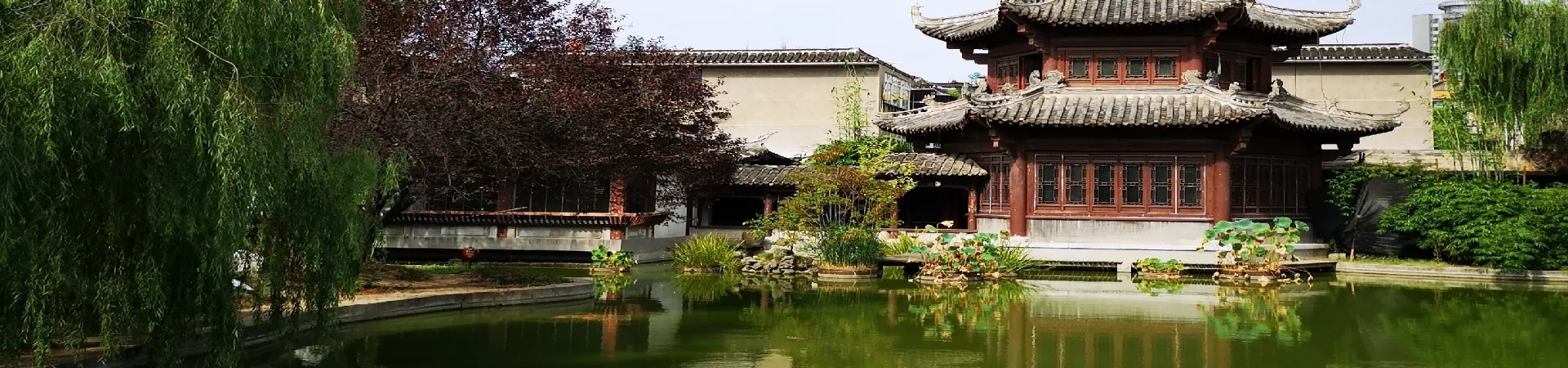
Subtitle: A Journey Through Calligraphy and History in Xiangyang's Ancient Quarter
1. Introduction: The Historical Tapestry of Xiangyang's Northwest Corner
To visit the Mi Gong Temple is to step into a layered narrative of Chinese history, where tales of military defense, maternal valor, and unparalleled artistic genius are interwoven into the very fabric of Xiangyang's ancient city walls. The temple's location itself is historically significant. Situated approximately 300 meters west of the Linhan Gate in northern Xiangyang, it lies in the city's historic northwest corner. This area is forever linked to the legendary "Lady's Wall" (夫人城). During the Eastern Jin Dynasty, when the city was under siege by the forces of Fu Pi of the Former Qin, the mother of the defending general Zhu Xu, Lady Han, identified this northwestern section as a vulnerable point in the city's defenses. Demonstrating remarkable leadership, she mobilized the women of the city to construct a new, sturdy auxiliary wall on a strategic diagonal. Her foresight proved crucial when that exact section of the original wall was later breached; the newly built fortification held firm, repelling the invaders and saving the city. This act immortalized the site long before it became a sanctuary for art.
2. The Temple Complex: From Mi Family Abbey to a Memorial Hall
The core of the site, the Mi Gong Temple, originally known as the Mi Family Abbey (米家庵), traces its origins to the Yuan Dynasty. It was significantly expanded during the Ming Dynasty and later formally renamed Mi Gong Temple, transforming from a private family place of quiet reflection into a public memorial hall dedicated to celebrating the life and legacy of the Song Dynasty master, Mi Fu. The architecture within the temple compound is contemplative and elegant, designed to foster an atmosphere of scholarly reverence. Key structures include the Worship Hall (拜殿), a space for paying homage; the Baojin Studio (宝晋斋), which evokes the study where Mi Fu might have practiced his art; and the Yanggao Hall (仰高堂), whose name suggests "looking up to the heights," a metaphor for admiring lofty achievements and virtue.
3. The Heart of the Temple: A Treasury of Stone Inscriptions
While the buildings provide the setting, the temple's soul resides in its extraordinary collection of stone stele inscriptions, making it a veritable open-air museum of Chinese calligraphy. The most prized possessions are the 45 stele engraved with Mi Fu's calligraphic masterpieces, meticulously copied and carved in the 8th year of the Qing Dynasty Emperor Yongzheng's reign (1730 AD) by his descendants. These works offer visitors a direct, tangible connection to the brushwork of the master himself, showcasing his dynamic, spontaneous, and powerfully expressive "flying and moving" style. Complementing these are an additional 145 stele featuring other inscriptions and works, creating a comprehensive epigraphic environment. The immense cultural value of this collection was officially recognized in 1956 when "Mi Gong Temple and Its Stone Carvings" was designated a Key Cultural Relic Protection Unit of Hubei Province, ensuring its preservation for future generations.
4. Practical Visitor Information
4.1. Opening Hours and Admission The temple is open year-round, with seasonal adjustments to its hours. From June 1st to August 31st, gates are open from 08:00 to 18:00, with last admission at 18:00. During the winter months (December 1st to February 28th of the following year), hours are from 08:00 to 17:30, with a last admission time of 17:30. Admission to the temple is priced at 50 RMB.
4.2. Suggested Duration and Transportation To fully appreciate the historical context, the architectural details, and to spend meaningful time studying the vast array of stone inscriptions, a visit of 3 hours or more is highly recommended. This allows for a leisurely pace to absorb the serene atmosphere. The temple is conveniently located within Xiangyang's ancient city wall area. After entering through the Linhan Gate on the northern side of the old city, a westward walk of about 300 meters will lead you directly to this historic corner and the temple grounds.