Exhibition Hall of the Museum of the Chinese First Sino Japanese War
Subtitle: A Journey Through the Defining Conflict of 1894-1895
1. Introduction to the Museum The Sino-Japanese War Museum Exhibition Hall stands as a comprehensive and authoritative institution dedicated to preserving and presenting the history of the First Sino-Japanese War (1894-1895). Located on Liugong Island in Weihai, Shandong Province—a site of profound historical significance during the conflict—the museum offers visitors a deep, immersive exploration of this pivotal war that dramatically altered the course of East Asian history. More than just a collection of artifacts, it serves as a space for reflection on themes of national crisis, heroism, and modernization.
The museum's architectural presence is itself a powerful statement. Designed by the renowned architect and academician of the Chinese Academy of Sciences, Professor Peng Yigang, the main building is celebrated as a "classic of 20th-century Chinese architecture." Its bold and unique design creatively integrates the symbolic form of a Beiyang Fleet warship hull with towering statues of Beiyang Navy admirals, standing resolute. This fusion of architecture and sculpture immediately sets a solemn, monumental tone, visually connecting the visitor to the naval essence of the conflict before they even step inside.
2. The Core Exhibition: "The Sino-Japanese War: 1894-1895" The museum's permanent exhibition is structured into five distinct yet interconnected sections, guiding visitors through a chronological and thematic narrative of the war.
2.1. Prelude Hall This introductory space sets the stage, preparing visitors for the immersive historical journey ahead. It often features key symbolic artworks or installations that encapsulate the gravity of the coming narrative.
2.2. China and Japan on the Eve of War This section provides crucial context, contrasting the state of Qing Dynasty China and Meiji Japan in the late 19th century. * Domestic Situations: It examines the internal politics, social structures, and economic conditions of both empires. * Paths to Modernization: A critical comparison is drawn between Japan's rapid, concerted Meiji Restoration and China's hesitant, piecemeal Self-Strengthening Movement. * Military Buildup: The development and modernization of the two nations' armies and navies, particularly the famed Beiyang Fleet, are detailed, highlighting the disparities in doctrine, technology, and organization that would prove decisive.
2.3. The Outbreak and Course of the War This is the central and most extensive part of the exhibition, detailing the major military engagements. * Naval Battles: The focus here is on the dramatic naval clashes, culminating in the pivotal Battle of the Yalu River and the catastrophic Battle of Weihaiwei. The exhibition uses detailed models, maps, and diagrams to explain tactics and outcomes. * Land Campaigns: The parallel land battles on the Korean Peninsula and in Manchuria are also covered, showcasing the struggles of the Chinese armies. * Weapons and Technology: A significant collection of reproduced period weaponry, naval guns, uniforms, and equipment from both sides is displayed, offering tangible insight into the material reality of the war.
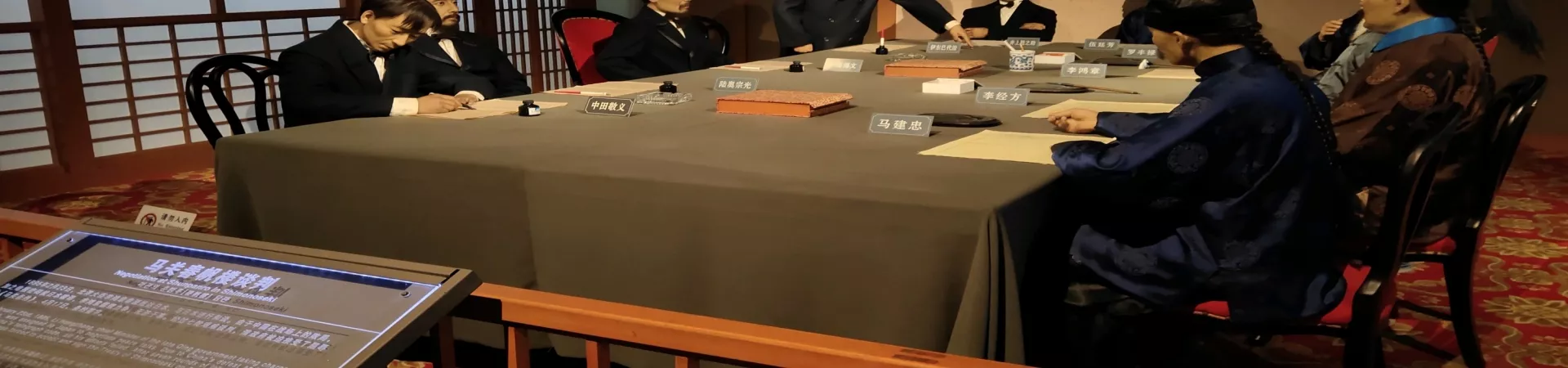
2.4. The Abyss of Defeat and the Spirit of Resistance This section moves beyond pure military history to explore the human cost, the aftermath, and the indomitable spirit of those who resisted. * Hyper-Realistic Dioramas: Among the museum's most poignant features are its life-sized, hyper-realistic scene reconstructions. These include the heart-wrenching "The Qu Family of Jinzhou Drowning Themselves in a Well" and the tense "Li Hongzhang at the Shimonoseki Negotiations," making history viscerally personal. * The Treaty of Shimonoseki: The harsh terms of the treaty that ended the war are examined, along with its far-reaching consequences for China, including the cession of Taiwan and the Liaodong Peninsula. * Artistic Interpretations: Large-scale oil paintings and monumental sculptures throughout this section depict key moments of battle, sacrifice, and tragedy, adding an emotional and artistic dimension to the historical facts.
2.5. Epilogue Hall This concluding space allows for contemplation on the war's legacy, its impact on Chinese national consciousness, and the lessons it holds for the present and future.
3. Immersive Multimedia Experiences The museum employs advanced technology to create powerful, sensory engagements with history. * The "Battle of the Yellow Sea" 3D Theater: A pioneering feature in China, this special theater uses 3D film technology to place viewers in the midst of the chaotic and thunderous naval battle, offering a unique perspective on the fury of naval warfare. * "The Battle for Weihaiwei" Multimedia Spectacle: Combining dynamic sound, lighting, projections, and special effects, this large-scale presentation recreates the intensity, drama, and ultimate tragedy of the final stand of the Beiyang Fleet at its home base, providing a truly震撼 (awe-inspiring) climax to the visit.
4. Practical Visitor Information * Location & Access: The museum is situated on Liugong Island. Access is via ferry from the Weihai mainland. Upon arriving on the island, the museum is within easy walking distance. * Admission: Entry to the Sino-Japanese War Museum (which includes this Exhibition Hall) is free. However, visitors must purchase the mandatory Liugong Island scenic area round-trip ferry ticket, which serves as the free admission pass. The ticket will be verified and collected at the museum entrance. * Visitor Capacity & Policy: The museum complex manages visitor flow with a daily capacity limit of 8,000 persons. It is advisable to arrive early during peak tourist seasons. * Opening Hours: The museum is open from 8:00 AM to 4:30 PM daily. The last admission is at 1:30 PM. These hours apply year-round, including weekends, though visitors should always confirm ahead of their visit. * Suggested Duration: A thorough visit to absorb the extensive exhibits, multimedia shows, and dioramas typically requires between 1 to 3 hours. * Contact: For specific inquiries, visitors can call 0631-5287807.