Qinhu National Wetland Park
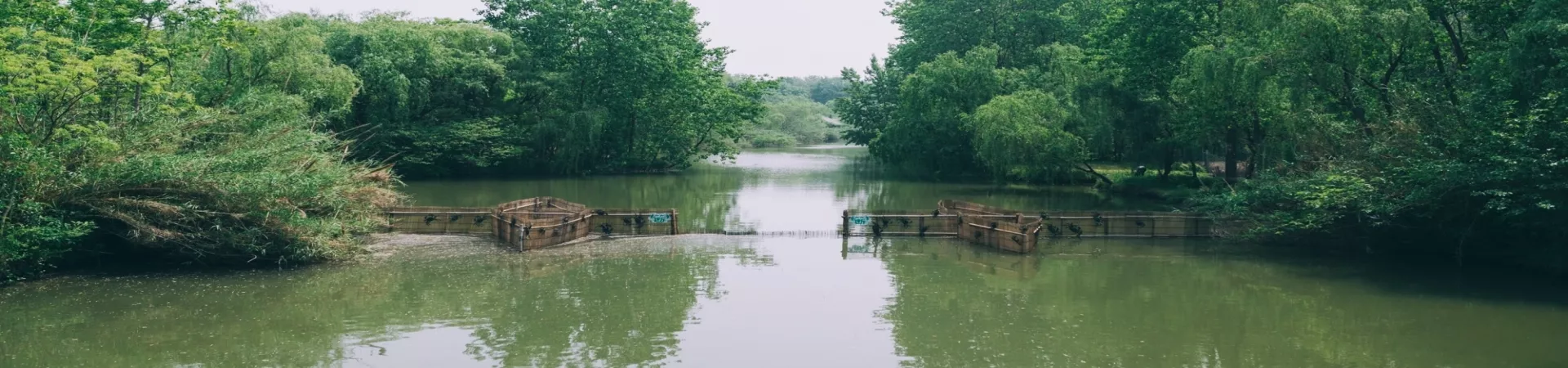
Subtitle: A Journey into the Heart of Jiangsu's Water Country: Qinh Lake National Wetland Park
1. Introduction: The Pearl of the Waterlands Nestled in the heart of Jiangsu Province's Lixiahe region, on the eastern outskirts of Taizhou City, lies Qinh Lake National Wetland Park, a breathtaking expanse often hailed as the "Pearl of the Water Country." Since opening its gates in 2003, it has rapidly ascended to prominence, earning designation as a National AAAA Tourist Attraction by the National Tourism Administration in November 2005. That same year, it achieved the distinguished status of a National Wetland Park from the State Forestry Administration, marking it as the first of its kind in Jiangsu and only the second in all of China. Encompassing a meticulously planned area of approximately 26 square kilometers, the park is a sanctuary where lush aquatic plants thrive. This land whispers tales of a primordial past, once serving as a paradise for herds of the rare Père David's deer. Despite the passage of millennia and shifting landscapes, Qinh Lake has preserved an exceptionally clean aquatic environment and a remarkably pristine wetland ecosystem. This natural treasure is further enhanced by the presence of rare geothermal hot springs, adding a layer of unique, precious value to this ecological haven.
2. A Tapestry of Natural and Cultural Heritage The park's significance extends far beyond its immediate boundaries, woven into a rich tapestry of surrounding cultural and historical sites that complement the natural core.
2.1. The Eastern Shore: A Model of Global Ecology To the east of the lake lies Heheng Village, an accolade-bearing community recognized by the United Nations Environment Programme (UNEP) as one of the "Global 500" for outstanding ecological and environmental achievements. In 2005, it was further honored as a National Agricultural Tourism Demonstration Site by China's National Tourism Administration. Today, it stands as a provincial-model "Socialist New Countryside" demonstration site, jointly developed by ministries and the province, showcasing harmonious coexistence between human habitation and nature.
2.2. The Northern Shore: A Historic Water Town North of the lake rests the ancient town of Qintong, officially designated as a Famous Historical and Cultural Town of China. Steeped in over a thousand years of prosperous history, it has long captivated scholars, poets, and artists who have left behind a legacy of beautiful verses and prose dedicated to its charm. The scenic "Eight Views of Qinh Lake" are embodiments of poetic beauty, while the town is internationally renowned for the Qintong Boat Festival. This vibrant event, featuring hundreds of traditional racing boats and crews in period costume, is a spectacular and unique display of enduring local folk customs that is unparalleled anywhere else in the world.
2.3. The Southern Shore: A Legacy of Scholarly Achievement To the south, in Qiaotou Town, visitors can explore the historic site of the Former Residence of the Liu Family, celebrated as "a family of archery and horsemanship for seventeen generations, a place of refined scholars for five hundred years." During the Qianlong era of the Qing Dynasty, the Liu brothers achieved extraordinary scholarly fame, with two of them attaining the prestigious title of "Martial Arts Champion" (武状元, wǔ zhuàngyuán) in three consecutive imperial examinations—a feat celebrated as a remarkable local legend.
3. A Bounty from Land and Water The Qinh Lake region benefits from fertile soil, a mild climate, and the diligent, resourceful spirit of its people, resulting in an extraordinary abundance of aquatic products. Among these, several have gained widespread fame for their exquisite quality and flavor.
3.1. Culinary Treasures: The "Eight Delicacies of Qinh Lake" The area's culinary reputation is crowned by the famed "Qinh Lake Eight Delicacies" (溱湖八鲜, Qín Hú Bā Xiān), a collection of dishes that represent the pinnacle of the region's aquatic culinary culture. This gourmet ensemble features local specialties such as the highly prized Qinh Lake Duan Crab (簖蟹, duàn xiè), a crab caught using traditional bamboo traps that is renowned for its rich roe and sweet meat; savory Fish Cakes (鱼饼, yú bǐng); and delectable Shrimp Balls (虾球, xiā qiú). The celebration of this culinary heritage is so significant that its corresponding food festival was recognized as one of "China's Top Ten Culinary Festivals" in 2007.
4. Practical Information for Visitors
4.1. Admission Fees * Standard Ticket: 80 RMB (Applicable year-round, Monday through Sunday). * Note: Ticket information is for reference only. Please confirm the official price on the day of your visit.
4.2. Opening Hours * Operating Hours: 08:30 - 17:00 daily. * Last Admission: 15:30. (Hours are applicable year-round, Monday through Sunday.)
4.3. Contact Information * Telephone: 0523-88623022
4.4. Suggested Visit Duration * A visit typically requires 1 to 3 hours to fully appreciate the core landscapes and attractions, though longer stays are recommended for those wishing to explore the surrounding cultural sites or indulge in local dining experiences.