Qiao Yuan
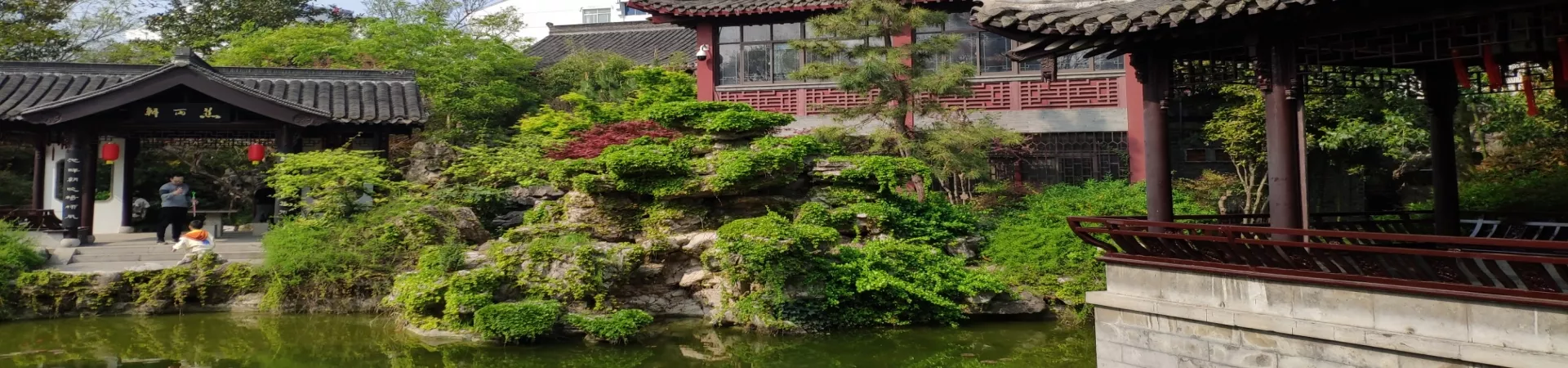
Subtitle: A Journey Through Time: Unveiling the Quiet Grandeur of Taizhou's Qiao Garden
Introduction: An Oasis of History in the Urban Heart
Nestled within the historic old city of Taizhou, Jiangsu Province, at 68 Hailing North Road, lies a serene sanctuary that whispers tales of dynasties past. Qiao Garden, a classical Chinese garden of understated elegance and profound historical depth, offers a tranquil escape from the modern world. More than just a scenic retreat, it is a living manuscript of architectural philosophy, literary allusion, and social history, its very name evolving through centuries like chapters in a book. This garden does not overwhelm with grandeur but invites contemplation, revealing its beauty and scholarly spirit layer by layer to those who wander its quiet paths.
1. The Evolution of a Name: A Mirror to Its Past
The garden's journey through time is encapsulated in the succession of names it has borne, each marking a distinct era in its long life.
1.1. The Ming Dynasty Beginnings: Rishe Yuan The garden's story commenced during the Wanli era of the Ming Dynasty (1573-1620). Its founder, Chen Yingfang, a high-ranking official serving as the Minister of the Court of the Imperial Stud, created a private residential garden. He named it Rishe Yuan, which translates to "Daily Stroll Garden." This poetic name was directly inspired by a line from the Jin Dynasty poet Tao Qian's renowned prose-poem "Returning Home": "园日涉以成趣" ("The garden, strolled through daily, becomes a delight"). This established the garden's foundational ethos as a personal, scholarly retreat for daily communion with nature and quiet reflection.
1.2. The Qing Dynasty Transformations: Sanfeng Yuan and Zhe Yuan By the Qing Dynasty, the garden's character had subtly shifted. During the Jiaqing reign (1796-1820), it became known as Sanfeng Yuan, or "Three Peak Garden." This name derived from a prominent landscape feature within its walls: three striking stone stalagmites, reminiscent of miniature mountain peaks, which became a central scenic focus. Later, in the late Qing period, it briefly carried the name Zhe Yuan ("Hibernation Garden"), possibly reflecting a period of quietude or a owner's desire for seclusion.
1.3. The Final Legacy: Qiao Garden The garden's contemporary name, Qiao Garden, was cemented in the late 19th century when it came into the possession of Qiao Songnian, a powerful official serving as the Salt Transport Commissioner of the Lianghuai region. His ownership was significant enough to permanently brand the garden with his family name, preserving it as "Qiao Garden" for posterity. This final naming represents the common practice where such exquisite private gardens became legacies of prominent families.
2. Architectural and Scenic Philosophy: A Classical World in Miniature
Following the enduring principles of Jiangnan classical garden design, Qiao Garden is a masterclass in creating an impression of vast, natural landscapes within a limited urban space. It artfully employs key techniques to achieve this.
2.1. The Art of Borrowed Scenery and Meticulous Layout The design emphasizes "borrowed scenery" and deliberate, asymmetrical composition. Views are carefully framed by lattice windows, moon gates, and pavilion openings to incorporate distant elements or create layered vistas within the garden itself, making the space feel expansive. The layout avoids rigid symmetry, instead guiding visitors on a winding, exploratory journey that unfolds surprises at every turn.
2.2. Core Elements: Water, Rockery, and Architecture The garden harmonizes its core components into a cohesive whole. A central pond or winding stream acts as the garden's lifeblood, reflecting pavilions and skies. The rockeries, particularly the famed three stone stalagmites, are not mere decorations but are sculpted to represent the essence of mountains, embodying strength and permanence. These natural elements are balanced by elegant, unobtrusive architecture: covered walkways that offer sheltered perspectives, pavilions for rest and contemplation, and scholar's studios that hint at the intellectual life once nurtured here.
3. The Visitor's Experience: Practical Information for Exploration
To fully appreciate the tranquility and historical ambiance of Qiao Garden, visitors are advised to plan their journey with the following practical details in mind.
3.1. Location and Access The garden is situated in the historic old city center of Taizhou, at 68 Hailing North Road (Hailing Bei Lu). This location makes it accessible and often a central part of a broader exploration of Taizhou's cultural heritage.
3.2. Opening Hours and Admission The garden is open to the public year-round. The general operating hours are from 8:30 AM to 5:30 PM daily. It is important to note that the last admission is typically at 5:00 PM, allowing visitors a final half-hour to conclude their visit. For the most current information regarding ticket prices or any unexpected closures, it is recommended to contact the garden directly.
3.3. Contact Information For inquiries, the garden can be reached via telephone at 0523-86225382.
4. Cultural Significance: Beyond Stones and Water
Qiao Garden's value extends far beyond its aesthetic appeal. It serves as a tangible cultural artifact.
4.1. A Testament to Literati Culture The garden is a physical manifestation of the Ming and Qing literati ideal. It represents the fusion of poetry, painting, philosophy, and landscape design into a single, livable art form. The initial naming after Tao Qian's verse directly connects it to a timeless Chinese scholarly tradition that valued retreat, simplicity, and a poetic engagement with nature.
4.2. A Narrative of Social History Its chain of ownership—from a Ming court official to a Qing salt commissioner—mirrors local and regional social histories. The transfer to Qiao Songnian, in particular, illustrates the economic power and cultural patronage of salt merchants and officials in late imperial China, who often became stewards of artistic and architectural treasures.
4.3. A Preserved Urban Heritage In the context of modern Taizhou, Qiao Garden stands as a crucial green heart and a preserved historical core. It offers residents and visitors alike a direct, sensory link to the city's architectural and philosophical past, providing a space for education, reflection, and the appreciation of classical Chinese garden artistry in a serene, unhuried setting.