Fengcheng River Wanghai Tower
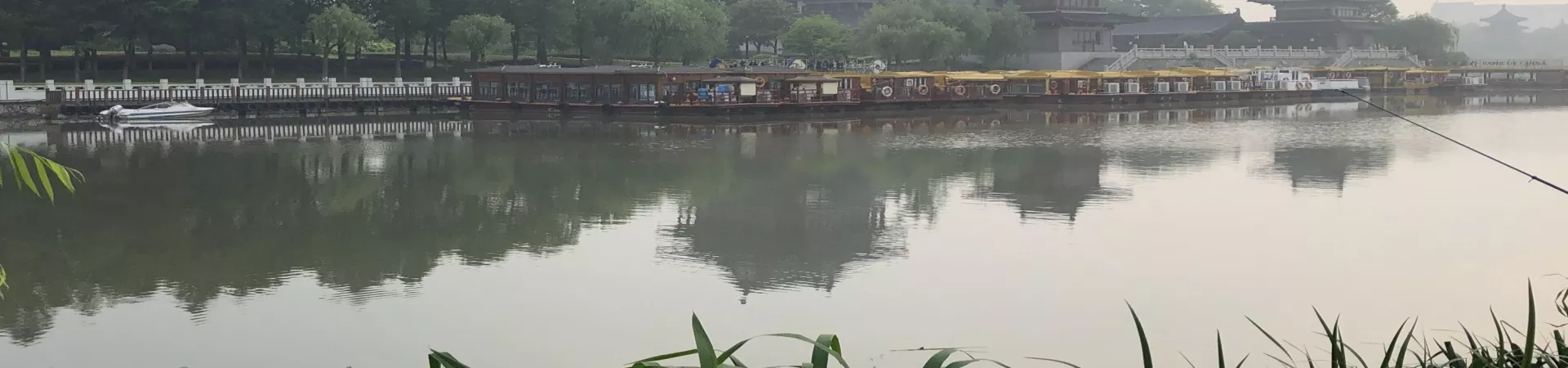
Subtitle: A Journey Through Time: Exploring the Wanghai Tower and the Fengcheng River Scenic Area
1. The Crown Jewel of the River: Wanghai Tower, the "First Tower of Jianghuai"
Rising majestically within the serene embrace of the Fengcheng River Scenic Area in Taizhou, the Wanghai Tower (Gaze-Out-to-Sea Tower) stands as an enduring symbol of the city's profound historical and cultural legacy. Its reputation as the "First Tower of Jianghuai" is not merely a title but a testament to its architectural grandeur and its deep-rooted significance in the annals of the Jiangsu region. While its name suggests a view of the sea, it historically served as a lofty vantage point overlooking the confluence of waterways and the prosperous city below, a beacon of scholarly pursuit and administrative prowess.
The tower's origins trace back to the Song Dynasty (960-1279 AD), a period often regarded as a zenith of Chinese culture, philosophy, and civic development. Although the original structure from that era is lost to time, the tower was meticulously reconstructed during both the Ming (1368-1644) and Qing (1644-1912) dynasties, each restoration effort preserving and enhancing its classical elegance. The current edifice, therefore, embodies a harmonious blend of architectural styles spanning centuries, showcasing traditional Chinese pavilion design with its multiple upturned eaves, intricate wooden bracketing (dougong), and sweeping views from each ascending level. To stand before it is to witness a physical timeline, a structure that has silently observed the flow of dynasties and the evolution of Taizhou itself.
2. The Hall of Literary Gathering: Where History's Giants Converge
Adjacent to the west of the Wanghai Tower lies a site of perhaps even greater historical resonance: the Wenhui Tang, or the Hall of Literary Gathering. This hall is intrinsically linked to one of China's most celebrated literary and political figures, Teng Zijing, a prefect of Taizhou during the Northern Song Dynasty who famously befriended the reformer Fan Zhongyan. Historical records indicate that Teng Zijing initially built this hall as a scholarly retreat, a place for literati, officials, and poets to convene, exchange ideas, and compose poetry—a true cultural salon of its time.
2.1. The Pantheon of Five Chancellors The hall's significance is powerfully underscored by its commemoration of five extraordinary individuals who all served as officials in Taizhou during the Northern Song Dynasty before rising to the highest echelon of imperial government: the position of Chancellor. These men—Yan Shu, Fan Zhongyan, Fu Bi, Han Qi, and Lü Yijian—were not merely bureaucrats; they were pivotal statesmen, military strategists, literary giants, and reformers whose policies and writings shaped the course of the dynasty. The hall respectfully displays historical materials and artifacts related to their lives and tenures in Taizhou, creating a unique gallery dedicated to local governance that produced national leaders. It is a profound reminder of Taizhou's historical role as a crucible for talent and administrative excellence.
2.2. The Five Chancellor Tree and the Bronze Sentinel In front of the Wenhui Tang, a living monument, known as the "Five Chancellor Tree," is planted. This tree serves as a symbolic, growing tribute to the enduring legacy of those five distinguished men, its roots in the Taizhou earth mirroring their foundational experiences in the city. Dominating the space nearby is a profound artistic homage: a majestic bronze statue of Fan Zhongyan, crafted by the renowned contemporary sculptor Wu Weishan, President of the Chinese Academy of Sculpture. The statue captures more than a likeness; it embodies the moral fortitude, intellectual depth, and compassionate leadership for which Fan Zhongyan is revered, immortalizing his connection to this very ground.
3. Layers of Antiquity: The Ancient City Site and Song Dynasty Culvert
The historical narrative woven around the Wanghai Tower and Wenhui Tang extends deep into the earth itself. Scattered throughout the scenic area are the venerable remnants of the ancient Taizhou prefectural city walls and foundations. These state-protected archaeological relics, some sections over a thousand years old, are silent witnesses to the city's strategic and economic importance through successive dynasties. Walking along these weathered ramparts allows visitors to literally tread on history, contemplating the daily life and grand events that unfolded within these boundaries.
Further enriching this archaeological tapestry is the Song Cheng Gu Han, an ancient culvert or watergate from the Song Dynasty. This remarkably preserved engineering feat highlights the advanced urban planning and hydraulic management of the era, designed for drainage, transportation, and possibly defense. It stands as a functional artifact, a testament to the sophisticated infrastructure that supported the thriving community that officials like Fan Zhongyan would have administered.
4. Practical Information for the Visit
To fully appreciate this journey into Taizhou's past, please note the following practical details for planning your visit.
4.1. Admission Fees * General admission ticket to the scenic area (which includes access to the Wanghai Tower complex, Wenhui Tang, and the ancient sites): 36 RMB per person.
4.2. Operating Hours * Main Scenic Area: Open daily from 8:30 AM to 5:30 PM. * Night Cruise Operations (Fengcheng River Boat Tour): * March through November: Cruise departures at 19:30 (7:30 PM), 20:30 (8:30 PM), and 21:30 (9:30 PM). * December through February: Cruise departures at 19:00 (7:00 PM), 20:00 (8:00 PM), and 21:00 (9:00 PM). (Please note that the night cruise is a separate activity; the tower and hall grounds typically follow the daytime operating hours.)
4.3. Contact Information * For inquiries, you may contact the scenic area at: +86 523 8636 3910.
Together, the Wanghai Tower, the Wenhui Tang with its chronicle of chancellors, the ancient city walls, and the Song Dynasty culvert form an unparalleled historical ensemble. They physically and spiritually encapsulate the proud local saying that defines Taizhou's heritage: "The prefecture was established in the Southern Tang, culture flourished in the Northern Song, a famed city and famed officials glorify each other." This is not just a park; it is an open-air museum and a hall of fame, where every stone, tree, and building whispers stories of a glorious past that shaped not just a city, but the nation.