Longhua Temple
Subtitle: A Spiritual Sanctuary on the Songhua River: Discovering Longhua Temple in Songyuan
1. Introduction: A Beacon of Serenity in the Northeast
Nestled within the expansive landscapes of Jilin Province, the city of Songyuan offers a unique blend of natural wonders and cultural depth. Among its most revered sites is the Longhua Temple, a modern Buddhist complex that has rapidly become a spiritual landmark for both pilgrims and travelers seeking tranquility. Unlike ancient temples with millennia of history, Longhua Temple represents a vibrant, living center of faith and traditional architecture, rising gracefully near the banks of the mighty Songhua River. Its presence offers a profound contrast to the region's famed ecological attractions, providing visitors with a space for quiet contemplation, cultural immersion, and architectural admiration. This guide delves into the essence of Longhua Temple, providing essential visitor information and exploring the elements that make it a compelling destination.
2. Practical Information for Visitors
2.1. Admission and Opening Hours A significant aspect of Longhua Temple's welcoming nature is its accessibility. The temple operates on a free admission policy, open to all visitors without any entrance fee. This policy underscores the temple's role as a public spiritual space, inviting everyone to experience its peace regardless of background.
The temple is open daily, with operating hours from 8:30 AM to 3:00 PM. This schedule is consistent throughout the year, from January 1st to December 31st. The morning opening allows visitors to experience the temple in the soft morning light, often a time for serene rituals, while the 3:00 PM closure encourages a visit earlier in the day. Visitors should plan to arrive with sufficient time to explore the grounds thoroughly before closing. It is always advisable to check for any temporary changes in schedule, especially during major Buddhist festivals or national holidays, when special events might alter standard timings.
2.2. Location and Best Time to Visit Longhua Temple is situated in the Ningjiang District of Songyuan City. Its location is advantageous, often integrated into broader itineraries that include the nearby Songhua River scenic areas or the renowned Chagan Lake, famous for its winter fishing tradition. The temple grounds themselves offer a respite from urban bustle.
The best time to visit largely depends on personal preference. Spring (April-May) and Autumn (September-October) offer mild temperatures and pleasant weather, ideal for strolling through the temple courtyards. Summer brings lush greenery, though it can be warm. Winter presents a dramatically beautiful, if chilly, scene; the temple's intricate roofs and statues dusted with snow against the stark northeastern sky create a powerfully serene and photogenic atmosphere, embodying a quiet, frost-laden majesty.
3. Architectural and Spiritual Highlights
3.1. The Grand Hall of Heavenly Kings (Tianwang Dian) The journey into Longhua Temple typically begins at the Hall of Heavenly Kings. This gatehouse hall serves as both an entrance and a spiritual introduction. Inside, the statue of the smiling Maitreya Buddha (the Future Buddha) welcomes visitors, flanked by the four formidable Heavenly Kings who protect the Buddhist law. This hall sets the tone, symbolizing the leaving behind of the mundane world and the entry into a sacred space.
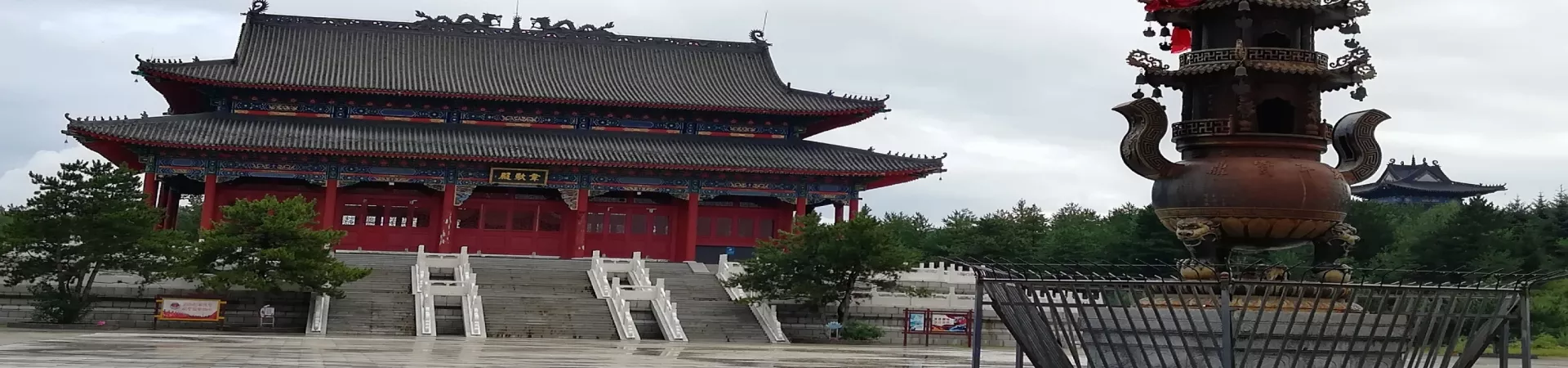
3.2. The Main Buddha Hall (Daxiong Baodian) The heart of any Buddhist temple is its main hall, and Longhua Temple's is a magnificent example. The Daxiong Baodian is an imposing structure featuring traditional Chinese wooden architecture, with sweeping, upturned eaves adorned with intricate carvings and mythological figures. Inside, the central altar is dominated by statues of the Sakyamuni Buddha (the historical Buddha), often accompanied by disciples or other buddhas. The atmosphere here is one of profound reverence. The hall is used for major ceremonies, and the air is often scented with sandalwood incense. Visitors may observe monks and devotees in prayer, offering a glimpse into active religious practice.
3.3. The Multi-Story Pagoda A defining feature of Longhua Temple's skyline is its elegant pagoda. This multi-story tower, following the classic style of Chinese Buddhist pagodas, serves as a reliquary and a powerful spiritual symbol. Each tier represents a stage on the path to enlightenment. Climbing or simply circumambulating the pagoda is considered an act of merit. It also offers, if accessible to the public, a vantage point for views over the temple's symmetrical layout and the surrounding Songyuan landscape.
3.4. Subsidiary Halls and Courtyards Beyond the central axis, the temple complex includes various subsidiary halls dedicated to specific bodhisattvas like Guanyin (the Goddess of Mercy) or Ksitigarbha. These halls provide more intimate spaces for prayer and reflection. The temple's design emphasizes harmony and balance, with serene courtyards connecting the buildings. These open spaces, often featuring ancient pine trees, stone steles, and incense burners, are integral to the experience, allowing for meditation and a moment of pause amidst the architectural grandeur.
4. Cultural Experience and Etiquette
4.1. Participating in Temple Life While a visit can be purely observational, engaging respectfully with temple activities deepens the experience. Visitors are welcome to light incense sticks as an offering—a common practice. A small donation for the incense is customary. Observing or quietly listening to the monks' chanting, especially during morning or noon services, can be a moving auditory and spiritual experience. The temple may also house a vegetarian restaurant, offering a chance to partake in the simple, mindful cuisine associated with Buddhist practice.
4.2. Visitor Etiquette Guidelines To maintain the sanctity of the site, observing proper etiquette is crucial. Visitors should dress modestly, covering shoulders and knees. Loud conversations, shouting, or intrusive behavior are inappropriate. When photographing the architecture, it is generally respectful to avoid using flash inside halls and to refrain from pointing cameras directly at monks or worshippers without permission. Silence or speaking in hushed tones is appreciated, particularly inside the main halls. It is also customary to circulate around statues and altars in a clockwise direction, following the path of the sun.
4.3. Longhua Temple in the Context of Songyuan A visit to Longhua Temple should not be isolated. Songyuan is a region defined by the Songhua River and its rich ecological and folk heritage. Combining a temple visit with a trip to the Zhalong Nature Reserve (partially accessible from the area) for bird watching, or a journey to Chagan Lake to witness the spectacular winter fishing culture, creates a richly layered travel experience. The temple provides the cultural and spiritual counterpoint to the region's natural wonders, making a trip to Songyuan a holistic exploration of Northeast China's diverse offerings.