The House of the King of Gorros
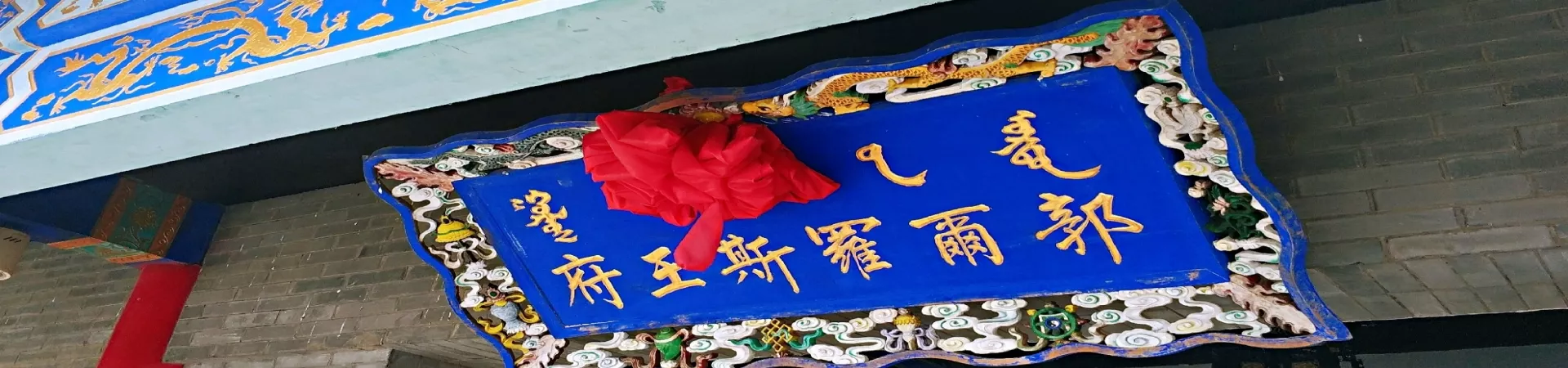
Subtitle: A Journey into Manchurian Grandeur: The Gorlos Prince's Mansion by Chagan Lake
Introduction: A Lakeside Legacy
Nestled on the picturesque shores of Chagan Lake in Songyuan, Jilin Province, the Gorlos Prince's Mansion (郭尔罗斯王府) stands as a monumental testament to the region's rich ethnic history and architectural ambition. This extensive complex, a large-scale imitation of Qing Dynasty palatial architecture, represents a rare and significant cultural artifact. It is one of the few surviving examples of palace-style manor houses within the traditional Mongolian territories, offering visitors a unique glimpse into the sophisticated fusion of Manchurian imperial design with the pastoral heritage of the grasslands. More than just a collection of buildings, the mansion serves as a silent narrator of the Gorlos Front Banner's past, whispering tales of nobility, strategic alliances, and a way of life that once dominated this northern landscape.
Architectural Grandeur and Layout
A Masterpiece of Imitative Design The primary allure of the Gorlos Prince's Mansion lies in its deliberate and majestic architectural execution. Constructed as a faithful replica of high Qing Dynasty style, the complex embodies the period's aesthetic principles of symmetry, hierarchical order, and symbolic decoration. The use of sweeping upturned eaves adorned with intricate dougong brackets, vibrant color schemes dominated by imperial yellow and verdant green, and detailed woodcarvings all contribute to an atmosphere of authoritative elegance. This careful reconstruction provides an accessible window into Qing palatial architecture, making it an invaluable educational site for those interested in Chinese architectural history far from the more famous palaces of Beijing or Shenyang.
The "Six Advancements" Courtyard System The genius of the mansion's plan is revealed in its rigorous and expansive layout. The entire compound is organized with meticulous precision around a central axis, following the traditional Chinese principle of axial symmetry which signifies balance and cosmic order. The core structural concept is based on the classic siheyuan (courtyard house), but elevated to a grand scale. Described as "six advancements and six exits" (六进六出), the complex unfolds as a series of six sequential courtyards, each leading deeper into the heart of the estate.
The Outer Courts: Ceremony and Public Affairs The first few courtyards upon entry were typically designed for public and ceremonial functions. Here, the prince would receive officials, conduct administrative business, and host formal gatherings. The architecture in these sections is particularly imposing, with wide gates and open spaces meant to convey power and welcome (or intimidate) visitors in equal measure.
The Inner Courts: Private Life and Family As one progresses through the successive gates, the courtyards transition into more private realms. These inner sections housed the residential quarters for the prince's family, ancestral temples for worship, private gardens for contemplation, and chambers for concubines. The layout ensured a clear separation between the public persona of the nobility and their intimate domestic life, a hallmark of traditional Chinese elite residence design.
This multi-layered structure creates a profound spatial experience, where each gate passed symbolizes a step closer to the inner sanctum of power and privacy. The overall effect is one of "vast depth, luxury, and magnificent splendor," truly living up to its reputation as a renowned northern mansion.
Cultural Significance and Historical Context
A Beacon in the Mongolian Grasslands The mansion's significance is magnified by its location. In the vast cultural landscape of Inner Mongolia and historic Manchuria, such elaborate, fixed palaces were exceptional. Nomadic traditions favored portable yurts over permanent stone structures. Therefore, the Gorlos Prince's Mansion was not merely a home; it was a powerful statement of settled authority, cultural integration, and political stature. It symbolized the Gorlos prince's allegiance to the Qing court and his role as a local ruler governing under the imperial system. The mansion thus became a central node of political power, economic activity, and cultural exchange in the region.
A Repository of Local Heritage Today, the mansion functions as a crucial cultural hub. While the original furnishings may be sparse, the architecture itself is the primary exhibit. It often hosts displays on Gorlos Mongolian history, including exhibits on traditional clothing, equestrian equipment, religious artifacts, and the unique customs of the region. Its position near the legendary Chagan Lake—famous for its ancient winter fishing tradition—integrates it into a broader cultural itinerary. Visitors can experience the dynamic, nature-based culture of the lake alongside the static, architectural culture of the mansion, gaining a holistic understanding of Northeast China's diverse heritage.
Visitor Information and Experience
Planning Your Visit A thorough exploration of the Gorlos Prince's Mansion typically requires 1 to 3 hours. This allows sufficient time to walk the central axis through all six courtyards, appreciate the architectural details, visit any interior exhibition halls, and stroll the grounds. The experience is largely self-guided, with informational placards explaining the function of major halls and structures. The best lighting for photography is often in the morning or late afternoon, when the sun accentuates the depth of the courtyards and the colors of the eaves.
The Integrated Cultural Journey A visit to the mansion is highly recommended as part of a broader exploration of Songyuan. The synergy with Chagan Lake is undeniable. After delving into the structured history within the mansion's walls, visitors can step outside to breathe the free, open air of the lakeshore, perhaps even witnessing the spectacular winter fishing rituals if visiting between December and February. This combination offers a profound contrast and a complete narrative: from the settled authority of the prince to the timeless, communal traditions of the people on the ice. The Gorlos Prince's Mansion, therefore, is more than a destination; it is the foundational chapter in the story of this unique part of China's frontier.