Historic Yehe Nara Hala City
Subtitle: Exploring the Legacy of the Yehenara: A Journey to the "Homeland of Empresses"
Introduction: A Portal to the Past
Nestled within the Yehe Town of Siping City, Jilin Province, lies the Yehenara Ancient City, a site that resonates with the echoes of the late Ming and early Qing dynasties. While presenting itself as a restored ancient town, its significance is deeply rooted in history as the reputed ancestral home of two of the most influential women in China's imperial narrative. This destination offers visitors a unique, albeit reconstructed, window into the world of the Yehe Nara clan, a powerful Jurchen tribe whose daughters shaped the course of the Manchu rise to power. The site you visit today is a conscious revival, a tribute built upon profound historical memory, making it an essential stop for anyone fascinated by the Qing Dynasty's origins and its powerful matriarchal figures.
The Historical Heart: Birthplace of Empresses
The Legendary Connections The primary historical gravitas of Yehe Town stems from its intimate association with two empresses. Most significantly, it is recognized as the birthplace of Empress Xiaocigao (Lady Monggo Jerjer), mother of Hong Taiji (Emperor Taizong of Qing), who founded the Qing Dynasty. Her role as the mother of the founding emperor cemented the Yehe Nara clan's integration into the rising Aisin Gioro power. Centuries later, the town also gained fame as the ancestral homeland of Empress Dowager Cixi, the de facto ruler of China in the late 19th century. These connections have rightfully earned the area the evocative title "Homeland of Empresses," a testament to the political influence wielded by women from this lineage.
The Lost Original City: A Note on Archaeological Reality It is crucial for visitors to understand the distinction between the historical site and the current attraction. The original Yehenara city fortress was located approximately ten kilometers away from the present-day complex. It met its demise in 1619 during the final campaign of Nurhaci, the founder of the Later Jin dynasty (precursor to the Qing), against the Yehe state. Razed and never rebuilt, the original site is now a protected provincial-level cultural heritage site. Visible remains are minimal—largely just delineated earthen mounds within cultivated farmland—offering a silent, solemn contrast to the reconstructed town. This true archaeological site represents the tangible, if subdued, evidence of the clan's former power and its dramatic fall.
The Modern Revival: The Yehenara Film City
Construction and Purpose The accessible attraction known today as the Yehenara Ancient City is, in fact, a modern reconstruction initiated in 1994. It was not built upon the original ruins but conceived as a cultural and tourist project to commemorate the region's history. Its design draws inspiration from historical records and architectural styles of the Manchu and late Ming period, aiming to provide a physical space where the stories of the Yehe Nara clan can be visualized and experienced.
From Film Set to Tourist Destination The site's popular identity was solidified in 1998 when it served as a primary outdoor filming location for the television drama "Princess Yehenara." This association led to its alternative and widely recognized name: the Yehenara Film City (Ying Shi Cheng). The production left a lasting legacy, with many of its sets and structures preserved and integrated into the permanent landscape. As you walk through the city gates, halls, and residential courtyards, you are traversing both a historical tribute and a piece of China's television history, where drama and heritage interestingly intertwine.
Practical Visitor Information
Location and Transportation The Yehenara Ancient City is situated in Yehe Town, under the administration of Siping City. Access is straightforward via the Si-Ye Highway (Siping-Yehe Line). For travelers departing from downtown Siping, regular public shuttle buses run directly to the scenic area. The service is frequent, with departures approximately every 7 minutes, making a self-guided day trip highly convenient.
Operating Hours and Contact The site is open year-round. The standard operating hours are from 08:00 to 16:30, with the last admission permitted at 16:00. These hours apply from Monday to Sunday throughout the year (January 1st to December 31st). It is always advisable to confirm times locally before your visit, especially during public holidays or off-season periods. For direct inquiries, you may contact the management at: 0434-3560666.
Experiencing the Site: Architecture and Culture
Architectural Layout and Features The reconstructed city typically encompasses classic architectural elements of a fortified Manchu settlement. Visitors can expect to see imposing city walls, watchtowers, and a main gate that sets the tone for the historical immersion. Inside, the layout often includes a central axis featuring administrative or ceremonial halls, flanked by residential compounds, temples, and gardens. The architecture, while modern, utilizes traditional materials and design principles, such as ornate roof beams, courtyard layouts (siheyuan), and symbolic color schemes.
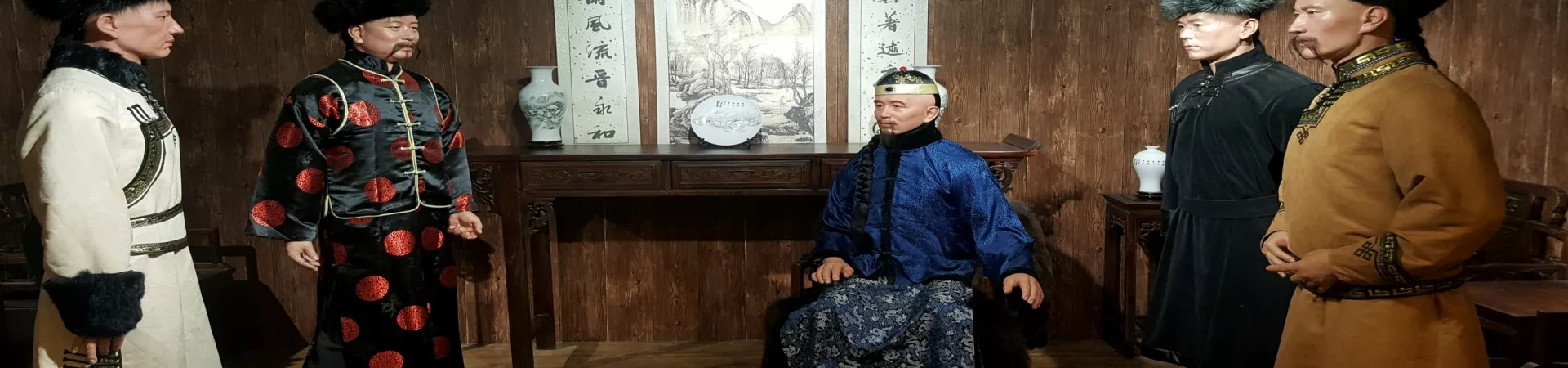
Cultural Displays and Activities To bring history to life, the film city frequently hosts various cultural displays and performances. These may include traditional Manchu song and dance performances, ceremonial re-enactments, or exhibitions on Qing Dynasty costumes and artifacts. Some areas are dedicated to explaining the history of the Yehe Nara clan, the life of Empress Xiaocigao, and the filming of the famous television series. These interactive elements provide context and engagement beyond the physical structures, helping to flesh out the historical narrative for visitors.