Qingyang Mao Culture Village
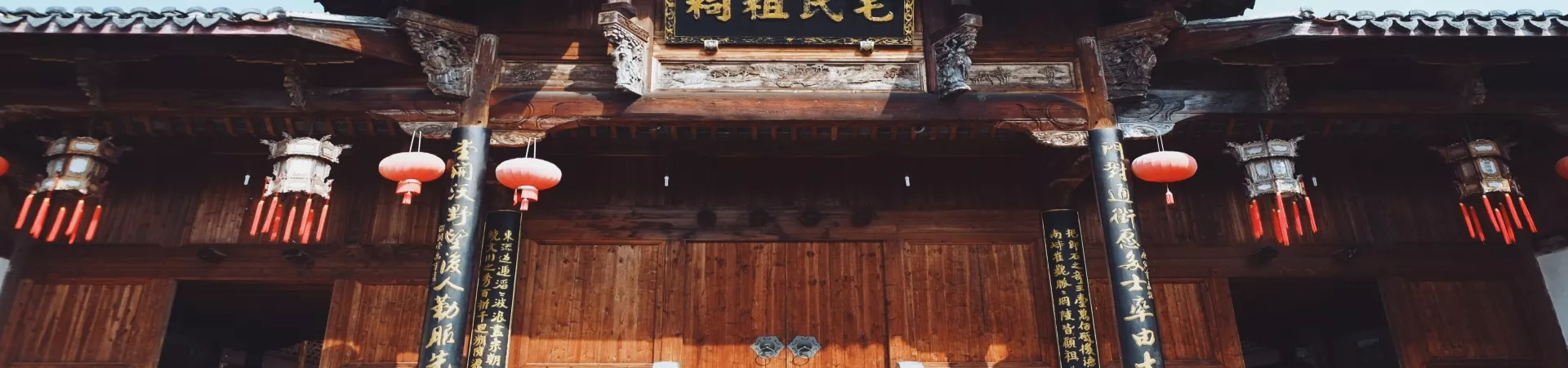
Subtitle: A Journey Through a Millennium of Heritage: The Ancestral Heart of the Mao Clan
1. Introduction: The Cradle of a Legacy
Nestled at the foot of the majestic Jianglang Mountain, approximately 20 kilometers from the urban center of Quzhou in Zhejiang Province, lies the serene and profoundly historic Qingyang Mao Cultural Village. This is no ordinary Chinese village. For over 1,500 years, since the migration of its founding ancestor, Mao Yuanqiong (honored as Lord Qingyang, the 8th-generation forebear of the Jiangnan Mao lineage), this community has been the enduring heart of the Mao clan. Every one of the hundreds of households in the village shares the surname Mao, a living testament to its unique identity. Qingyang is revered as the ancestral birthplace of the Mao lineage in the Jiangnan region (south of the Yangtze River), a status that transcends local history to touch upon the broader narrative of modern China. Its most distinguished claim is being the verifiable ancestral home of Chairman Mao Zedong. Furthermore, it is the genealogical origin of notable figures such as Mao Fumei, the first wife of Chiang Kai-shek, and Mao Yanwen, the wife of Xiong Xiling, the first Premier of the Republic of China. This convergence of lineages has endowed Qingyang with an unparalleled historical and cultural density, summarized by the village's enduring ethos: "A long history, outstanding talents, upholding farming and studying, noble but not wealthy."
2. Historical and Cultural Significance: A Tapestry of Scholars and Statesmen
2.1. A Legacy of Academic and Official Excellence The village's motto of "outstanding talents" is vividly borne out by its remarkable historical record. Across the dynasties, Qingyang produced an astonishing 83 jinshi (the highest-level scholars who passed the imperial examinations) and 8 shangshu (ministers or high-ranking officials in the imperial court). This extraordinary output from a single village underscores a deep-seated Confucian tradition that prized scholarship and public service—the "farming and studying" heritage. The success of its sons in the rigorous imperial examination system brought honor and nobility to the clan, shaping its "noble but not wealthy" character, where intellectual and moral prestige was valued above mere material accumulation.
2.2. The Priceless Genealogical Record: The Qingyang Mao Clan Genealogy Central to verifying and preserving this illustrious history is the Qingyang Mao Clan Genealogy. First compiled in 1083 AD during the Northern Song Dynasty (in the 6th year of the Yuanfeng era), this document is far more than a family record. It is a meticulously maintained historical archive spanning millennia. In recognition of its immense value, it was designated as one of China's first 48 "National Treasure"-level precious documentary archives by the National Archives Administration, which holds the document in its collection. This genealogy serves as the critical link that irrefutably connects the dots of history.
2.3. The Mao Zedong Connection: A Direct Lineage Scholarly research based on this genealogy has conclusively established that the Mao clan of Shaoshan, Hunan Province—the family of Mao Zedong—are direct descendants of the Qingyang Mao lineage. Mao Zedong is identified as the 56th-generation direct descendant of the Qingyang Mao clan. This connection transformed Qingyang from a local historical site into a place of national significance. In December 2006, this living link was ceremoniously affirmed when Qingyang village hosted a ceremony to receive a copy of the Shaoshan Mao family genealogy, presented by relatives from Mao Zedong's hometown, symbolizing the reunion of branches separated by time and distance.
3. The Village Experience: Sites and Structures
Following its designation as a Provincial-Level Historical and Cultural Village in 2006 (the third batch), Qingyang opened its doors wider to visitors. Since May 2007, key historical sites have been restored and made accessible to the public, allowing a tangible connection to the past.
3.1. The Ancestral Heart: Qingyang Mao Ancestral Residence This residence stands as the spiritual core of the village, representing the origins and continuity of the clan. It offers insights into the architectural styles and living conditions of the scholarly gentry that the village produced.
3.2. Homes of the Learned: Mao Zishui's Former Residence Mao Zishui, a renowned 20th-century scholar and philologist, is one of Qingyang's modern exemplars of its intellectual tradition. His former residence provides a glimpse into the life of a contemporary academic born from this village's unique culture.
3.3. Hall of Fame: The Celebrity Hall This dedicated hall likely showcases the stories, achievements, and portraits of the village's most famous sons and daughters across history, from the imperial ministers to modern figures, putting faces and narratives to the staggering statistics.
3.4. A Landmark in the Landscape: The Qingyang Pagoda Often serving as a feng shui or cultural landmark for villages, the Qingyang Pagoda adds to the scenic and spiritual landscape of the area, representing the cultural aspirations and aesthetic sensibilities of the clan.
4. Practical Visitor Information
4.1. Admission Fee A ticket to access the cultural village and its key historic sites is priced at 50 RMB.
4.2. Operating Hours The opening hours vary seasonally to accommodate daylight and weather conditions: * Summer Season (June 1 - August 31): 08:00 - 17:00 daily. Last admission is at 16:30. * Winter Season (December 1 - February 28/29 of the following year): 08:00 - 16:30 daily. Last admission is at 16:00.
Visitors are advised to plan their trip according to these hours and consider the seasonal beauty of the Jianglang Mountain foothills, which frame the village's tranquil setting. A visit to Qingyang Mao Cultural Village is ultimately a walk through a living genealogy, a quiet exploration of how one family's dedication to learning and virtue, sustained in one village over centuries, left an indelible mark on the canvas of Chinese history.