longyou grottoes
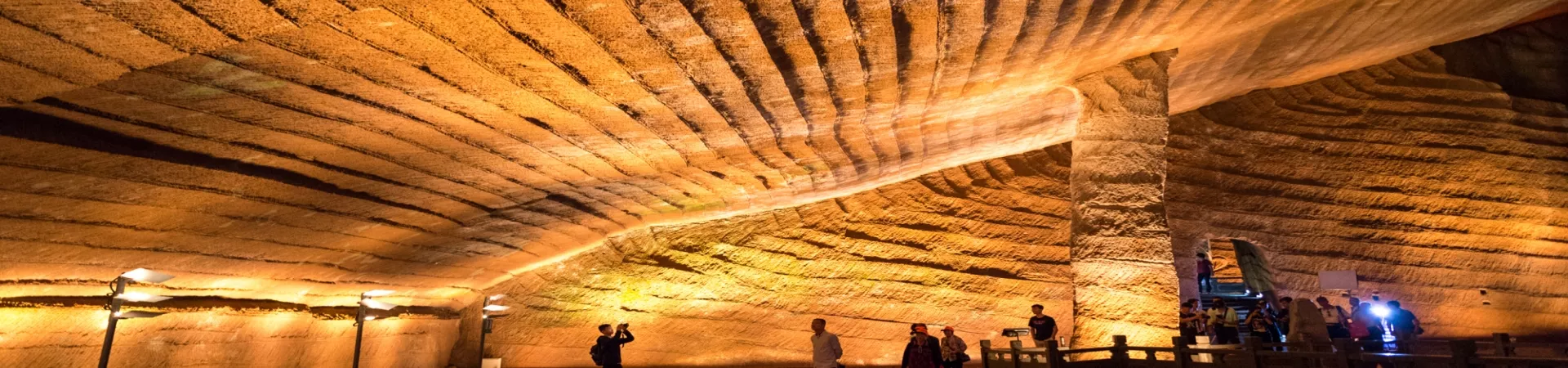
Subtitle: Delving into the Mysteries of an Ancient Underground Marvel
Introduction: The Enigmatic Discovery
Nestled approximately one kilometer east of the Longyou Bus North Station in Quzhou, Zhejiang Province, lies one of China's most captivating and perplexing archaeological enigmas: the Longyou Grottoes. This sprawling subterranean complex, which slumbered in watery darkness for millennia until its accidental discovery in the 1990s, represents a monumental feat of ancient engineering. Within an area of nearly one square kilometer, a series of 24 man-made caverns—varying in size but exhibiting a seemingly deliberate layout—were carved with astonishing precision into the sandstone bedrock. Recognized as one of the most sophisticated and large-scale underground artificial structures from ancient China, the Longyou Grottoes challenge historical narratives and continue to baffle experts with their unknown origins, purpose, and construction methods.
Section 1: Architectural Grandeur and Puzzling Features
1.1 Scale and Design The sheer scale of the complex is its first arresting feature. The excavated caverns, some reaching heights of over 30 meters and covering areas of several thousand square meters, are immense, cathedral-like spaces. They are not simple holes but meticulously designed structures. Each grotto features a consistent and sophisticated architectural blueprint: massive supporting pillars, intricately carved from the native rock, are evenly distributed to hold up the vast, flat ceilings. The walls, ceilings, and pillars are uniformly adorned with parallel chisel marks at a consistent 60-degree angle, a decorative yet systematic pattern that covers every visible surface and speaks to an extraordinary level of craftsmanship and aesthetic intention.
1.2 The Enduring Mysteries It is this very precision and uniformity that fuels the site's greatest mysteries. Who built them? No historical records, local legends, or archaeological evidence from the surrounding area mention their construction. When were they created? Estimates vary widely, with some scholars suggesting they could be over 2,000 years old, possibly dating back to the Qin or Han dynasties, though definitive dating remains elusive. What was their purpose? Theories abound—ranging from an imperial tomb complex, a secret military garrison, or a mining operation, to a ritualistic or religious sanctuary. The complete absence of artifacts, inscriptions, or soot marks inside the chambers only deepens the puzzle. Furthermore, the engineering logistics of excavating, lighting, and disposing of millions of cubic meters of rock in ancient times, without leaving clear traces, present a problem that modern engineers struggle to explain.
Section 2: The Visitor Experience
2.1 Planning Your Visit A visit to the Longyou Grottoes is a journey into a cool, silent, and awe-inspiring underground world. To fully appreciate the atmosphere and scale, planning is recommended.
2.2 Ticketing Information Admission is ticketed, with different rates applying: * General Admission: 85 RMB for adults. * Concession Tickets (42 RMB): Applicable to: * Children with a height between 1.2 meters (inclusive) and 1.5 meters. * Visitors under 18 years of age (verified by date of birth relative to the visit date). * Full-time students (excluding adult education and postgraduate students) with a valid student ID. * Seniors aged 60 (inclusive) to 70 (exclusive) with valid ID. * Free Admission: Granted to children under 1.2 meters in height and seniors aged 70 and above (with valid ID).
2.3 Opening Hours and Suggested Duration The site is open daily from 08:00 to 16:30, with the last admission at 16:10. It is advisable to allocate a minimum of 3 hours for your visit. This allows sufficient time to explore several of the largest and most accessible caverns, contemplate the intricate chisel marks, and absorb the profound sense of mystery that permeates the air. The constant, cool temperature inside (around 15-20°C or 59-68°F year-round) provides a refreshing respite, particularly in summer.
Section 3: Practical Information for Your Trip
3.1 How to Get There The most straightforward public transportation option is to take the Longyou Bus K8 or Route 8 and alight at the "Shiku Damen" (Grottoes Main Gate) bus stop. From there, the entrance is within short walking distance. For greater flexibility, taxis or ride-hailing services from Longyou city center are also readily available and inexpensive.
3.2 On-Site Considerations Wear comfortable, non-slip shoes as the pathways and steps within the caverns can be damp. While lighting is installed for visitor safety and viewing, the overall ambiance is one of dramatic shadow and highlights, emphasizing the grandeur of the spaces. Photography is permitted and encouraged, though the low-light conditions may require a steady hand or appropriate camera settings. Informational plaques are placed throughout, offering explanations of the features and the various scientific theories, available primarily in Chinese.
Section 4: The Unanswered Questions and Legacy
4.1 A Global Archaeological Phenomenon The Longyou Grottoes have attracted international attention from geologists, archaeologists, and historians. The site defies easy classification. The absence of any religious iconography or burial items argues against a tomb or temple theory. The lack of practical infrastructure for habitation or storage complicates theories of military or warehouse use. Some researchers have even proposed a connection to lost ancient civilizations or symbolic purposes related to ancient cosmology. Each visit reinforces the realization that this is a site where the questions are more abundant than the answers.
4.2 Preservation and Ongoing Research The grottoes are now a protected national heritage site. Preserving the delicate balance of humidity and temperature within the caverns is an ongoing challenge to prevent erosion of the intricate carvings. Research continues, employing advanced technologies like 3D scanning and geological analysis, in hopes of one day unlocking the secrets of their creation. For now, they stand as a powerful testament to the ingenuity and ambition of an unknown ancient people, inviting every visitor to ponder the limits of our historical knowledge and to marvel at a hidden masterpiece of human endeavor, waiting silently beneath the fields of Zhejiang.
Information last updated: September 21, 2023. Credit for collaborative editing is acknowledged to contributor "一路向北".