Former Residence of Dai Li at Xianxia Pass
Subtitle: A Journey Through History and Intrigue at the Dai Li Residence and Xianxia Pass
Introduction: Where Ancient Fortress Meets Modern Mystery
Nestled within the dramatic landscape of Quzhou, in Zhejiang Province, lies a unique historical site that intertwines the deep echoes of ancient military strategy with the shadowy whispers of 20th-century espionage. This is the area encompassing the Xianxia Pass and the Dai Li Residence. More than just separate attractions, they form a compelling narrative whole. The site invites visitors to walk in the footsteps of both Tang Dynasty soldiers defending a vital artery of the empire and the enigmatic spymaster who, centuries later, operated from this secluded location. A visit here is a dual exploration: of the formidable natural and man-made barriers that shaped Chinese history, and of the secretive life of one of its most controversial modern figures. The journey offers breathtaking scenery, profound historical insights, and a palpable sense of intrigue.
Part I: The Strategic Keystone - Xianxia Pass
1.1 A Geographical Imperative The story begins with the land itself. The Xianxia Pass is not merely a gate in a wall; it is the crowning point of the Xianxia Ancient Road, a 120-kilometer corridor cutting through the rugged Xianxia Mountains. For over a millennium, this route was an indispensable link between the coastal provinces of Zhejiang and Fujian and the inland heartlands. Before modern highways and railways, controlling this pass meant controlling the flow of people, goods, and armies. Its strategic value was immeasurable, making it a focal point of regional power and a coveted military objective.
1.2 Engineering and Defense Through the Ages The pass as seen today is a testament to relentless human endeavor. Initial development is credited to Huang Chao, a rebel leader of the late Tang Dynasty, who carved the primitive path during his campaign. However, its fortification into a true military stronghold accelerated during the Song and Ming dynasties. The existing structure, with its imposing gate towers, thick walls, and steep stone stairways, primarily dates from Ming renovations. Walking up the ancient steps, one appreciates the brutal practicality of its design—narrow approaches forcing attackers into vulnerable columns, high walls offering defenders clear vantage points. It stands as a premier example of Chinese ancient frontier defense architecture, perfectly adapted to the unforgiving terrain.
1.3 The Pass in Lore and Warfare The history of Xianxia Pass is written in both official chronicles and local legend. It played a role in the dynastic transitions from Song to Yuan and Yuan to Ming. Perhaps its most famous chapter was written in the mid-17th century, when the loyalist general Zheng Chenggong (Koxinga) used the pass in his resistance against the invading Qing forces. Each conflict added layers to its legacy, solidifying its reputation as an impregnable barrier. The surrounding forests and mist-shrouded peaks seem to hold the echoes of these past struggles, allowing visitors to feel the weight of history pressing in from all sides.
Part II: The Shadow in the Mountains - Dai Li and His Wartime Residence
2.1 The Enigmatic Spymaster: Dai Li To understand the residence is to understand the man. Dai Li (1897-1946) was the formidable founder and chief of the Bureau of Investigation and Statistics (BIS), the military intelligence agency of the Republic of China under Chiang Kai-shek. Feared and secretive, he was often called "China's Himmler" for his ruthless efficiency and the vast reach of his secret police network. His power was rooted in clandestine operations, loyalty to Chiang, and an aura of mystery. He was a master of deception, intelligence, and covert action, shaping much of the Nationalist government's security apparatus during the War of Resistance against Japan and the subsequent civil war.
2.2 The Secret Mountain Headquarters In the turbulent years of the Sino-Japanese War (World War II), Dai Li sought a secure, clandestine base of operations. He chose a spot near the remote Xianxia Pass, a location offering natural protection, secrecy, and strategic proximity to both coastal and inland theaters. Built between 1943 and 1945, the residence was far more than a private home; it functioned as a regional command center, a training ground for agents, and a safe house. Its design, overseen by Dai Li himself, embodied the principles of its owner: caution, secrecy, and strategic foresight.
Part III: Exploring the Dai Li Residence: Architecture of Paranoia and Power
3.1 Layout and Disguise The residence complex is a fascinating study in architectural deception. From the outside, it appears as a relatively large, well-built but otherwise unremarkable traditional Chinese manor, blending into the local village (Shenxiang Village). This ordinary facade was its first layer of defense. The compound is structured around a central courtyard, with wooden buildings featuring carved eaves and paneled windows, typical of Qing and Republican-era styles in southeastern China.
3.2 Ingenious Security Features and Hidden Devices Beneath its conventional appearance lies a web of ingenious secrets, making it a masterpiece of spycraft architecture.
- The Labyrinthine Interior: Rooms connect through a confusing array of passages, dead-end doors, and multiple staircases. This design allowed for quick, unseen movement and escape, and could disorient any unauthorized intruder.
- Hidden Escape Routes and Listening Posts: The most famous feature is the secret escape tunnel accessible from behind a mirrored cabinet in a bedroom. This tunnel led discreetly down to a nearby stream. Additionally, hollow walls and discreetly placed listening ports allowed occupants to monitor conversations in other parts of the house.
- Defensive Fortifications: While disguised, the house was built to withstand assault. Its walls are exceptionally thick, windows are strategically placed for defensive fire, and its location on the mountainside provided natural surveillance advantages.
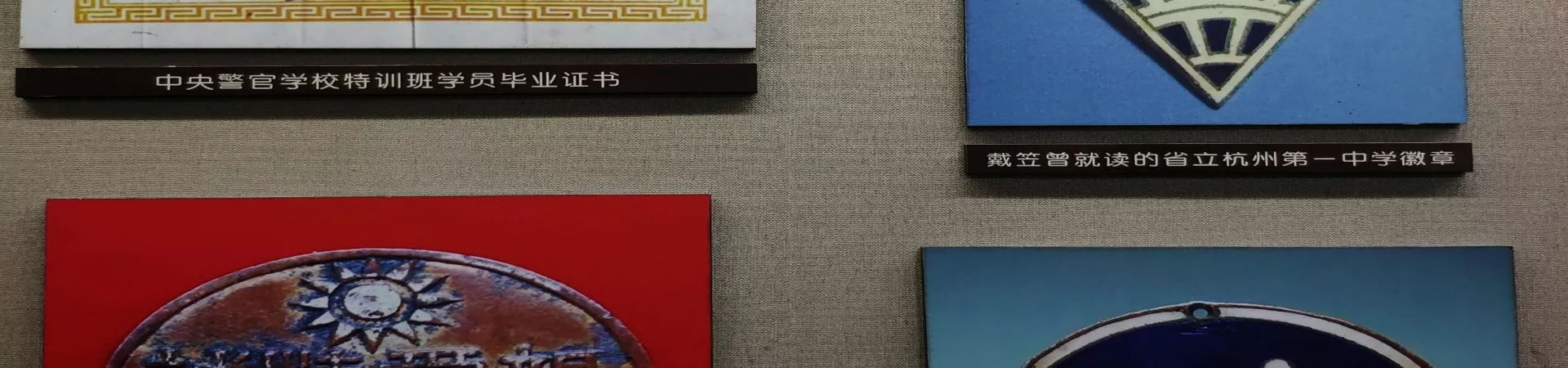
3.3 Artifacts and Atmosphere Today, the residence is maintained as a museum. Rooms are furnished in period style, displaying Dai Li's personal effects, photographs, and documents related to the BIS. Exhibits detail his life, his intelligence methods, and the historical context of the war. The atmosphere is one of subdued tension; walking through the quiet, dimly lit rooms, one can easily imagine whispered conversations, the clicking of telegraph machines, and the constant, watchful presence of its former occupant.
Part IV: The Integrated Visitor Experience
4.1 Practical Information for Your Visit To plan a seamless visit, note the following practical details. The site is located in Shifeng Village, near the town of Jushan, approximately a 1.5 to 2-hour drive from Quzhou city center. The most convenient way to visit is by private car or taxi. For inquiries, you may contact the site at 0570-4811274. The operating hours are 08:00-17:15, Monday through Sunday, throughout the year. It is advisable to wear comfortable walking shoes with good grip, as exploring both the ancient pass and the residence involves considerable stair climbing and walking on uneven stone paths.
4.2 Connecting the Dots of History The true power of a visit lies in experiencing the profound contrast and connection between the two sites. One represents the overt, monumental power of the state—the visible might of an empire defending its borders. The other represents the covert, shadowy power of the individual—the invisible influence of intelligence and fear. Standing on the ramparts of Xianxia Pass, you survey a landscape that generals and emperors coveted. Sitting in the secluded study of the Dai Li Residence, you ponder the decisions made in secrecy that shaped a nation's fate. Together, they offer an unparalleled, tangible journey through the multifaceted layers of Chinese history, from the battlefield to the backroom, all set against the timeless beauty of the Zhejiang highlands.