Stone Forest
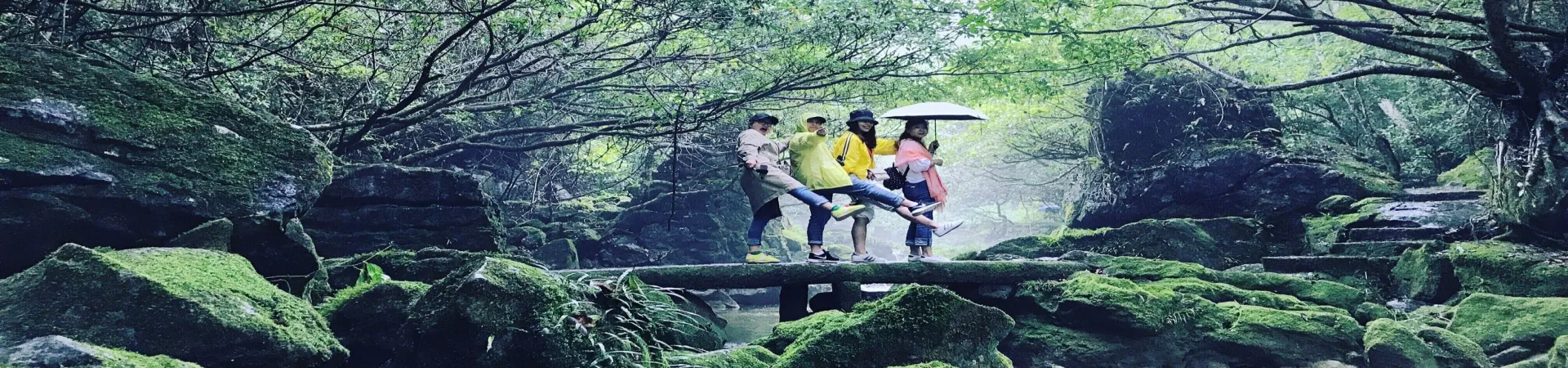
Subtitle: A Realm Where Stone and Root Embrace: The Enigmatic Stone Forest of Libo
Introduction: The Crown Jewel of Libo's Natural Triad
Deep within the heart of the expansive Maolan National Nature Reserve in Qiannan, Guizhou, lies one of China's most extraordinary geological and ecological marvels: the Stone Forest. Alongside its sister wonders, the Water Forest and the Funnel Forest, it forms the legendary "Three Uniques of Libo." Spanning across the reserve's vast 20,000 hectares, this is not a forest of mere trees growing on soil, but a breathtaking testament to life's tenacity—a primordial symphony composed over millennia between unyielding rock and relentless root. Here, the very concept of a forest is redefined, presenting visitors with a landscape that feels both ancient and dynamically alive, a place where stone and woodland are locked in an eternal, intimate dance.
I. The Geological and Ecological Phenomenon
A. The Symphony of Stone and Silhouette The Stone Forest is a masterpiece of paradoxical coexistence. Imagine a sea of towering karst formations, their grey and weathered surfaces sculpted by endless cycles of wind and water. Upon and within these seemingly barren rocks, a thriving, verdant ecosystem flourishes. This is the core spectacle: a vast, primordial forest that has quite literally taken root on stone. The landscape is a complex, three-dimensional tapestry woven from limestone and lignin, where the boundaries between the organic and the inorganic blur into artistic ambiguity.
B. The Duel of Forms: "Stone Embracing Tree" and "Tree Embracing Stone" This epic struggle and cooperation between plant and mineral has given rise to two iconic, mesmerizing formations that visitors will encounter throughout their exploration.
Stone Embracing Tree (Shi Bao Shu): Here, the narrative is one of patient, powerful force. Tree seeds, carried by wind or wildlife, find a precarious purchase in the minutest cracks and fissures of the limestone. As the seedling grows, its roots perform a feat of natural engineering. They delve deeper into the stone's vulnerabilities, slowly but inexorably expanding. Over centuries, this gentle, persistent pressure splits the rock apart. The result is a stunning visual: robust tree trunks seemingly erupting from the heart of solid boulders, the stone itself fractured and cradling the tree like a rigid, stony shell. It is a vivid demonstration of life's power to reshape the inanimate.
Tree Embracing Stone (Shu Bao Shi): In this contrasting yet equally beautiful form, the tree adopts a strategy of agile conquest. Confronted with a large rock obstacle, the tree's roots do not attempt to break it outright. Instead, they exhibit remarkable plasticity, spreading over the rock's surface like giant, wooden serpents. They grip, cling, and cascade over the contours of the stone, eventually reaching the soil on the other side or finding a new crevice to anchor into. The rock becomes a centerpiece enveloped and adorned by a living lattice of roots, creating natural sculptures that appear as if the tree is consciously protecting or consuming its stony companion.
II. Experiencing the Stone Forest: A Visitor's Guide
A. Navigating the Ancient Landscape Exploring the Stone Forest is an immersive journey. Well-maintained walking trails and boardwalks meander through the spectacle, allowing visitors to safely observe the intricate details of the root-rock relationships. The air is fresh, filled with the scent of damp earth and foliage, and the soundscape is a chorus of birdsong and rustling leaves. Each turn on the path reveals a new tableau—a colossal tree triumphantly standing atop a rock podium, a network of sinewy roots cascading down a cliff face, or a quiet grove where light filters through canopies to dapple the moss-covered stones below. It is a hike that engages all senses and inspires awe at every step.
B. The Broader Context: Maolan National Nature Reserve The Stone Forest cannot be divorced from its pristine setting. Maolan Reserve is a biodiversity hotspot, a vast expanse of subtropical karst forest that is one of the best-preserved in the world. The Stone Forest is its most dramatic highlight, but the entire area is a sanctuary for rare flora and fauna. The experience of visiting the Stone Forest is amplified by the knowledge that you are walking through a living museum of ecological resilience, a protected realm where natural processes continue undisturbed. The preservation efforts here ensure that the slow, silent dance between tree and rock will continue for generations to come.
III. Practical Information for the Journey
A. Admission and Access The Stone Forest is a key component of the broader Libo scenic area. Access to this natural wonder is included within the general admission ticket for the Libo Scenic Zone. There is no separate entrance fee specifically for the Stone Forest. Visitors typically purchase a combined ticket that may cover access to multiple sites within the Libo area, including the famous Libo Karst forests. It is highly advisable to check the latest ticket prices, package options, and operating hours through official tourism channels or at the visitor center prior to your trip, as details may be subject to change.
B. Planning Your Visit To fully appreciate the Stone Forest's grandeur and undertake the walking trails comfortably, visitors should allocate at least half a day. Sturdy, comfortable walking shoes with good grip are essential due to the sometimes uneven and potentially slippery paths. The climate is humid subtropical; carrying water, rain gear, and insect repellent is recommended. As a protected nature reserve, it is imperative for all visitors to adhere to the principles of sustainable tourism: staying on designated paths, refraining from touching or damaging the fragile formations, and carrying out all trash to help preserve this unique landscape's pristine beauty.