Qicheng Cultural Relics Scenic Area
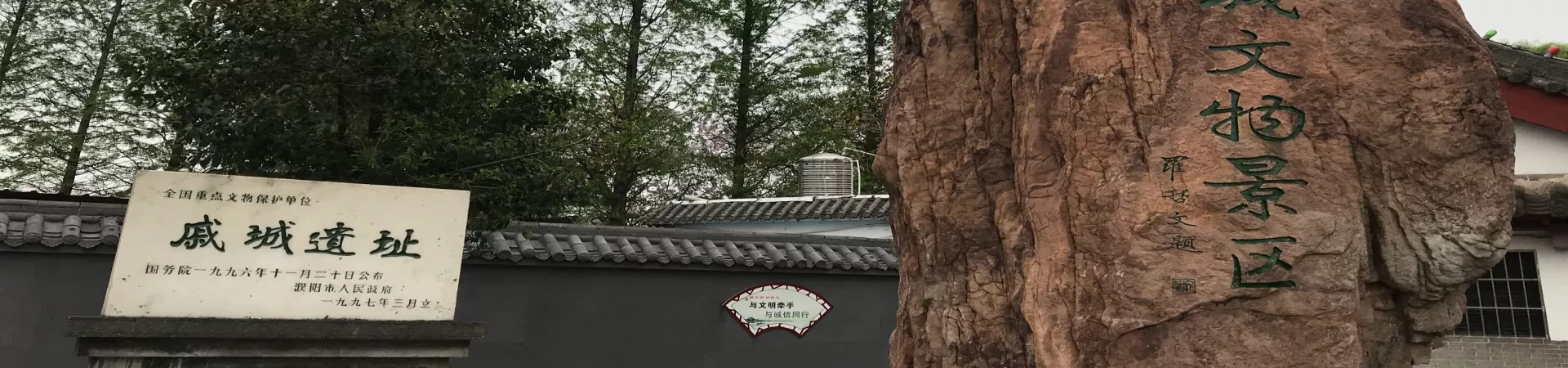
Subtitle: A Journey Through Millennia at the Ancient Qi City Relics
1. Introduction: The "United Nations" of the Spring and Autumn Period Nestled within Puyang City, a renowned historical and cultural hub in Henan Province, lies the ancient Qi City Relics (Qicheng Yizhi), a site whispering tales from China's deepest past. This weathered fortress, recognized for its profound archaeological significance, was inscribed on the list of Major Historical and Cultural Sites Protected at the National Level (the fourth batch) on November 20, 1996. Its historical importance was famously underscored during an inspection by former Chinese leader Jiang Zemin, who likened it to the "United Nations" of the Spring and Autumn Period (770-476 BC), a testament to its role as a pivotal venue for diplomatic meetings and alliances among ancient states. Locally, the site is also known as Kongkui City, traditionally believed to have been the fiefdom of Kongkui, a grandson of Duke Ling of the state of Wei.
2. Architectural Grandeur and Layout The physical remains of Qi City are imposing, offering a tangible connection to its storied past. The surviving sections of the ancient city wall, primarily on the eastern, western, and northern sides, stretch for a total perimeter of 1,520 meters. These ramparts, though partially ruined, still reach an impressive maximum residual height of 8.3 meters and boast a formidable thickness of up to 16.5 meters at their widest points. Enclosed within these formidable defenses is an area of approximately 144,000 square meters. This scale marks Qi City as the most ancient and longest-continuously inhabited ancient settlement and fortress preserved in northern Henan Province.
3. A Deep Tapestry of Cultural Layers The true majesty of Qi City lies not just in its visible structures but in the immense chronological depth buried beneath its soil. The site represents a rare and continuous archaeological sequence, with cultural layers stacked one upon another like pages in a history book. Excavations and surveys have revealed that the city is built upon a foundation that encapsulates nearly the entire span of Chinese prehistoric and early historic civilization. Successively, the ground holds evidence of the Peiligang Culture (c. 7000–5000 BC), the Yangshao Culture (c. 5000–3000 BC), and the Longshan Culture (c. 3000–1900 BC). Above these Neolithic foundations lie the strata of the Shang Dynasty (c. 1600–1046 BC), Western Zhou Dynasty (1046–771 BC), the very period of its prominence during the Spring and Autumn era, and later the Han Dynasty (206 BC–220 AD). The city itself is believed to have been initially constructed in the later part of the Western Zhou Dynasty, with subsequent expansions and reinforcements added through various later periods.
4. Core Relics and Current Preservation Strategy Beyond the ramparts, the site's core heritage features include the ancient city walls, the rich, unexcavated archaeological deposits within the city proper, and the foundational platform known as the "Alliance Terrace" (Huimeng Tai). This terrace is particularly evocative of the site's "United Nations" moniker, as it served as the stage for crucial interstate meetings, covenants, and diplomatic ceremonies during the Spring and Autumn Period. Recognizing the extreme sensitivity and value of these irreplaceable cultural assets, the current preservation philosophy prioritizes protective conservation in situ. The primary strategy involves the use of vegetative cover—grass and plants—to shield the underground ruins from erosion and damage. This approach not only safeguards the relics but has also transformed the area into a public green space where visitors can stroll and relax amidst the echoes of history. The long-term vision is to conduct systematic, scientific excavation in the future when advanced technologies and sufficient resources can ensure the absolute safety of the artifacts. Only then will the full splendor and historical value of these layers of civilization be revealed and presented to the world.
5. Practical Visitor Information For those planning a visit to this cornerstone of ancient history, the following details are essential: * Contact: +86-393-8116340; +86-393-8110107 * Opening Hours: * Summer Season (June 1 - August 31): 08:00 - 18:30 daily. Last admission is at 18:30. * Winter Season (December 1 - February 28/29): 08:00 - 17:30 daily. Last admission is at 17:30. * Note: It is always advisable to verify the opening hours prior to your visit, as schedules may be subject to change for maintenance or special circumstances.
Information last updated: January 11, 2023. Credit and thanks to contributor Xifan Longshelan for editorial input.