Memorial Hall of Revolutionary Base Site in the Hebei Shandong Henan Border Region
Subtitle: A Journey Through Time: Exploring the Revolutionary Heartland at the Ji-Lu-Yu Border Region Revolutionary Base Memorial Hall
1. Introduction: The Cradle of Revolution in Central Plains
Nestled in the historic city of Puyang, in China's Henan province, lies a site of profound historical significance: the Ji-Lu-Yu Border Region Revolutionary Base Memorial Hall. This institution stands not merely as a museum but as a sacred ground, a meticulously preserved testament to a pivotal chapter in modern Chinese history—the revolutionary struggles led by the Communist Party of China during the War of Resistance against Japanese Aggression and the subsequent Chinese Civil War. The memorial hall is dedicated to the Ji-Lu-Yu Border Region, a crucial revolutionary base area that encompassed parts of Hebei (Ji), Shandong (Lu), and Henan (Yu). This region served as a vital strategic rear area, a political model, and a military stronghold, where the Party mobilized the masses, implemented progressive policies, and nurtured the forces that would ultimately contribute to the founding of the People's Republic. A visit here is more than an educational trip; it is an immersive journey into the resilience, sacrifice, and unwavering spirit of the people who shaped the nation's destiny. The site operates with visitor convenience in mind, offering free admission (Ticket: Free Admission) and maintaining seasonal hours for public access (Opening Hours: 09:00-17:30 (June 1-August 31, Monday-Sunday); 09:00-17:00 (December 1-February 28 of the following year, Monday-Sunday); last entry at 17:00). For inquiries, visitors can contact 0393-8567502.
2. Historical Context and Significance of the Ji-Lu-Yu Base
2.1. Strategic Formation in Wartime The establishment of the Ji-Lu-Yu Border Region was a direct and strategic response to the invasion by Japanese militarists. In the late 1930s, as Japanese forces advanced deep into Chinese territory, the Communist Party of China, adhering to the policy of the United Front, moved to establish stable base areas behind enemy lines. The flat yet populous Central Plains, where the three provinces met, offered both challenges and opportunities. Through relentless guerrilla warfare and profound mass work, the Party, led by experienced commanders and political workers, successfully carved out and consolidated this base. It became a beacon of resistance, effectively pinning down significant enemy forces and disrupting their supply lines and communication networks.
2.2. A Model of Political and Social Construction Beyond its military role, the Ji-Lu-Yu Base was a laboratory for social and political reform. Here, the Party implemented its policies of rent reduction, land reform (in later stages), and democratic governance, which galvanized the support of the vast peasantry. Local democratic governments were established, promoting production campaigns to achieve self-sufficiency. The base area became synonymous with a new social order—one that stood in stark contrast to the corruption of the old society and the brutality of the occupiers. It provided a tangible vision of the future the revolution sought to build, fostering a powerful sense of identity and purpose among its inhabitants.
3. The Memorial Hall Experience: Architecture and Exhibitions
3.1. Site Overview and Architectural Ambiance The memorial hall complex is often built upon or near authentic historical sites, which may include former headquarters of the Border Region government, military command posts, printing houses for revolutionary publications, or sites of significant meetings. The architecture typically blends solemn, commemorative styles with elements reminiscent of the period, creating an atmosphere of reverence and historical immediacy. The layout guides visitors through a narrative progression, from the outbreak of war to the triumphs and trials of base area life.
3.2. Core Exhibition Galleries The heart of the visit lies in the systematic exhibition halls, which utilize a rich array of media to tell the base area's story.
- 3.2.1. Hall of Historical Prelude: This section sets the stage, detailing the Japanese invasion's impact on the three provinces and the initial, spontaneous resistance by local people and patriots. It outlines the national crisis that made the creation of such base areas a historical necessity.
- 3.2.2. Hall of Base Area Establishment and Development: Here, the focus is on the meticulous and often perilous process of building the base. Displays include historical documents, maps charting the expansion of the region, and artifacts related to early organizing efforts. It highlights the roles of key leaders and the integration of regular Eighth Route Army units with local militia forces.
- 3.2.3. Hall of Military Struggle and Heroic Deeds: This gallery is dedicated to the fierce military conflict. It features dioramas of famous battles, tactical explanations of guerrilla warfare, and a poignant collection of weaponry (often simple and homemade alongside captured equipment), uniforms, and personal effects of soldiers. Wall-mounted biographies and photographs honor individual and collective acts of bravery, paying tribute to those who made the ultimate sacrifice.
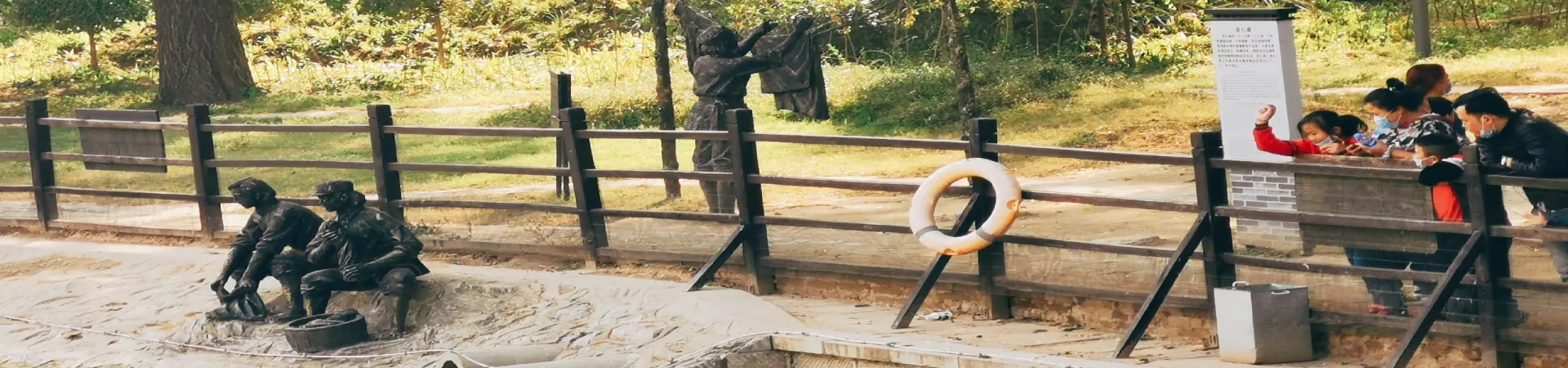
- 3.2.4. Hall of Mass Mobilization and Social Life: Perhaps the most evocative section, it recreates the socio-economic fabric of the base. Exhibits show how land policy was implemented, how production drives (for grain, cotton, and salt) were organized, and how cultural activities (through newspapers, drama troupes, and schools) boosted morale and literacy. Life-sized scenes or photographs depict villagers participating in elections, women sewing shoes for the front, and children learning in makeshift classrooms, illustrating the profound mobilization of an entire society for the war effort.
4. Legacy and Contemporary Relevance
4.1. Preservation of Intangible Heritage The memorial hall safeguards a vast collection of primary sources—letters, diaries, official notices, newspapers like the Border Region Daily, and propaganda posters. These items are invaluable for historical research, providing raw, unfiltered insights into the thoughts, challenges, and daily realities of the revolutionary period. They form the core of the institution's mission as a guardian of collective memory.
4.2. An Educational Platform for Patriotism Today, the hall serves as a nationally recognized base for patriotic education. It is a destination for students, Party members, military personnel, and the general public to study the "old district spirit" (laoqu jingshen)—a spirit characterized by unwavering faith, hard struggle, unity, and dedication to the people. Special lectures, themed activities, and interactive sessions are often organized to deepen this understanding, connecting the historical struggles to the values of national rejuvenation in the modern era.
4.3. A Destination for Thematic Tourism For the cultural tourist, the site offers a profound and focused historical experience. It anchors the broader "red tourism" circuit in Puyang and the surrounding region, encouraging visitors to explore the geographical and human landscape that sustained the revolution. The visit prompts reflection on the origins of modern China, the cost of its independence, and the enduring lessons of unity and perseverance drawn from this critical period. The memorial hall, therefore, stands not as a relic of a closed past, but as a living dialogue between history and the present, inviting contemplation on the journey that forged a nation.