Qiantong Town
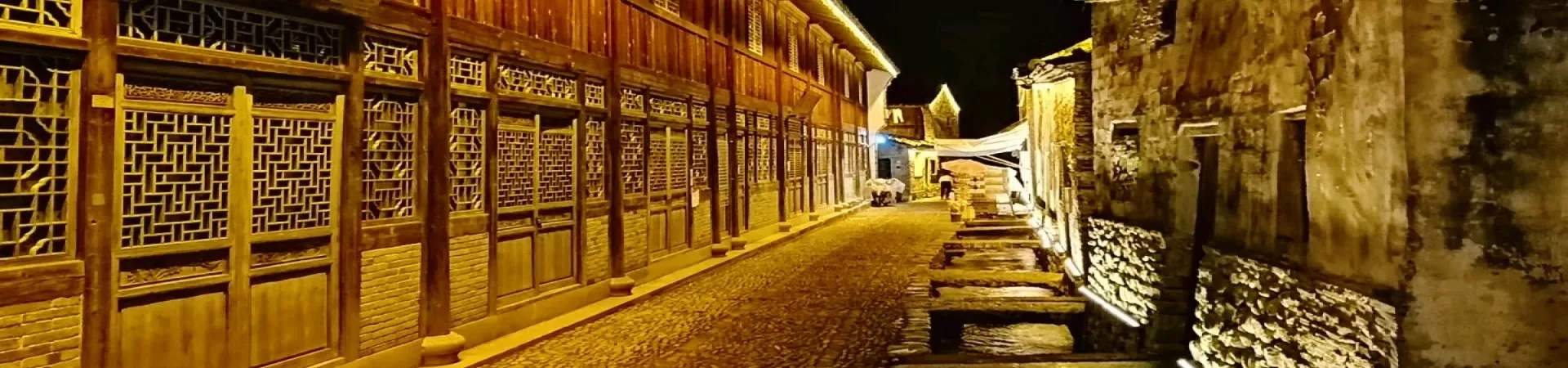
Subtitle: A Journey Through Time in Ningbo's "Living Museum"
Introduction: The Soul of Jiangnan
Nestled in the verdant landscapes of Ninghai County, under the jurisdiction of Ningbo, Zhejiang Province, lies the ancient town of Qiantong. Far removed from the relentless pace of modern cities, this town is a serene portal into China's rich historical and cultural tapestry. Often celebrated with evocative titles such as "The Premier Confucian Town of Jiangnan," "The Little Lijiang of Jiangnan," and most tellingly, "A Living Museum of Folk Culture," Qiantong offers more than just picturesque scenery. It presents a profoundly authentic and immersive experience where history is not merely displayed but continues to breathe in the daily rhythms of life, the architecture, and the very waterways that weave through it.
1. Architectural Grandeur and Historical Legacy
Qiantong's most striking feature is its exceptionally well-preserved ensemble of Ming and Qing dynasty architecture. As the largest settlement of the Tong clan in the Jiangnan region, the town's development has been deeply intertwined with this family's lineage for centuries. The visual harmony of the town is breathtaking: rows upon rows of traditional houses with "white-washed walls and dark-gray tiles" (粉墙黛瓦), creating a majestic yet elegant skyline that stretches across the horizon.
This is not a static museum piece. The town earns its "living museum" moniker because these ancient dwellings remain inhabited, maintaining a vibrant connection between past and present. Wandering through its core, one witnesses a "village painting heavy with ancient charm" (古韵浓重的乡村画). A remarkable detail that brings this painting to life is the prevalence of exquisite woodcarvings. The saying "every household has carved beams" (家家有雕梁) holds true, with doors, windows, and eaves adorned with intricate depictions of flora, fauna, and mythological scenes, symbolizing wishes for prosperity, longevity, and good fortune.
2. The Lifeline: The Unique Water System
If the architecture forms Qiantong's bones, then its water system is its lifeblood. This is where the town's magic becomes tangible. The ancient planners engineered an ingenious "Bagua" (Eight Trigrams) water network, channeling clear stream water from the nearby Baixi River into the village. This results in the enchanting phenomenon of "living water gracing every doorstep" (户户有活水).
Clear rivulets flow alongside nearly every street and lane, passing directly in front of homes. Residents still use this water for daily chores, adding a layer of serene vitality to the scene. The gentle sound of flowing water is a constant companion to visitors. This network was designed for practical purposes—drainage, fire prevention, and irrigation—but today, it creates a poetic ambiance where reflections of the ancient eaves shimmer on the water's surface, blending the real with the illusory.
3. Layout and Ambiance: A Labyrinth of Time
The town's layout is a fascinating embodiment of ancient Chinese philosophical and geomancy principles. Designed in a "回' character pattern based on the Nine Palaces and Eight Trigrams formation" (回字九宫八卦式布局), it was intended to bring harmony and offer protection. For the modern visitor, this translates into an engaging and slightly mysterious exploration.
The "streets and alleys are narrow, and the buildings are densely packed" (街巷狭小,建筑密集), creating a captivating maze. Losing one's sense of direction here is part of the charm. With each turn, you might discover a quiet courtyard, a small stone bridge arching over a babbling brook, or an elderly local going about their day. This dense, labyrinthine structure shields the interior from the outside world, preserving an atmosphere of timeless peace. It feels like walking through a living, breathing puzzle where history is around every corner.
4. Practical Information for Visitors
To fully appreciate Qiantong, planning is helpful. The following details will assist in organizing your visit:
4.1. Admission and Opening Hours * General Admission Ticket: Approximately 50 RMB. It is always advisable to check the official website or contact the venue for the most up-to-date pricing. * Opening Hours: The schedule varies seasonally. * Summer Period (June 1 - August 31): 08:00 - 17:00 (last entry at 16:30). * Winter Period (December 1 - February 28): 08:00 - 16:30 (last entry at 16:00).
4.2. How to Get There The journey is part of the adventure. The most common route from Ningbo is: 1. Take a bus from Ningbo South Bus Station to Ninghai County's main bus station. 2. From Ninghai, board local bus 102 to either the West or South Bus Station of Ninghai. 3. At these stations, transfer to a local minibus or taxi for the final leg to Qiantong Ancient Town. This last segment takes about 25 minutes.
4.3. Suggested Duration A visit of 1 to 3 hours is typically sufficient to explore the main lanes, admire the architecture and waterways, and absorb the tranquil atmosphere. However, photographers and those wishing to linger in tea shops or sketch the scenes may wish to allocate more time.
Conclusion of the Visit Experience
As you conclude your walk, perhaps pausing on one of the many small stone bridges, the integrated essence of Qiantong becomes clear. It is a place where intellectual heritage (the "Confucian town"), aesthetic beauty (the "little Lijiang"), and enduring daily practice (the "living museum") converge seamlessly. The silent eloquence of its carved beams, the cheerful murmur of its ubiquitous streams, and the quiet dignity of its maze-like alleys together compose a powerful, wordless narrative about harmony among people, their architecture, and nature. It stands as a serene and profound counterpoint to the modern world, inviting reflection and offering a genuine, untouched glimpse into the soul of traditional Jiangnan.