Luoquan Ancient Town
Subtitle: A Journey Through Time in Sichuan's Salt Well Town
1. An Introduction to Luoquan
Nestled in the rolling hills of Sichuan Province, approximately 50 kilometers east of Neijiang City, lies Luoquan Ancient Town—a hidden gem that offers a profound escape into China's rich historical tapestry. Unlike the bustling, commercialized ancient towns found elsewhere, Luoquan (which translates to "Spring by the Luo River") is a place of authentic, weathered charm and deep cultural significance. Its story is intrinsically linked to a single, precious resource: salt. For over a millennium, Luoquan was not just a settlement but a vital hub of salt production in Sichuan, its fortunes rising and falling with the brine wells that sustained it. Today, designated as a National Historical and Cultural Town, it presents visitors with a remarkably well-preserved slice of late Qing and Republican-era architecture and town planning, all set along the serene curves of the Zhujiang River. A visit here is less about ticketing attractions and more about immersive strolling; it's about feeling the grooves in the stone steps worn smooth by generations, tracing the intricate carvings on temple eaves, and listening to the whispers of history carried on the river breeze. The town operates with a welcoming openness, inviting exploration at any hour without an admission fee, making it an accessible and spontaneous detour for any traveler seeking depth and authenticity.
2. The Historical Heartbeat: Salt, Culture, and Revolution
2.1. The Salt Well Legacy To understand Luoquan is to understand its salt. The town's history as a salt production center dates back to the Qin and Han dynasties, reaching its zenith during the Ming and Qing periods. At its peak, it boasted over 1,500 brine wells. The most famous, the "Guanyin Well," was said to have been discovered in the Sui Dynasty. This saline wealth financed the construction of the magnificent guild halls, temples, and residences that still stand. The entire 2.5-kilometer-long main street, shaped like a reclining dragon following the river's contour, was built to facilitate this industry. You can still see remnants of this past—old well sites, transport routes, and the distinctive architectural style of the salt merchants' compounds, which blend utilitarian robustness with elegant Sichuanese flair.
2.2. Architectural Symphony in Blue and Grey The town's architecture is its most striking visual feature. The dominant palette is one of blue-grey bricks, dark tiles, and weathered wood, creating a solemn and harmonious atmosphere. The structures are classic examples of Qing-era Sichuan merchant town design, characterized by xiashihouwu (shops in the front, residences in the back) layouts and deep, covered alleyways. Elaborate wooden carvings of flora, fauna, and mythological scenes adorn window lattices, door frames, and roof beams, speaking silently of the wealth and taste of their original owners. Walking through the town feels like moving through an open-air museum of folk architecture.
2.3. A Cradle of Revolutionary History Beyond commerce, Luoquan holds a significant place in modern Chinese history. It was here, in August 1911, just months before the Wuchang Uprising, that the "Luoquan Conference" was held. This secret meeting of the Tongmenghui (Chinese Revolutionary Alliance), disguised as a birthday banquet for a local elder, was crucial in planning the railway protection movement in Sichuan, which directly ignited the Xinhai Revolution that ended over two thousand years of imperial rule. The site of this conference, a traditional courtyard house, is now a preserved memorial, adding a layer of profound historical gravity to the town's peaceful lanes.
3. Exploring the Town's Core Treasures
3.1. The Dragon-Shaped Old Street The backbone of the town is its five-mile-long main street, paved with massive stone slabs. Following its natural curve reveals a living community. Small shops sell local handicrafts and snacks, residents go about their daily lives, and every few hundred meters, a grander structure breaks the rhythm of residential facades. The street is best experienced slowly, with attention to detail—the moss between stones, the aging shop signs, the glimpse into a sunny courtyard.
3.2. Guild Halls: Monuments to Mercantile Power The salt trade attracted merchants from across China, who built impressive guild halls as centers of business, community, and worship. The most renowned is the Guangdong Guild Hall (Yue Palace), a masterpiece of intricate stone and wood carving. Its opera stage, towering pillars, and sweeping roofs are a testament to the influence and wealth of the Guangdong salt merchants. The Fujian Guild Hall and others, though perhaps less ornate, similarly reflect the convergence of different regional cultures in this prosperous hub.
3.3. Temples of Faith and Refinement Spiritual life centered around several beautiful temples. Zigong Temple, dedicated to the God of Salt, is the most profession-specific, highlighting the divine gratitude for the town's livelihood. Xianli Temple and Chenghuang Temple served the broader spiritual needs of the community. These temples often feature serene courtyards with ancient trees, offering quiet spaces for contemplation amidst the historical narrative of commerce and revolution.
4. Practical Information for Your Visit
4.1. Admission and Opening Hours One of Luoquan's most appealing aspects is its accessibility. The town itself has no entrance fee; visitors are free to wander its streets, alleyways, and public spaces at their leisure. The individual historic sites and museums within the town (such as the Luoquan Conference site) may have separate, minimal fees. The town is open for exploration 24 hours a day, every day of the year. This allows for incredible flexibility—experience the lively morning market, the soft afternoon light on the blue-grey walls, or the hauntingly beautiful atmosphere of the old street under the glow of traditional lanterns at night.
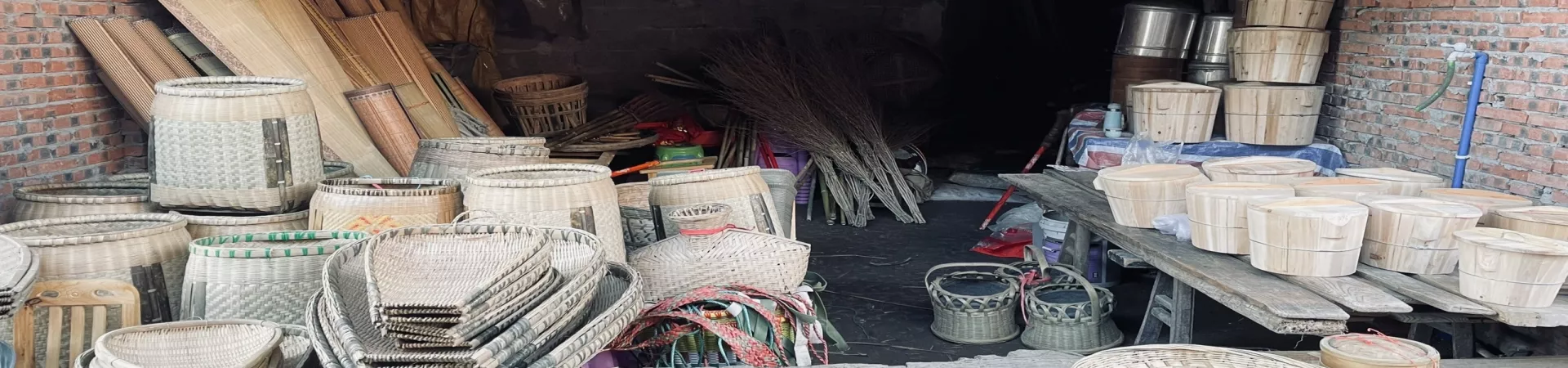
4.2. Local Flavors and Souvenirs No visit is complete without sampling Luoquan's culinary claim to fame: Luoquan Bean Curd. This is not the soft tofu commonly found. It is a firm, pressed bean curd with a unique, slightly smoky flavor, traditionally made with salt-well brine. It can be served braised, cold-dressed, or stir-fried. Other local snacks include zhangcha duck and various glutinous rice cakes. For souvenirs, look for handmade bean curd, local preserved vegetables, or simple folk crafts.
4.3. Getting There and Contact Luoquan is located in Shizhong District, Neijiang City, Sichuan Province. The most convenient way is to drive or hire a car from Neijiang (about 1-1.5 hours) or from Chengdu (approximately 2-2.5 hours). Some long-distance buses also connect from Neijiang's main bus stations to the town. For specific inquiries, such as confirming the opening of a particular museum or site, you can contact the local tourism information at 0832-5801111.