Longchang Stone memorial archway Tourist Area
Subtitle: A Journey Through Stone: Exploring Longchang's Ancient Archways
Introduction: A Legacy Carved in Stone
Nestled within the heart of Sichuan Province, the city of Longchang holds a remarkable secret: a breathtaking collection of stone archways and steles that stand as silent, majestic sentinels of history. Widely regarded as the finest and most significant assemblage of its kind in all of China, the Longchang Stone Archways offer visitors an unparalleled glimpse into the Qing Dynasty's intricate social customs, moral codes, and artistic achievements. Unlike solitary monuments found elsewhere, this is a cultural landscape where history feels immediate and tangible, inviting you to walk through portals of stone into a world governed by filial piety, loyalty, and scholarly honor. More than just architectural relics, these structures are profound narratives carved in granite, telling stories of virtue, sacrifice, and community recognition that resonate centuries after their creation.
1. The Historical and Cultural Significance
The Longchang Stone Archways are not merely decorative; they are a dense, open-air textbook of Qing Dynasty societal values. Erected roughly between the reigns of Emperor Qianlong and Emperor Guangxu (mid-18th to late 19th centuries), each archway was commissioned through imperial decree to honor individuals for extraordinary virtue. The inscriptions and detailed iconography serve specific purposes, celebrating a spectrum of Confucian ideals.
1.1. Categories of Commemoration The archways can be broadly classified into several types, each with its own solemn meaning. Jiexiao arches were dedicated to chaste widows and filial children, commemorating lifetimes of devotion and sacrifice. Gongde arches praised officials or wealthy benefactors for their public service and charitable contributions to the local community. Bai arches, often the most ornate, celebrated individuals who reached the venerable age of 100 or more, symbolizing the blessing of longevity. Finally, Jieyi arches marked significant locations or events. Together, they formed a moral compass for society, physically manifesting the virtues everyone was encouraged to uphold.
1.2. Artistic Mastery in Stone The true wonder lies in the exquisite craftsmanship. Local artisans employed a distinctive, hard blue stone, meticulously carving it with techniques that have ensured its endurance. The artistic repertoire is staggering: from majestic dragons and protective lions symbolizing power and prestige, to delicate phoenixes and lotuses representing virtue and purity. Scenes from classical literature, folklore, and daily life are frozen in high and low relief across beams and pillars. Every bracket, eaves, and inscribed tablet showcases a harmony of structural integrity and decorative flourish, making each archway a masterpiece of Qing stone sculpture.
2. Exploring the Archway Clusters: North Pass and South Pass
The core of the archway group is strategically located at the ancient northern and southern entrances to the old Longchang city, areas known as Beiguan (Dao Guan Ping) and Nanguan (Chun Niu Ping). This placement was intentional, ensuring that all travelers—officials, merchants, and scholars—would pass through these gates of virtue, receiving a silent lesson in morality upon entering and leaving the town.
2.1. The North Pass (Beiguan) Cluster The cluster at Dao Guan Ping (North Pass) is the most concentrated and arguably the most impressive, featuring seven major stone archways lined along the historic path. Walking through this area is a sequential journey through different tales of honor. Here, you might find a towering arch for a centenarian adjacent to one commemorating a widow's lifelong chastity, creating a powerful juxtaposition of different societal values. The density allows for direct comparison of styles, from the complexity of rooftop designs to the variations in calligraphic inscriptions, many authored by renowned scholars of the time.
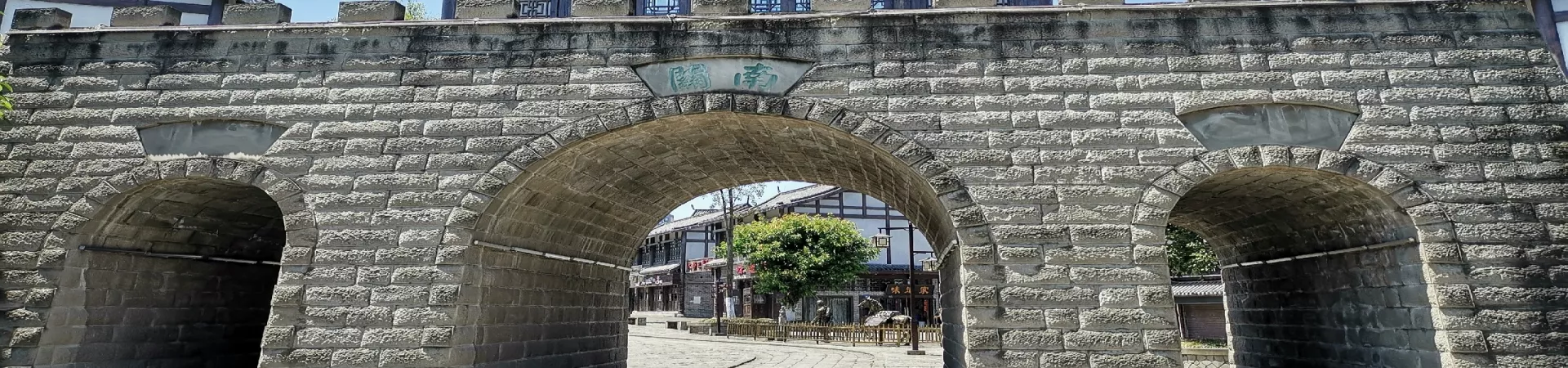
2.2. The South Pass (Nanguan) Cluster The Chun Niu Ping (South Pass) area, with its six archways, offers a slightly different atmosphere. Often integrated with the old city wall remnants and ancient tree shades, this cluster feels like a historical promenade. The archways here are equally detailed but are spaced to allow each monument its own space for contemplation. The themes continue to revolve around loyalty, filial piety, and official integrity, with some steles providing additional context and imperial edicts that authorized the construction.
3. Practical Information for Your Visit
To fully appreciate the serenity and grandeur of the site, planning your visit with the following practical details in mind is essential.
3.1. Admission and Operating Hours One of the most appealing aspects of the Longchang Stone Archways is its accessibility. Admission to the tourism area is completely free of charge, allowing everyone to experience this cultural treasure without barrier. The site is open 24 hours a day, every day of the year. This "all day" policy offers incredible flexibility. Many visitors find that the archways are particularly magical at sunrise or sunset, when the low angle of the light dramatically highlights the textures and depths of the carvings, or under the gentle glow of evening illumination, which casts a solemn and majestic atmosphere over the stone figures.
3.2. Location and Distribution The archways are primarily concentrated in two urban clusters: * North Pass (Beiguan/道观坪): 7 archways. * South Pass (Nanguan/春牛坪): 6 archways. Additionally, four standalone archways and several important stone steles are dispersed in surrounding villages and towns, offering an opportunity for deeper exploration of the countryside for dedicated enthusiasts. The main clusters in Beiguan and Nanguan, however, provide the most comprehensive and convenient experience.
4. Enhancing the Visitor Experience
4.1. Suggested Itinerary and Touring Tips A recommended approach is to start at either the North or South Pass and spend 1.5 to 2 hours leisurely walking through the cluster. Bring a pair of binoculars to appreciate the high-up carvings in detail. Taking time to slowly decipher the themes—identifying the mythical beasts, floral patterns, and narrative scenes—turns the visit into an engaging puzzle. While the site is always open, weekdays and mornings tend to be quieter for uninterrupted contemplation.
4.2. Cultural Context and Deeper Appreciation To truly connect with what you're seeing, consider the immense social weight these structures carried. Receiving an imperial decree for an archway was the highest honor for a family, bringing prestige for generations. The fusion of architectural form, sculptural art, calligraphy, and historical literature on a single structure represents a pinnacle of traditional Chinese commemorative culture. Before or after your walk, researching the specific stories behind a few archways (often available at local cultural centers or via official guides) will profoundly deepen your understanding, transforming silent stones into poignant human stories.
4.3. Contact Information For the latest information or specific inquiries regarding guided tours or cultural events, you can contact the relevant management office at 0832-3988777.