Nanyang Prefecture Office
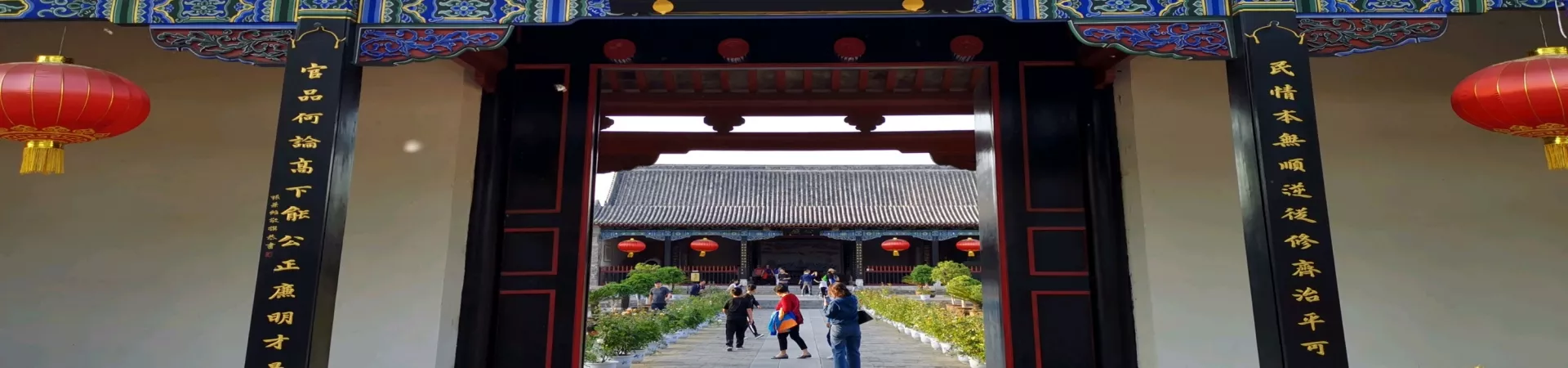
Subtitle: A Journey Through Seven Centuries of Regional Governance and Architectural Heritage
Introduction: The Heart of Nanyang's Administrative History Nestled in the southwestern corner of Nanyang's old city, north of the western end of today's Minzhu Street, stands the Nanyang Prefectural Administrative Office. Commonly referred to as the Prefectural Yamen or the Magistrate's Office, this complex served as the official seat of power for the highest regional official—the Prefect—across three major dynasties: the Yuan, Ming, and Qing. With a history spanning over 700 years from its initial establishment in the Yuan dynasty to its final administrative role in the late Qing, the Nanyang Prefectural Office is a monument of immense historical and cultural significance. Its preservation and restoration, undertaken as a key project by the Nanyang municipal government, represent a vital effort to safeguard a tangible link to the past, an initiative that has garnered widespread public appreciation for its role in protecting the city's heritage.
1. Architectural Layout and Symbolism of Power The architecture of the Nanyang Prefectural Office is a physical manifestation of traditional Chinese bureaucratic philosophy and social order. The complex follows the classic axial layout typical of Chinese official compounds, designed to reflect hierarchy, authority, and the Confucian principles governing state administration.
1.1 The Central Axis and Key Halls The entire compound is organized along a strict north-south central axis, symbolizing the uprightness and centrality of imperial authority. The main gates, including the imposing main entrance gate (Zhaobi), lead into a series of courtyards and halls. The most important structures are aligned on this axis, such as the Great Hall (Datang), which was the core venue for official ceremonies, hearings of significant cases, and important receptions. Behind it, the Inner Hall or Second Hall served as the prefect's daily office for administrative work and discussions with subordinates. Further back were residential quarters, blending the public and private spheres of the prefect's life.
1.2 Functional Zones and Their Purposes Flanking the central axis were numerous auxiliary courtyards and buildings housing the various functional departments (known as "Fang" or "Cao") of the prefectural government. These included offices for revenue, personnel, justice, rites, and military affairs. The compound also featured a jail, archives, storehouses, and gardens. This meticulously planned layout ensured the seamless operation of regional governance, from judicial proceedings and tax collection to ceremonial functions and defense coordination, all within a single, fortified complex.
2. Historical Evolution and Cultural Significance The site's continuous use for over seven centuries provides a unique narrative of continuity and change in Chinese regional administration, architecture, and local history.
2.1 From Yuan Dynasty Foundation to Qing Dynasty Legacy Established during the Yuan Dynasty (1271-1368), the office was built upon earlier administrative traditions. It was extensively renovated and expanded during the Ming (1368-1644) and Qing (1644-1912) dynasties, with each era leaving its architectural imprint. The structures seen today primarily reflect Ming and Qing architectural styles, characterized by wooden beam frameworks, sweeping upturned eaves adorned with intricate dougong brackets, and grey brick-and-tile construction. The longevity of the site makes it an invaluable textbook for studying the evolution of Chinese official architecture and local governance systems.
2.2 A Repository of Intangible Heritage Beyond its physical structures, the Prefectural Office embodies the intangible cultural heritage of traditional governance. It was a stage for the enactment of imperial law, the administration of justice, and the implementation of policies that affected millions of lives in the Nanyang region. The stories of the prefects who served here, their challenges in flood control, agricultural management, and maintaining social order, are integral to understanding the region's historical development. The restoration efforts aim to make this history accessible, transforming the site from mere ruins into a dynamic museum of political and social history.
3. Practical Information for Visitors For travelers seeking to explore this historical gem, the following practical details are essential for planning a visit.
3.1 Location and Contact Information The Nanyang Prefectural Office is located at the western end of Minzhu Street in the old city district of Nanyang, Henan Province. For verification of opening hours or other inquiries, visitors can contact the site management via telephone at 0377-61381235 or 0377-63232861.
3.2 Admission Fees and Opening Hours The standard admission ticket is priced at 40 RMB per person, applicable year-round. The site operates with seasonal opening hours to accommodate daylight and weather conditions. During the summer months (June 1st to August 31st), it is open from 08:00 to 18:00, with the last admission at 17:30. In the winter season (December 1st to February 28th of the following year), hours are from 08:00 to 17:30, with the last entry at 17:00. It is advisable to allocate at least two to three hours for a comprehensive visit to fully appreciate the extensive complex and its exhibitions.
4. The Restoration: Bridging Past and Present The decision to restore the Nanyang Prefectural Office was driven by the recognition of its precarious state and irreplaceable value. Prior to restoration, centuries of wear, conflict, and neglect had left significant parts of the complex in disrepair.
4.1 The Restoration Philosophy and Process The restoration project is not a mere reconstruction but a careful, scholarly endeavor based on historical records, archaeological findings, and architectural studies. The goal is to preserve authenticity while stabilizing the structures for public access. This involves using traditional materials and techniques where possible to repair halls, gates, and courtyards, ensuring that the restored complex accurately reflects its historical appearance during its operational peak in the Ming and Qing dynasties.
4.2 The Site's Role in Contemporary Nanyang Today, the restored Nanyang Prefectural Office serves multiple roles. It is a protected cultural relic, an open-air museum offering insights into ancient Chinese bureaucracy, and a cultural landmark that enhances Nanyang's historical urban landscape. It provides an educational resource for students and a unique destination for history enthusiasts and tourists, allowing them to walk the same paths as imperial officials and gain a deeper, more concrete understanding of China's regional administrative past.